


Thailand Travel Cost: Build a Real Trip Budget for 2026
Build a Thailand budget from live hotel and flight prices, daily food and transport allowances, official attraction fees, tours, insurance and mobile data.


A useful Thailand budget is a living worksheet, not a promise that every traveler will spend the same amount. A specific choice of Bangkok hotel dates, one private island transfer or an ambitious boat tour can change the total far more than a week of modest local meals.
Build the trip in this order: start with flights and accommodation, add intercity transport and fixed activities, then allow for daily food, local transport and a contingency fund. Keep every live quote in Thai baht until the final conversion so exchange-rate changes do not become mixed into the working total. The regional money-and-cost hub offers broader comparisons, while the trip-cost collections show destination-level examples.
A planning range, not a guarantee
Use these ranges only for an early feasibility check. They exclude international flights and assume two people share a room where relevant.
| Style | On-the-ground planning range | What it assumes |
|---|---|---|
| Budget-focused | ฿1,200–2,000 per person/day | Hostels or simple shared rooms, local meals, public transport, selective paid sights |
| Comfortable | ฿2,800–5,500 per person/day | Well-located mid-range room, mixed dining, domestic transport and regular paid activities |
| Premium | ฿7,000+ per person/day | Resort or luxury city hotel, private transfers, premium dining and tours |
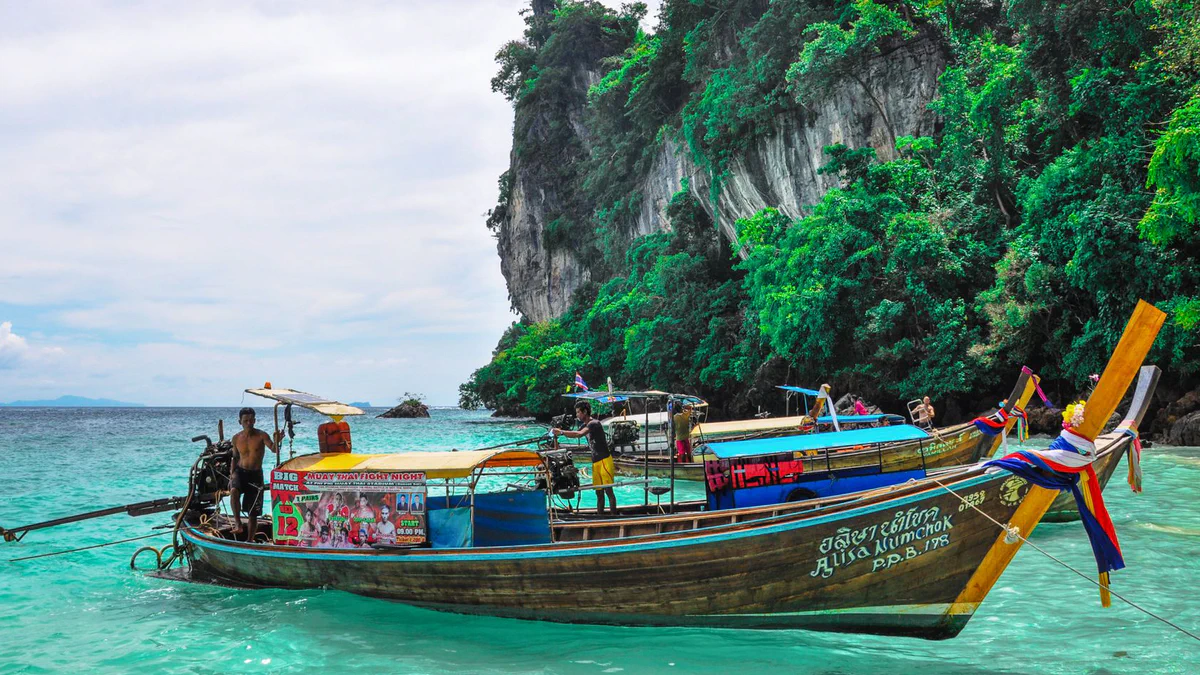
Island stays often cost more than time in the north because beachfront rooms, boat transfers and imported supplies can raise the daily total. Peak dates and one-person room occupancy push these ranges higher as well. Price the actual route before treating any broad daily range as a savings target.
Price the volatile items live
Hotel, flight and tour prices move with the season and remaining inventory, so a frozen “average” quickly becomes misleading. Run the actual dates through each booking tool and record the final total, including taxes, baggage fees and any premium for flexible cancellation.
Evaluate the neighborhood before choosing a specific property. The Bangkok where-to-stay guide shows how a lower room rate can be erased by extra taxis and repeated time in traffic.
For flights, include checked baggage, the airport transfer and the consequences of the arrival time. A low fare that lands after the last practical ferry or train can force an unplanned hotel night and erase the saving. For activities, compare what the headline price includes, the meeting point, the weather policy and the cancellation deadline.
Build your Thailand budget by category
Accommodation
Record the final stay total, then divide it across travelers and nights. Check:
- taxes and service charges;
- refundable versus non-refundable terms;
- breakfast and bed configuration;
- distance to useful rail, pier or old-city sights;
- resort transfer or island pickup;
- whether the rate changes across weekends or holidays.
Moving hotels adds transport costs and time spent packing and checking in. Change bases when the new location materially changes the trip—Bangkok to Chiang Mai, or a city to an island—not merely to save a few hundred baht a night.
Food and drink
Price one realistic day: breakfast, lunch, dinner, water and a coffee or snack, with alcohol kept as a separate flexible line. Local made-to-order restaurants (ran a-han tam sang), night markets and mall food courts make this part of the budget relatively controllable. Beachfront dining, imported spirits and specialty coffee require a higher allowance.
Do not make the food budget depend on finding the cheapest stall three times a day. Use the Bangkok meal-planning guide to fit meals into sightseeing days without crossing the city or postponing food until everyone is exhausted.
Local and intercity transport
Bangkok BTS and MRT fares are distance-based, so use the official calculators for the journeys you expect to make; the BTS currently caps eligible routes at ฿65. Add a separate buffer for luggage transfers and late journeys after rail service ends.
Keep intercity legs separate from the daily local-transport allowance. Price each train, bus, domestic flight, ferry and airport transfer individually. The Thailand transport guide and Bangkok airport-transfer guide help expose cheap fares that require an expensive or awkward connection.
Sights and activities
The official ticket for foreign visitors to the Grand Palace is currently ฿500, which includes entry to several linked attractions within its validity period. It’s a significant single expense that needs to be accounted for in a budget-focused day, but remember that you don’t necessarily need a costly organized tour every single day to see the best of the city.
List fixed-price priorities first, then leave room for at least one weather-dependent activity. For an island tour, verify whether the price includes national-park fees, pier transfers, meals and snorkeling equipment, and check the cancellation rules before paying.
Connectivity and insurance
Mobile data is small beside the hotel bill and can usually be fixed early. The Thailand SIM/eSIM guide compares low-cost travel eSIMs with local AIS and dtac options.
Travel-insurance quotes depend on age, residence, trip duration and planned activities such as diving or scooter use. Use identical inputs when comparing policies, then check the medical-evacuation and motorcycling wording in the Thailand travel-insurance guide before buying.
A simple budget worksheet
- International flights
- Domestic flights, trains, ferries and transfers
- Accommodation total with taxes
- Fixed tickets and tours
- Daily food and local transport × trip days
- SIM/eSIM and insurance
- Shopping and nightlife as optional lines
- A contingency held separately
Update the worksheet once the itinerary is stable. A seven-day Thailand route and a two-week route create different transport costs even before the hotel category changes.
Quick answers
Frequently asked questions
How much should I budget per day in Thailand?
What is the biggest Thailand trip cost?
Should flights be included in a daily Thailand budget?
Research notes
Official planning references
We use these primary references for the time-sensitive details relevant to this guide. Rules, prices and operating hours can change, so confirm the live information before you travel.
- Grand Palace official ticket information
Details to check: Current foreign-visitor price, inclusions and opening times.
- BTS Skytrain routes and fares
Details to check: Official route-specific Bangkok fare calculator.
- Tourism Authority of Thailand
Details to check: Official destination and trip-planning information.
Guide reviewed 5 August 2026. Confirm live rules, prices and operating details with the linked authority before travel.