Wat Phra Singh Chiang Mai: A Respectful Visit Guide
Decide whether Wat Phra Singh fits your Old City day, then follow a respectful visit sequence with honest notes on heat, access and current rules.


Wat Phra Singh is the stronger Old City choice when you want a living monastery, Lanna religious art and a western anchor for a slow walk. Choose Wat Chedi Luang instead when monumental ruined scale and city history matter more. You can visit both, but a second major compound is worthwhile only while the group still has attention and heat tolerance. Allow roughly 45–75 minutes here, read the current entrance board before assuming a fee or opening time, and remember that access can change for worship or ceremonies. The aim is not to photograph every roof: it is to understand how art, devotion and ordinary monastic life share the same space.
Understanding Wat Phra Singh as an Active Monastery
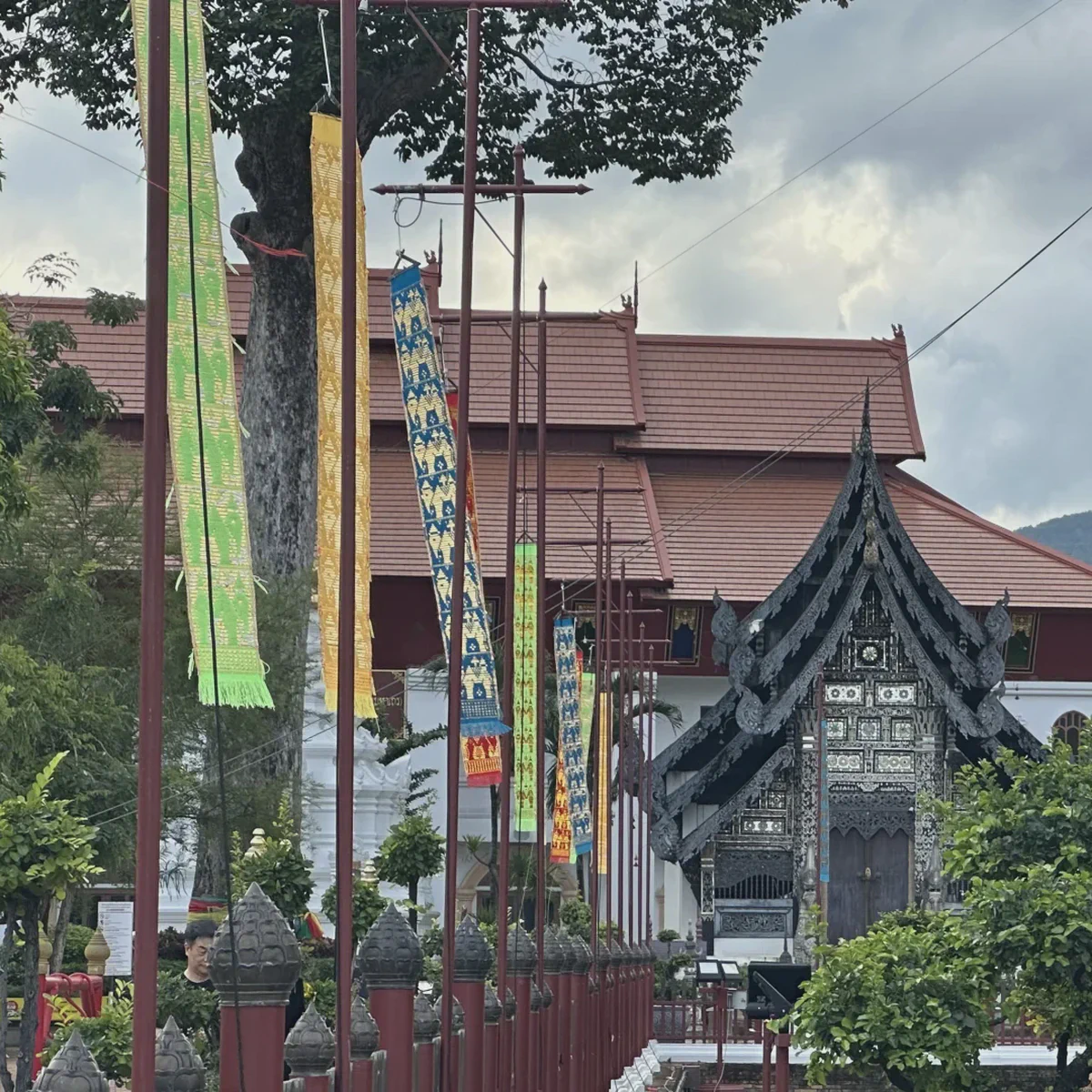
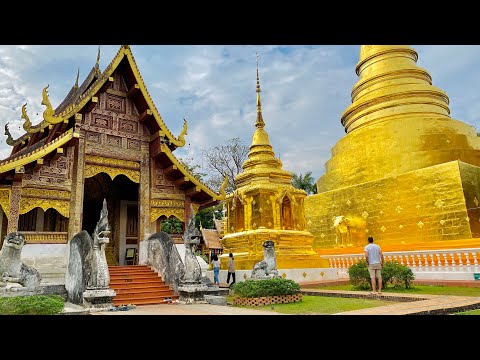
Wat Phra Singh Woramahawihan is both a historic compound and an active monastery. The grounds remain a place of worship, study and monastic life. Visitors are guests in a sacred space, and the compound makes more sense when approached with respectful observation rather than as a quick photo opportunity.
The revered Phra Singh Buddha image and Viharn Lai Kham are central to the visit. Accounts of the image’s origin and movement vary, so the useful visitor fact is its present religious importance—not a single legend presented as settled chronology. Look at how worshippers use the space before focusing on decorative details.
When planning a visit, remember that access to certain halls or areas can be temporarily restricted for religious ceremonies, monastic duties, or cleaning. Flexibility and a quiet, observant attitude are key.
A Realistic 45- to 75-Minute Visit Plan

Rushing through a temple complex as significant as Wat Phra Singh can be overwhelming and unsatisfying. A structured, 45- to 75-minute visit allows you to appreciate the main highlights without succumbing to “temple fatigue.”
1. Entrance and Orientation (5–10 minutes)
At the entrance you use, pause to read posted visitor guidance, access notices and any current foreign-visitor fee. This is also the moment to cover shoulders and knees and prepare small Thai Baht notes. Do not assume a side gate follows the same visitor flow as the main entrance.
2. The main worship hall (10–15 minutes)
Enter the principal worship space only when it is open to visitors and no ceremony or sign redirects you. Remove shoes where indicated. First notice how people enter, sit and make offerings; then look at the roof structure, Buddha images and decorative program. If you sit, fold your feet behind or beside you rather than pointing them toward a Buddha image.
3. Viharn Lai Kham and the Phra Singh Image (15–20 minutes)
Find Viharn Lai Kham using current compound signs rather than relying on a remembered left/right instruction. The intimate scale, gilded work and mural details reward a slower look, and the Phra Singh image gives the hall continuing devotional importance. Access, interior photography and visitor circulation can change; follow the sign at the door and give worshippers the clear line of movement.
4. The Chedi and Grounds (10–20 minutes)
Continue to the principal chedi and the surrounding grounds. A slow circuit helps the compound read as a whole after the concentrated interiors. Smaller halls, a scripture-library structure and monastic areas have different functions; do not assume every attractive doorway is visitor space. Follow barriers and private-area signs even when another tourist crosses them.
5. Quiet Exit
When you are ready to leave, exit respectfully. This is a good moment to pause at a nearby cafe for a cold drink and to reflect on the visit before continuing your exploration of the things to do in Chiang Mai.
Visitor Practicalities: Fees, Hours, and Dress Code
Planning the logistics for a temple visit is essential for a smooth and respectful experience.
Hours and Entrance Fees
Opening hours and foreign-visitor entrance fees remained uncertain as of August 28, 2026. Keep your schedule flexible and check the current notice at the entrance before entering the compound.
- Action: Visitors should consult the current entrance notice board upon arrival for the most accurate information on hours and any applicable fees.
- Payment: It is always advisable to carry small denominations of Thai Baht (THB) for temple entrance fees, as change for large notes may not be available. Listings on third-party travel sites should be treated as indicative, not official.
Dress Code and Behavior
Following the dress code is a sign of respect for the temple’s religious function.
- Clothing: Cover shoulders and knees for all genders. Carry your own lightweight layer; do not assume a wrap is available to borrow or rent.
- Shoes: Remove your shoes before entering any worship hall or building where you see shoes collected outside. Look for the designated shelves.
- Conduct:
- Move and speak quietly, especially inside buildings.
- Avoid physical contact with monks and do not touch sacred objects or Buddha images.
- When sitting in a worship hall, do not point your feet toward the Buddha images. Tuck your feet behind you.
- Do not block or walk in front of people who are actively praying.
- Observe current photography signs. Do not photograph an identifiable worshipper or monk without consent, and put the camera away when it interferes with prayer or circulation.
Decide before raising the camera
The easiest photograph is not always the most respectful one. Doorways frame interiors beautifully, but standing in one can block a worshipper or create a queue of visitors behind you. A wide shot of a hall may include people making offerings who did not agree to become the subject. Take an exterior establishing image, check the interior sign, then spend part of the visit without a screen between you and the room.
If photography is central to your interest, morning or later light may be gentler, but religious use outranks a lighting plan. A ceremony, funeral or private observance is a reason to wait or move on, not an inconvenience to shoot around.
Navigating the Compound: Heat and Accessibility
Chiang Mai’s climate and the temple’s historic construction present practical challenges.
- Heat and Sun: Shade is available but can be patchy. The open courtyards can be intensely hot, especially from late morning to late afternoon. A hat, sunscreen, and water are essential. Visiting early in the morning (e.g., before 10:00 AM) generally means cooler temperatures, though it does not guarantee fewer visitors.
- Accessibility: Road access does not make every part of a historic compound step-free. A visitor may encounter:
- High thresholds into buildings.
- Multiple steps to enter most halls.
- Uneven pavement in some courtyard areas.
- The requirement to remove and put on shoes frequently, which can be difficult for those with mobility issues.
Pairing Wat Phra Singh with Other Activities
Wat Phra Singh’s location at the western end of Ratchadamnoen Road makes it a logical anchor for exploring the Old City.
- Best Pairing: Combine a morning visit to the temple with a slow walk east along Ratchadamnoen Road, which is known for its artisan shops and cafes. This allows for a restorative stop for coffee or a meal from Chiang Mai’s rich food scene. On Sundays, this road becomes the famous Sunday Walking Street Market.
- The two-temple choice: Wat Chedi Luang is the logical second anchor farther east in the Old City. The connection is straightforward on a map but exposed walking, crossings and browsing can stretch it. Break the pair with lunch or visit on separate mornings.
- Who should skip or shorten: If the group is already temple-tired, needs reliably step-free interiors or cannot manage repeated shoe removal, choose one major Chiang Mai temple and keep the rest of the day different in texture.
Wat Phra Singh or Wat Chedi Luang?
| Choose | When it is the better use of an hour | Main trade-off |
|---|---|---|
| Wat Phra Singh | You care most about a living monastery, intimate religious art and a western Old City route | The compound’s meaning is quieter; visitors looking only for dramatic scale may rush it |
| Wat Chedi Luang | You want the damaged great chedi, visible historical change and a central landmark | The monumental ruin can overshadow the active religious spaces around it |
| Both | You have half a day, will pause for food and still want to compare two different jobs | Heat and temple fatigue can make the second visit superficial |
If this is your first morning and you cannot decide, choose the temple that fits the next two hours geographically. Wat Phra Singh makes sense before a slow Ratchadamnoen walk; Wat Chedi Luang makes sense when the rest of the route sits around the city center. The better choice is the one you can visit without backtracking.
Check these details at the gate
- Today’s visitor hours and any temporary ceremony closure.
- The current foreign-visitor fee and where it applies.
- Which halls are open and where shoes must be removed.
- Current photography signs, especially inside Viharn Lai Kham.
- The simplest route for anyone who needs to limit steps or uneven ground.
Those five checks are more reliable than an old screenshot. Once they are clear, give the compound one deliberate hour, then stop for food rather than adding another temple automatically.
Research notes
Official planning references
We use these primary references for the time-sensitive details relevant to this guide. Rules, prices and operating hours can change, so confirm the live information before you travel.
- Tourism Authority of Thailand — Wat Phra Singh
Details to check: Official attraction identity and destination context; checked 2026-08-28.
- Chiang Mai University Lanna Information Center
Details to check: Institutional Lanna religious, architectural and cultural context; checked 2026-08-28.
Guide reviewed 30 August 2026. Confirm live rules, prices and operating details with the linked authority before travel.