Best Things to Do in Chiang Mai
Choose Chiang Mai experiences by area, time, heat and transport effort, from Old City temples and markets to mountain days and quieter evenings.


Chiang Mai becomes more interesting when you do something with your hands or body instead of only moving between temples. Keep the first-time essentials—an Old City morning, Doi Suthep and one market—then choose one activity that reflects how you actually like to travel: a metal workshop, cooking class, Muay Thai lesson, university walk, live jazz night or waterfall climb.
A class takes half a day but gives you time to learn a skill; a famous photo café may require two rides for little more than a photograph.
Choose by situation (not a ranked list)

Instead of trying to “do everything,” pick the bucket that matches your trip:
- First-timer basics: Old City walk + one major temple viewpoint + one market night.
- Hands-on craft: the Lanna Craft Wisdom Museum at Wat Sri Suphan officially offers live demonstrations and metal-repoussé workshops. Confirm the session before traveling across town.
- Food and craft Chiang Mai: choose a cooking class for technique, or Baan Kang Wat and one weekend craft market for browsing.
- Nature day: one big day trip (Doi Inthanon or a waterfall day).
- Active hour: a beginner Muay Thai class is a better fit than a full-day tour when you want movement without another long drive. Ask whether gloves, wraps and beginner instruction are included.
- Slow trip: massages, cafés, the Chiang Mai University reservoir and short neighborhood loops.
- Live evening: North Gate Jazz Co-Op is the clearest established jazz anchor by the Old City; check the venue’s current program and plan the ride home before the room fills.
| Traveler priority | Best anchor | Useful second choice | Cut first |
|---|---|---|---|
| First visit, two days | Old City morning | Doi Suthep or one market | Remote café and second day trip |
| Food and craft | Cooking class or craft workshop | Market chosen by weekday | Long temple checklist |
| Nature and movement | One waterfall or mountain day | Short neighborhood evening | Another full-day excursion |
| Slow city break | Nimman or Old City base | Massage, café and one cultural stop | Cross-city “top ten” route |
| Family trip | Short temple cluster | Hands-on class or open-air break | Late market after an early start |
| Rainy day | Museum, craft or cooking block | Covered Nimman loop | Exposed mountain viewpoint |
The point is not to select one item from every row. Choose the row that resembles the trip you are actually taking, then protect the anchor from weaker additions.
The attraction shortlist competitors often leave unexplained
Several recurring names deserve a clear role because their location and atmosphere change how they fit into a day.
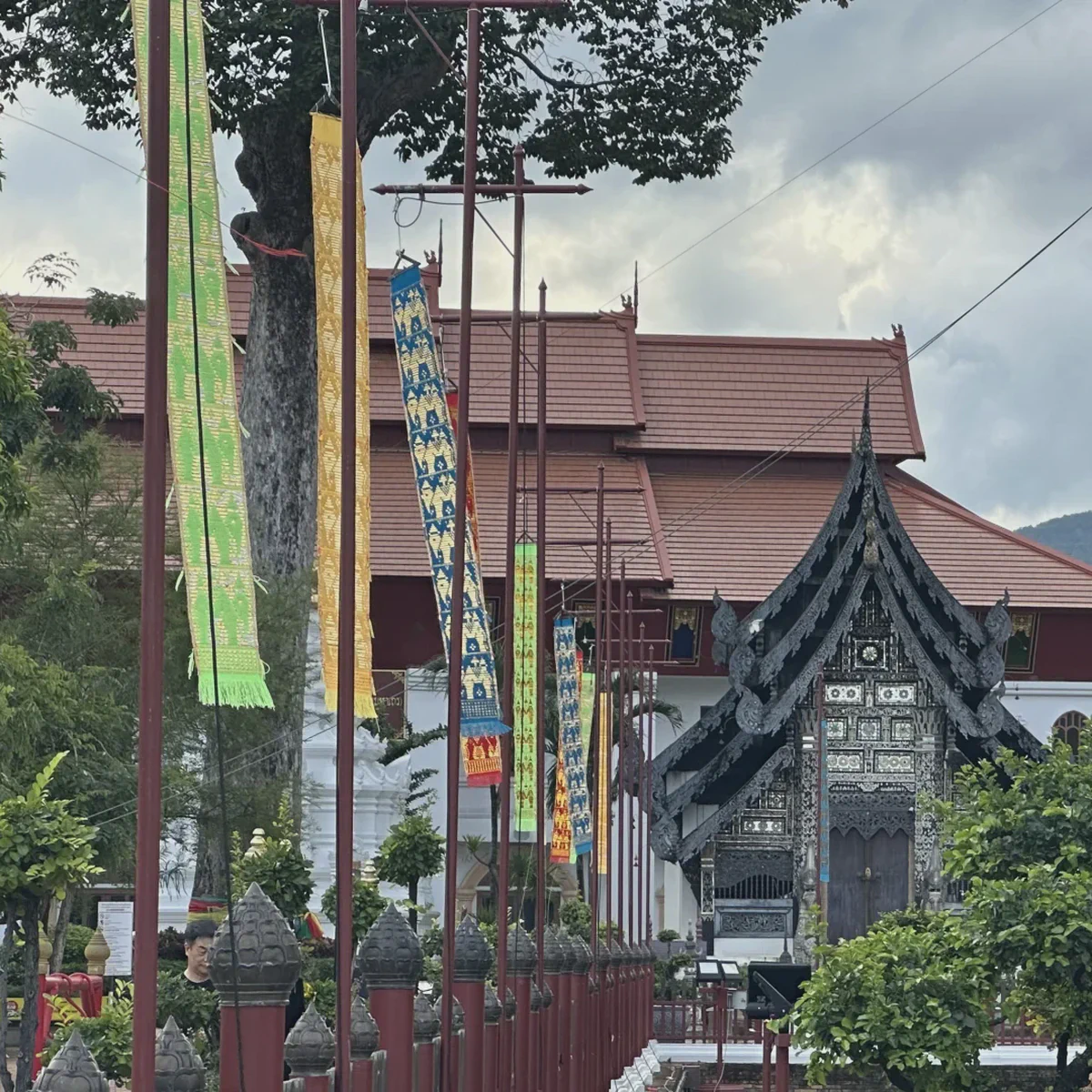
Wat Phra Singh is a major living-temple anchor at the western end of the Old City. On a first visit, it competes with Wat Chedi Luang for attention rather than automatically following it. Choose Wat Phra Singh for active worship spaces and religious art; choose Wat Chedi Luang for scale and visible historical layers.
Wat Chedi Luang is the strongest single Old City stop for scale and historical layers. Choose it when one temple needs to carry the morning. Pair it with a smaller nearby contrast, not five more famous names.
Wat Umong offers forest and tunnel atmosphere on the western side. Combine it with Baan Kang Wat, the Suthep Road area or another west-side activity. It is inefficient as a quick addition after an east-side market.
Baan Kang Wat is a craft-village and studio cluster whose value depends on current shop and workshop schedules. Go to browse or make something, not simply to photograph the wooden buildings.
Chiang Mai University and Ang Kaew Reservoir can provide an ordinary low-cost walk when campus access and current visitor rules allow. It is a pause and people-watching choice, not a substitute for the Old City’s cultural context.
Mae Rim and the Mae Sa Valley contain gardens, family attractions, waterfalls and commercial activity north of town. They require a route and transport plan. Do not use “Mae Rim” as though it were one attraction or combine every roadside stop into a single quality signal.
Night Safari, the zoo and animal cafés need a separate animal-welfare and family-value assessment. A child enjoying animals does not remove questions about show format, proximity, transport and late hours. These pages should be researched independently before the site recommends them strongly.
What works for children
Young children often respond better to one short temple, open space, food they can recognize and a hands-on activity than to a complete adult shortlist. Choose air-conditioned or shaded recovery before the child is already overwhelmed. A hotel pool can preserve the market evening better than another attraction.
School-age children may enjoy a cooking class with verified supervision, a simple craft workshop, Bua Tong with close adult control, or a nature stop whose vehicle hours remain reasonable. Ask about age rules, child restraints, toilets, changing facilities and whether the activity still works in rain.
Teenagers can help choose the trip’s one personal anchor—coffee, Muay Thai, a workshop, live music or a hike—rather than being carried through an adult temple schedule. Keep independent time inside a clear area and agree on data, money and a meeting point.
Do not advertise “family-friendly” as a universal property. Heat, stairs, feeding animals, late transport and consecutive road hours affect different ages differently. The right family plan is shorter, more reversible and more explicit about exits.
Free and low-cost hours
An inexpensive Chiang Mai day does not have to be a day of low-value filler. Walk one Old City cluster, sit at the moat or a permitted public space, browse a working market without buying, use a campus or neighborhood loop where visitor access allows, and choose one ordinary local meal.
Temples may be free, donation-based or ticketed in different areas; follow the current sign rather than a blog’s old price. A free visit still carries obligations around clothing, worship and photography. Markets cost nothing to enter but create spending pressure, while a remote “free” waterfall still needs a vehicle.
Calculate cost by complete outing. A free attraction across town can cost two rides and half an afternoon. A paid workshop beside the day’s route may deliver more learning per hour and require no extra transfer.
If smoke, rain or heat changes the day
During poor air quality, reduce strenuous outdoor time and choose a well-sealed indoor environment; a mountain is not automatically cleaner because it is higher. During heavy rain, avoid forest trails, waterfall climbing and long scooter rides until conditions are understood. During extreme heat, put the exposed walk first and stop before symptoms force the decision.
Useful replacements include a museum, cooking class, confirmed craft workshop, cinema, mall, massage from a clearly described provider or a short café-and-meal loop. Keep at least one replacement in the same part of town so weather does not create another cross-city journey.
Plan city time by area and energy
Old City: make one morning coherent
The Old City is where a first visit gains context, but it should be walked as a compact neighborhood rather than attacked as a list of temples. Choose Wat Chedi Luang or Wat Phra Singh as the main interior visit, connect one smaller site through shaded lanes, and stop before midday heat turns the rest into repetition.
The moat is a useful orientation device, but traffic and uneven pavements complicate apparently short walks. Begin near the side closest to the hotel. Do not pay for a ride across the Old City merely to reproduce a route read online. The Old City guide gives a heat-aware sequence and shows where a market or café can replace a third temple.
If temples are not the main interest, use the historic core for street scale, walls, food and one museum or cultural stop. A first trip does not fail because it includes only one prayer hall. It fails when everyone is too tired to notice the city around it.
Doi Suthep: go for the mountain decision
Doi Suthep is the obvious half-day outside the flat city core. Its value comes from the combination of mountain road, temple setting and possible view, not from being another item in a temple count. Put it on the clearest available morning, but understand that haze, cloud and seasonal smoke can still erase the panorama.
Choose shared transport for budget and flexibility when the return is clear; choose a driver when timing, family needs or additional stops justify the cost. Add Wat Pha Lat or a forest walk only when footwear, weather and energy support it. The Doi Suthep guide separates the road visit from the hike so the morning does not quietly become a full day.
After the mountain, recover on the western side of town. Nimman, Chiang Mai University surroundings or the hotel are more sensible than immediately crossing east for another major attraction.
Markets: let the weekday choose
Chiang Mai markets are not interchangeable. Jing Jai is strongest as a weekend morning of food, design and craft. Saturday Walking Street belongs to Wualai; Sunday Walking Street takes over the central Old City axis; Warorot is a daytime commercial market; the Night Bazaar is the most predictable evening fallback when the trip misses the weekend pattern.
Choose one morning market and one evening market at most. Repeated souvenir lanes begin to blur, and slow shoulder-to-shoulder walking is more tiring than the route distance suggests. The markets guide records the current planning differences and should be rechecked close to the visit for operating changes.
A market works best when it ends the day near dinner or the hotel. It works badly when the group crosses town after a mountain return only because the market appears on a generic checklist.
Craft and hands-on experiences
Chiang Mai becomes more memorable when one activity changes the traveler from observer to participant. At Wat Sri Suphan, the Lanna Craft Wisdom Museum officially describes live demonstrations and repoussé workshops; confirm the current session before planning a special journey. Baan Kang Wat and other craft-oriented spaces can support browsing and workshops, but opening days and individual studio schedules vary.
A cooking class can provide deeper instruction and a full meal, but pickup and market time turn it into a major block. A short workshop offers less breadth but fits more easily beside an Old City morning. Decide whether learning, making or simply browsing is the real goal.
Do not book a class because “hands-on” sounds responsible or culturally rich. Ask who teaches, what each participant actually makes, how many people share instruction and what happens if the session is canceled. The cooking-class guide gives the questions that separate instruction from a long group demonstration.
Food and coffee without chasing pins
Use meals to support the geography of the day. Eat khao soi or a quick rice dish near sightseeing, save a shared northern meal for an evening with time, and choose one market when grazing itself is the activity. The Northern Thai food guide explains dishes, ordering and dietary questions without turning the trip into a restaurant race.
Coffee should solve a real need: breakfast, serious coffee, an air-conditioned recovery hour or work time. Nimman has density, while the Old City is better when the café sits between planned stops. A remote photogenic café is a poor use of a short trip unless the setting is genuinely the day’s anchor. Use the café guide to choose by purpose and area.
Choose one nature day
Doi Inthanon offers elevation, waterfalls and trail choices at the cost of a long road day. Bua Tong Sticky Waterfall is more physical and can be shorter, but return transport and wet footing need more attention. Chiang Rai is a very long same-day outing; an overnight is usually the calmer choice when the temples and city, rather than the transfer, are the point.
Use the day-trip comparison to choose by road time, effort and the energy you want left for dinner. Do not book two major excursions back-to-back on a three- or four-day stay. The city itself needs at least one unhurried day.
When rain, smoke or fatigue weakens the chosen outdoor plan, replace it rather than trying to “make the most” of poor conditions. A workshop, cooking class or protected city afternoon is a real alternative, not a consolation prize.
Massage and recovery time count
A massage can belong in the itinerary when it answers accumulated fatigue, but it should not be treated as a generic gap filler. Choose a clearly described service, check duration and final price, and reserve enough time afterward that the group does not rush straight into another booking.
Travelers with injuries, pregnancy or health concerns should explain relevant needs and choose an appropriate service rather than assuming stronger pressure is better. A reputable business should be able to describe what it offers without vague medical promises.
The same principle applies to hotel pool time, laundry and an afternoon nap. They are not empty hours. On a hot first trip, protecting recovery can make the market or dinner later in the day genuinely enjoyable.
Evenings: music, markets or an early night
North Gate Jazz Co-Op provides an established live-music anchor near the Old City, but schedules and crowd levels change. Check the current program and choose dinner nearby. Nimman works for a more contemporary bar night; the Night Bazaar is easier for mixed groups who want food and browsing.
The Chiang Mai nightlife guide treats the return ride, final bill and next morning as part of the decision. One compact area is usually enough. Crossing town between venues rarely adds as much as it costs in waiting and energy.
A realistic 48-hour priority list

If you only have two full days, the most reliable set is:
- Old City walk in the morning.
- Doi Suthep early the next morning.
- One market evening.
- One “you” activity: cooking class, café loop, or a short nature half-day.
If the trip overlaps a weekend, use Jing Jai or a walking street instead of adding a separate shopping district. If rain or heat removes an outdoor block, a craft workshop, massage or mall-based Nimman afternoon is a genuine replacement—not a consolation prize.
For three days, add only one major excursion. Use the three-day itinerary to protect midday recovery and keep each day geographically coherent. If arrival is late or the group is jet-lagged, move the mountain morning later rather than beginning the trip with an alarm that nobody can enjoy.
A note on elephants
Elephant experiences are not interchangeable. Treat this as an ethical decision, not just an activity. “No riding” is insufficient if the day still revolves around touching, bathing or close feeding. Use the elephant-welfare checklist; if a venue cannot answer it clearly, skip the booking.
Marketing words such as “sanctuary,” “rescue” and “ethical” are not standards by themselves. Ask how elephants spend the day, whether contact is optional for the animals, how group sizes are managed and what the venue does when an elephant moves away. A shorter observation-led program can be more defensible than a full day designed around continuous visitor interaction.
What to cut when the plan is too full
Cut the second day trip first. Then remove the farthest café or restaurant, the third temple and any market that duplicates another market already chosen. Protect the accommodation decision, the return transport and the one activity each traveler genuinely cares about.
Use this final check:
- Does every day have only one major anchor?
- Are the optional stops in the same part of town?
- Is there a real midday recovery window?
- Can rain or smoke remove an outdoor block without breaking the whole trip?
- Is the final evening easy enough before departure?
The strongest Chiang Mai trip is not the one with the most pins. It is the one where the mountain, food, craft and city each receive enough attention to feel different.
Research notes
Official planning references
We use these primary references for the time-sensitive details relevant to this guide. Rules, prices and operating hours can change, so confirm the live information before you travel.
- Silver Temple — Lanna Craft Wisdom Museum
Details to check: Official information on live craft demonstrations and hands-on repoussé workshops at Wat Sri Suphan (checked 2026-08-26).
- North Gate Jazz — Official site
Details to check: Current confirmation of North Gate Jazz Co-Op and its location by the Old City (checked 2026-08-26).
Guide reviewed 31 August 2026. Confirm live rules, prices and operating details with the linked authority before travel.