Chiang Mai Old City Guide
Plan a Chiang Mai Old City walk by temple clusters, gates, market timing and shade, with a shorter route for heat, limited mobility or tired legs.


The Old City is best as a half-day walk with one major temple, not a race around the moat. Start at Wat Chedi Luang, add one smaller temple or museum, then stop before the pavement heat turns every doorway into work. Tha Phae Gate is useful for orientation and the Sunday market; it is not worth organizing the day around a staged pigeon photograph.
If this is your first morning, allow three to four hours including coffee, shade and a proper lunch. Return in the evening only when a market or specific performance gives you a reason.
Who this area suits
The Old City suits first-time visitors, temple-focused trips and travelers who want to walk out of the hotel without arranging the first ride of the day. It is less comfortable for a long midday walk, wheelchair users dealing with uneven pavements, or anyone trying to cover opposite gates with luggage.
It also suits travelers who value atmosphere between attractions: monks crossing a lane, incense escaping a doorway, breakfast under a fan and the moat appearing at the end of a street. Those small transitions disappear when every stop begins with a car pickup.
Staying inside the moat does not mean every address is equally convenient. The center reduces the distance to temples, while the east side helps with Tha Phae Gate and evening activity. The west side is closer to Wat Phra Singh and the road toward Nimman and Doi Suthep. A room beside a busy bar, school or Sunday market route can be much noisier than another one two lanes away.
If you have heavy luggage, confirm that a car can reach the door at your arrival time. Narrow lanes and temporary market closures can turn a short map distance into a sweaty walk. Use the Where to Stay in Chiang Mai guide to compare the Old City with Nimman and the riverside before choosing a base.
How to orient yourself
The moat forms a square around the historic core, but the modern city continues in every direction. Tha Phae Gate anchors the east; Suan Dok Gate marks the westward route toward Nimman; Chang Phuak Gate sits to the north; and Chiang Mai Gate opens toward the south-side food market. These are useful reference points, not four mandatory attractions.
Inside the moat, Ratchadamnoen Road provides an east–west spine between Tha Phae and the Wat Phra Singh side. Wat Chedi Luang lies close to the middle and makes the strongest first anchor. Save your hotel pin and one gate in your phone, but let the smaller lanes supply the texture.
Do not plan to walk the full moat merely because the outline looks compact. The edge roads carry traffic, crossings can be awkward and shade is inconsistent. A route through the interior is usually calmer; take a short ride when your next destination sits on the opposite side and your energy is already falling.
A realistic half-day loop

- Start at Wat Chedi Luang: the ruined chedi gives the walk a clear anchor and enough scale that you do not need to collect every smaller temple.
- Add one nearby stop: Wat Phan Tao, a museum or a quiet working temple is enough. Choose according to what is open and how much sun you have already absorbed.
- Pause rather than push west: take a shaded coffee break or lunch before deciding whether Wat Phra Singh still feels appealing.
- Finish near your base: if the hotel is on the east side, end toward Tha Phae; if it is on the west side, do the reverse.
For a shorter mobility- or heat-conscious version, take a vehicle to Wat Chedi Luang, explore the central compound, then ride to one second stop. The moat is compact on a map, but crossings, broken pavement and traffic make a full square less graceful than it looks.
Begin early enough that the first temple still feels quiet and physically comfortable. Dress for active religious spaces—shoulders and knees covered is the respectful default—and carry footwear that is easy to remove and replace. Keep water accessible, but do not treat temple courtyards as picnic grounds.
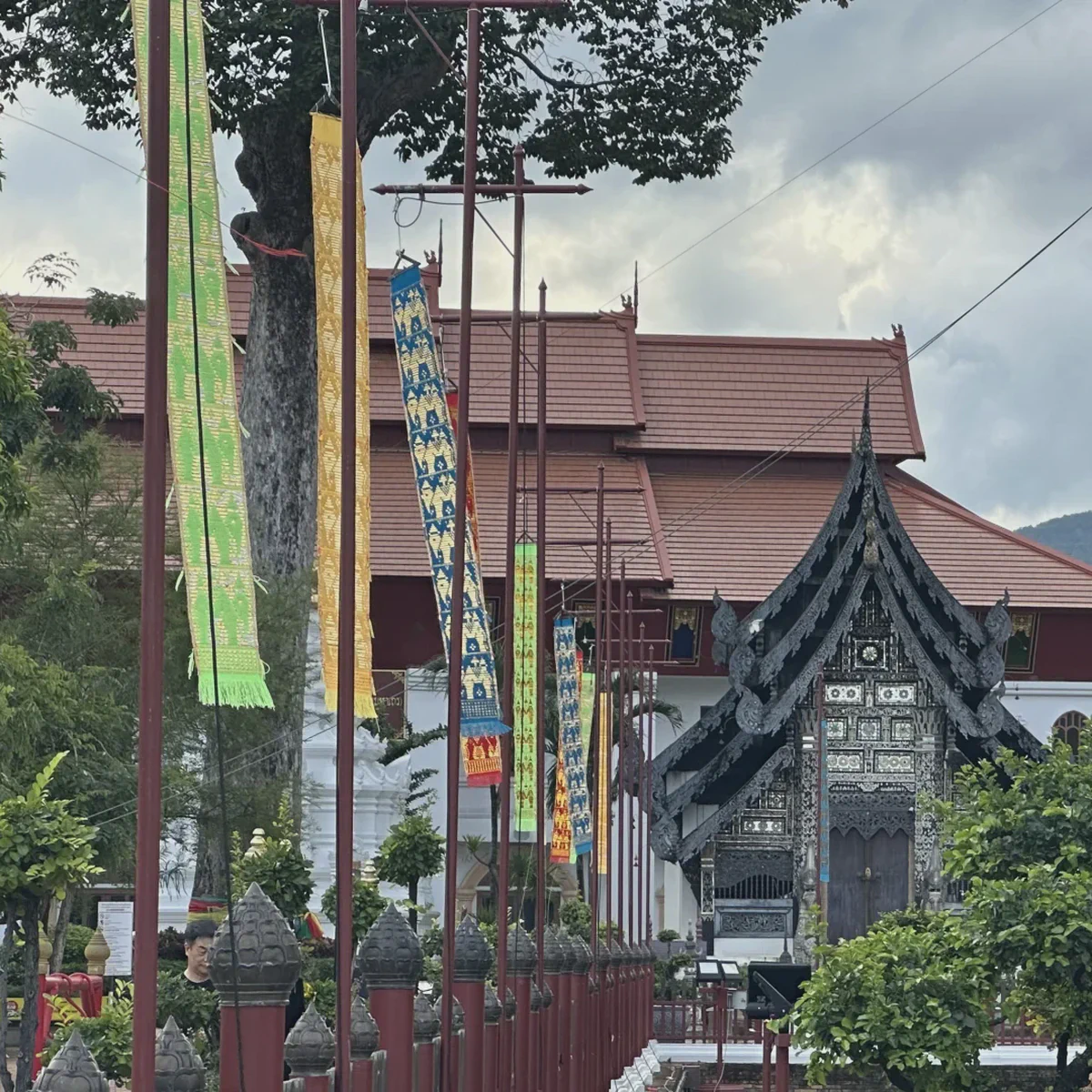
At Wat Chedi Luang, give the historic structure time rather than walking directly to the next map pin. Read the site information, notice how the active temple and old chedi occupy the same compound, and step aside when worship or ceremonies are taking place. Photography rules can differ by building and event; signs and staff instructions outrank an old blog post.
After the first major stop, choose one contrast. Wat Phan Tao offers a different scale nearby; a museum provides interpretation and indoor time; a working neighborhood temple shows everyday religious life without another headline queue. If you continue to Wat Phra Singh, make it the final cultural stop before lunch rather than the beginning of a second temple marathon.
The best pause is often a simple shaded café near the route, not the city’s most famous one. Sit long enough for your body temperature and attention to recover. If you are still reading plaques and noticing details afterward, continue. If every courtyard has begun to look the same, eat and stop.
Read the Old City as a living center
The moat and remaining walls make the square easy to recognize, but the Old City is not a preserved pedestrian quarter. Schools, monasteries, homes, guesthouses, traffic and tourism occupy the same lanes. The point of walking is to notice how those uses overlap, not to imagine the area has stopped in the Lanna period.
Wat Chedi Luang shows this overlap clearly: a monumental damaged chedi, active prayer halls, monks and visitor circulation share one compound. Wat Phra Singh provides a western religious anchor, while gates connect the inner streets to markets and modern neighborhoods outside. The physical remains are only one layer; ceremonies, school traffic and an ordinary lunch are part of the place too.
The city pillar, royal and monastic histories, and changes to the walls deserve interpretation, but one walking article cannot responsibly compress every century into a paragraph. Use on-site material or one museum to add context, then let the route remain practical. A confident invented legend is worse than admitting that a detail needs a better source.
Add a museum when context matters
The Three Kings Monument area groups several cultural institutions close enough to work as a single decision. Choose one based on current exhibitions, language support, air-conditioning and the question you want answered. Do not buy multiple tickets merely because the buildings are adjacent.
A museum is most useful after the first temple, when names and architectural forms have something concrete to attach to. It is also a strong midday replacement when rain, heat or smoke weakens a long walk. Check current opening days close to the visit; cultural institutions often have weekly closure patterns that a static itinerary misses.
Families can use a museum as a shorter interpretive stop rather than extending another temple explanation in the sun. Travelers with limited mobility should ask about lifts, thresholds and accessible toilets at the exact building, not infer access from the plaza outside.
Morning, afternoon or evening?
Morning is best for temples, longer walks and quieter observation. Eat before the heat becomes the final decision. Afternoon works for a museum, massage, café or one preselected temple reached by vehicle; it is the weakest time for a full moat circuit. Evening belongs to food, a small bar, an illuminated street or the market that actually operates that day.
Sunset is not a reason to remain outside for six continuous hours. Return to the hotel after lunch, then re-enter from the side closest to the evening plan. Two short visits often reveal more than one exhausted day.
If the trip includes only a late arrival, use Tha Phae or dinner for orientation and protect the proper Old City walk for the next morning. If departure follows immediately after lunch, check out, store luggage and keep the final loop close to the hotel rather than carrying bags across broken pavement.
Heat, rain and limited-mobility alternatives
Chiang Mai’s Old City is walkable in distance but inconsistent in surface. Pavements narrow, disappear or force pedestrians around parked vehicles. Temple thresholds and internal steps vary, and shade can vanish between compounds. A wheelchair-accessible vehicle route with two preselected stops is more realistic than promising a seamless walking circuit.
In hot weather, place outdoor temples in the morning and reserve the middle of the day for lunch, a museum, a massage or the hotel. An umbrella provides shade but does not remove humidity. Refill water and make the decision to stop before fatigue becomes nausea or irritability.
During heavy rain, wait under proper shelter rather than rushing across slick bricks. Pickups may be slower and drivers may avoid a flooded or crowded lane, so move the meeting point to a recognizable gate or wider road only when it is safe. Waterproofing a phone and keeping a dry layer in the bag matter more than preserving the exact order of the loop.
Families can shorten the route to one major temple, a snack and a courtyard where children can pause without disrupting worship. Explain shoes and quiet voices before entering rather than correcting them repeatedly inside. A shorter respectful visit is better than forcing one more stop after everyone is tired.
Tha Phae Gate without the pigeon performance
Tha Phae Gate is a meeting point and the eastern start of Sunday Walking Street. Stop for the brick wall, open square and orientation, then move on.
Chiang Mai authorities currently ask visitors not to feed pigeons in public areas around the gate because of hygiene and landscape-management concerns. Skip handlers who scatter food or frighten birds into flight for photographs. The result is staged, the birds absorb the disturbance, and the municipality is trying to reduce the activity rather than encourage it.
If you want a photograph, use the wall and morning light. You do not need airborne pigeons to prove you reached Chiang Mai.
Evening and Sunday road closures

On Sundays, Ratchadamnoen Road becomes the city’s largest walking street. It is convenient if you already stay inside or beside the moat, but vehicle pickups and hotel access can change around the closure. Read the Chiang Mai market guide and choose a pickup point outside the densest pedestrian zone.
The Sunday market changes the Old City from a wandering neighborhood into a long, busy pedestrian corridor. Arrive before the deepest crowd if you want to see crafts, eat before hunger dictates every decision and agree on a meeting point if the group separates. Do not assume a ride can collect you from the same hotel door used in the morning.
On an ordinary weekday evening, the area is gentler. Choose a meal, a massage or one small bar and allow the lanes to be the experience. Not every night needs a market. Staying inside the moat is valuable precisely because you can finish dinner and walk a short distance home instead of manufacturing another attraction.
Check current event and road information close to the day. Festivals, ceremonies and public works can alter access. Hotel staff usually know the practical pickup edge better than a map app because they see where drivers actually stop.
Food, cafés and temple etiquette
Use meals to divide the day rather than collecting restaurants across town. Breakfast near the hotel, lunch after the temple loop and dinner near the evening plan keep the Old City walk coherent. For regional dishes and ordering context, see the Chiang Mai food guide.
At temples, speak softly, remove shoes where indicated and avoid blocking worshippers for photographs. Do not climb on old structures or sit with feet pointing toward Buddha images. Ask before photographing monks at close range. Some buildings may restrict entry by gender or close for religious activity; respond to the place in front of you rather than insisting that a published itinerary be completed.
Ordinary streets also deserve care. Doorways may belong to homes, schools or working monasteries, not photo sets. Stand aside from traffic, keep drones out unless explicitly permitted and buy something if a small business is providing your prolonged shade or seating.
What to avoid
Avoid zig-zagging between gates, visiting temples through the hottest hours and treating every highly rated café as a required stop. The Old City becomes more memorable when one ruined chedi, one shaded courtyard and one meal have time to register.
Before leaving the hotel, choose one anchor, one optional second temple and the gate or road where the walk will finish. Carry covered clothing, water, sun or rain protection and enough cash for small purchases. Save the hotel address in Thai and identify a wider pickup road if your lane becomes inaccessible.
The Old City does not need to occupy every day. Give it one attentive morning and, if Sunday timing works, one market evening. Then use Nimman, the riverside or the mountains for contrast. The result feels more like Chiang Mai and less like a sequence of temple names.
Research notes
Official planning references
We use these primary references for the time-sensitive details relevant to this guide. Rules, prices and operating hours can change, so confirm the live information before you travel.
- Tourism Authority of Thailand — Wat Chedi Luang Varavihara
Details to check: Official attraction reference for the central Old City anchor (checked 2026-08-26).
- Chiang Mai Provincial Public Relations Office — Tha Phae Gate public-space notice
Details to check: Municipal request not to feed pigeons at Tha Phae Gate for hygiene and public-space management (checked 2026-08-26).
Guide reviewed 30 August 2026. Confirm live rules, prices and operating details with the linked authority before travel.