
Doi Inthanon Day Trip from Chiang Mai: Route, Weather and Trade-Offs
Plan a Doi Inthanon day trip from Chiang Mai by transport, pace, mountain weather, park fees and the stops to cut when time or conditions change.


Doi Inthanon deserves a full day. Reaching the park is only the beginning: the summit forest, twin pagodas, waterfalls and trailheads are spread along a mountain road, so a driver who moves with you inside the park matters more than a cheap transfer to the gate.
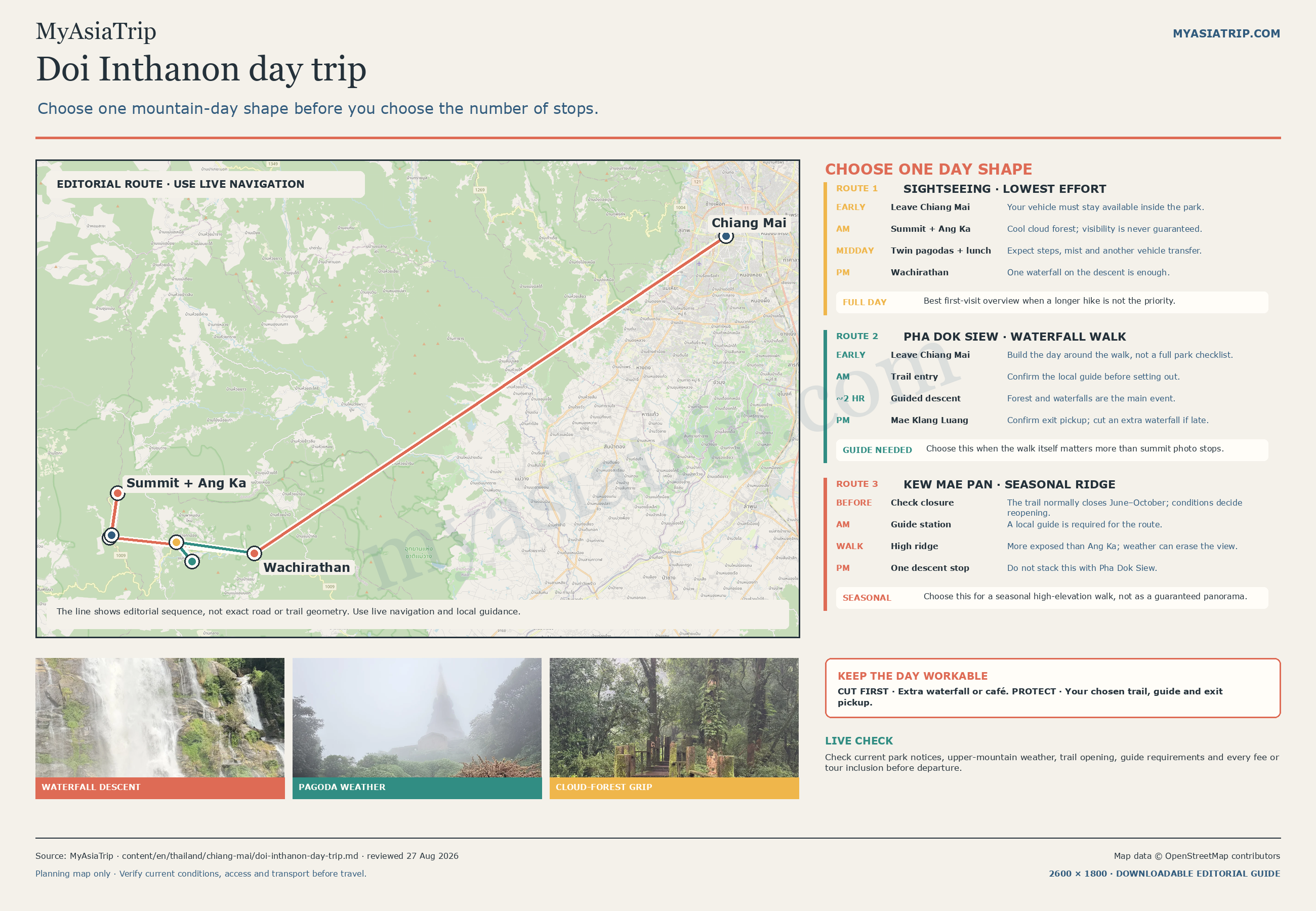
For a first visit, choose either a sightseeing route with the summit, Ang Ka, pagodas and one waterfall, or a walking route built around Pha Dok Siew or Kew Mae Pan. Trying to do both named trails and every roadside stop turns a cool mountain day into a timetable.
Choose your transport first

Transport controls how much of the park you can actually see:
- Group tour: best for a solo traveler who wants the route, tickets and lunch organized. Check which trail—if any—is included rather than assuming “nature walk” means a two-hour hike.
- Private driver: best for couples, families and anyone who wants to cut a stop without negotiating with a group. Confirm that the driver stays for the movements inside the park.
- Self-drive: only if you are comfortable with a long mountain day, changing visibility and the concentration required on the return.
There is no useful city-style hop-on transport between the main sights. A drop-off at the park entrance does not solve the day.
Before paying, ask for the pickup area, actual vehicle, group size, park movements and approximate return. A tour that says “Doi Inthanon transfer” may not include the trail you saved. A private-driver quote may exclude entrance tickets, the twin-pagoda area, a local guide or overtime. Put the inclusions in writing so the road morning does not begin with a negotiation.
Families should confirm child restraints and whether the itinerary can stop for toilets. Travelers with limited mobility need distances and steps at each named stop, not a general promise that the tour is easy. The summit marker is close to vehicle access, while trails, pagoda gardens and waterfall viewpoints ask for different amounts of walking.
If you self-drive, plan the return as carefully as the climb. Mountain mist, wet roads and fading concentration make a late descent more demanding. Do not use a scooter unless you are properly licensed, insured and already experienced on comparable roads.
Compare Doi Inthanon tours by the walk you are actually buying
| Doi Inthanon tours | Day format | Suits | Main trade-off |
|---|---|---|---|
| 7.5-hour nature-and-culture highlights day · shortest shared option | Main sights and general mountain walking | Visitors wanting a manageable overview without a named two-hour trail | Confirm the live stops, admissions and whether the shorter return is genuine |
| 9.5-hour highlights circuit · group advertised up to 20 | Summit, waterfalls, village and pagoda-style stops | Budget travelers who want admissions and logistics organized | Twenty people may not feel small; the nature walk is not a substitute for a named trek |
| 9.25-hour Ang Ka and waterfall route · shared or private choice | Sightseeing-led day with group-format and pickup options | Families or couples deciding whether private pacing is worth the premium | Select the exact tour type, language, tickets and pickup rather than relying on the page headline |
| Ten-to-eleven-hour mountain day · named two-hour scenic trek | Trek-led route plus major park sights | Active travelers for whom walking is the non-negotiable anchor | Trail name, local guide, closure substitute, wet-ground difficulty and long return |
| Nine-hour private hiking day · hotel pickup and pacing control | Private mountain route for a couple, family or friends | Groups needing toilet stops, slower pacing or a focused hike | Highest price; trail, guide, seasonal access and included fees require written confirmation |
| Your priority | Best starting choice |
|---|---|
| Lowest-effort first overview | Shorter 7.5-hour highlights day |
| Lowest shared price with a broad checklist | 9.5-hour group circuit after accepting the possible 20-person cap |
| Family pace but mostly sightseeing | Shared-or-private Ang Ka route, priced in both formats |
| A real two-hour walk | Named-trek day; reject any replacement described only as a “nature walk” |
| Private control on wet ground or with mixed fitness | Private hiking day after the exact trail is confirmed |
A realistic pace (so it still feels like a day off)

Sightseeing route: lowest physical effort
Start with the summit area and short Ang Ka boardwalk, then choose the twin pagodas, lunch and Wachirathan Waterfall on the descent. This route still involves steps, damp paths and repeated vehicle stops, but it avoids committing the day to a longer trail.
The summit is a geographic milestone rather than a guaranteed panorama. Forest and mist are part of the high point, and visibility can be limited. Walk the Ang Ka boardwalk slowly: moss, moisture and cooler air provide the experience even when the sky is white.
At the twin pagodas, gardens and stairs can take longer than the photo stop suggested by a tour list. Cloud may open and close around the viewpoints. Give the area time if it is your priority, or cut it cleanly when mobility or weather makes the terraces uncomfortable.
Wachirathan makes a practical descent stop because the waterfall is powerful and relatively accessible from the road, but spray can soak surfaces and people. Keep a dry layer in the vehicle and use shoes that remain secure when wet.
Pha Dok Siew route: forest, waterfall and village
Pha Dok Siew is the better fit when you want the walk itself to be the anchor. The route is commonly run as an approximately two-hour guided descent through forest and past waterfalls toward Mae Klang Luang. It is not a quick add-on between photo stops. Ask whether the local guide, pickup at the trail exit and village stop are included.
The descent can be easier on the lungs than a climb but harder on knees and balance. Roots, mud, agricultural paths and waterfall spray make grip important. Use the guide’s pace, keep hands free and do not race ahead for an unobstructed photograph.
The community element should be more than a sales label. Ask who provides the guide and what is included at Mae Klang Luang. A coffee or village stop can offer context and rest, but it should not be squeezed into ten minutes because the tour has overfilled the afternoon.
If heavy rain has affected the route, accept a closure or change. A trail being the reason you booked does not make unstable conditions negotiable. The operator should explain the replacement before departure whenever possible.
Kew Mae Pan route: seasonal ridge walk
Kew Mae Pan is the higher, more exposed scenic trail. A local guide is required, and the trail is normally closed from June through October, reopening in November if park conditions allow. If your trip falls in the closure period, do not book a generic “Doi Inthanon hike” without seeing the actual replacement route.
When open, this is the choice for a purposeful hike rather than a collection of roadside sights. Conditions can shift between clear ridge views, cold wind and cloud. Carry a warm layer and rain protection even if Chiang Mai was hot at breakfast.
Confirm the current opening with the park close to the visit. Annual patterns are not a promise for a specific date, and weather or maintenance can delay access. A responsible operator should not guarantee the trail before the official status is clear.
Whichever version you choose, leave central Chiang Mai early and expect the return to reach into the evening. Keep dinner easy; this is not the day for a late cooking class or a market on the opposite side of town.
Mountain weather and seasonal expectations
Doi Inthanon can be dramatically cooler than Chiang Mai, especially early at the summit. That contrast is part of the appeal, but it also means city forecasts are inadequate. Check high-elevation conditions and bring a layer you can remove as the route descends.
The dry-season months can offer clearer mornings, while haze may reduce distant views later in the season. The wet season brings dense green landscapes, stronger water and more mist, alongside slippery surfaces and possible trail disruption. None of these seasons guarantees a specific photograph.
Build the day around experiences that still work in imperfect visibility: cloud forest, a guided walk, the sound of a waterfall and the change in vegetation. If a tour sells only the panorama, it is selling something the operator cannot control.
Lunch, toilets and pacing
Tour lunches vary from a simple set meal to a local stop. Ask what dietary requests can realistically be handled and carry a backup snack if an allergy or strict diet makes uncertainty risky. Do not assume every small mountain restaurant can guarantee separation from shared ingredients.
Use toilets when they are available rather than waiting for the next named attraction. Keep small cash and tissues accessible. Families and older travelers may need more transition time than a fast group schedule allows; this is a reason to choose a private route, not to hurry them at each stop.
Repeatedly entering and leaving the vehicle creates fatigue of its own. Limit the route to stops with distinct purposes. Summit forest, a named trail and a waterfall tell a coherent story; adding three more roadside pauses may only create more doors, shoes and headcounts.
Understand the three upper-mountain stops
The summit marker is brief. It records the highest point but is not automatically the most scenic view. Treat it as an orientation stop, not the emotional center of the day.
The Ang Ka nature trail is the compact cloud-forest experience near the summit. Boardwalk, moss, damp air and changing visibility make it valuable even without a panorama. It suits the lower-effort route, though wet surfaces and steps still need attention.
The twin pagodas and gardens provide designed views and a more formal stop. Weather can turn the landscape from broad and bright to clouded in minutes. Confirm whether the separate access and transport arrangement is included in the tour rather than assuming the national-park ticket covers every element.
These three stops can fit one sightseeing morning because they serve different purposes. The mistake is adding a long named trail, several waterfalls, a village, lunch and every viewpoint without deciding which part deserves unhurried time.
Pha Dok Siew or Kew Mae Pan?
Choose Pha Dok Siew when forest, waterfall, agricultural landscape and a village-linked route matter. The walk typically functions as a one-way experience with transport meeting the group later, so the driver and guide coordination is part of the booking. Rain changes mud, water and footing.
Choose Kew Mae Pan when an upper-elevation ridge and seasonal opening pattern are the point. It requires the official trail to be open and a local guide under current rules. Exposed sections, wind, cloud and a closure season make it a specific hike rather than a generic park inclusion.
Neither is “the better trail” for everyone. Pha Dok Siew often offers a more varied cultural and waterfall sequence; Kew Mae Pan offers the high-mountain landscape when conditions and season cooperate. Do not book a listing that promises “trekking” without naming the route.
Questions for a tour operator or driver
- Which named trail is included, and what replaces it if closed?
- Is the local guide included in the quoted price?
- Are national-park, vehicle and pagoda-area charges all included?
- How many people share the vehicle, and are seat belts provided?
- How much walking is involved outside the named trail?
- Where and when is lunch, and can dietary needs be confirmed?
- What is the latest realistic return to the hotel?
- Which optional stop is cut first when weather or traffic slows the day?
Clear answers protect the route better than a promise to visit ten places. Save them in writing because the guide meeting the group may not have created the online listing.
What to pack
- A light warm layer. The city can be above 30°C while the upper mountain is cool enough for a jacket; check the summit conditions, not only the Chiang Mai forecast.
- Rain protection and shoes with grip. Mist, spray and wet boardwalks matter even when the city morning looks dry.
- Water, a snack and any motion-sickness medication you need before the winding road.
- Small cash for park or guide payments that may not accept your preferred digital method.
- Sun protection for exposed gardens and a dry bag or plastic pouch for phone and documents.
- Any personal medicine, including motion-sickness treatment taken before the winding section begins.
- A saved hotel address and charged battery for the evening return.
Entrance fees and opening patterns (check before you go)
Doi Inthanon is a national park: pay the entrance fee and keep the receipt for later checkpoints. The maintained park reference checked in August 2026 lists 300 THB per foreign adult and 150 THB per foreign child, plus a vehicle fee such as 30 THB per car. The twin pagoda garden and local trail guides may involve separate charges; confirm inclusions before booking a tour.
Individual sites and trails have their own operating patterns. Check the park’s current notices before an early departure, especially in wet weather or around the Kew Mae Pan reopening date.
Ask the operator to separate mandatory charges from optional stops. “Tickets included” should specify the national-park entrance, vehicle fee, pagoda area and local trail guide. Keep receipts because checkpoints inside the park may ask to see them again.
Prices and access rules can change. The official park notice and the signs on the day take priority. If a tour’s old listing conflicts with current instructions, do not pressure staff or guides to reproduce the outdated promise.
Sample day structures
For a first-time sightseeing day, leave Chiang Mai early, visit the summit and Ang Ka, continue to the pagodas, stop for lunch and choose one waterfall on the descent. Protect the upper mountain morning and cut a lower stop if traffic builds.
For a Pha Dok Siew day, make the guided trail the anchor, arrange pickup at the exit and use one or two short scenic stops around it. Do not bolt the full sightseeing circuit onto the walk. Wet shoes and tired knees need time, food and an uncomplicated ride home.
For a Kew Mae Pan day when officially open, confirm the guide and trail first, then add only what remains comfortable. Start early enough to avoid making the exposed walk a rushed midday exercise. Keep a weather alternative in the same park rather than replacing it with an even longer road detour.
All three versions should end with a flexible return. Chiang Mai traffic and group logistics can shift arrival, so tell the hotel if a check-in or arrangement depends on a specific hour.
Cut list (when the day gets slow)
If the day starts slipping, protect the one thing you came for.
- On a hiking day, cut an extra waterfall or coffee stop before shortening the trail into a rush.
- On a sightseeing day, keep either the pagodas or summit forest as the anchor, then one waterfall.
- Do not add Mae Ya Waterfall simply because it is famous; its detour can unbalance a route focused on the upper park.
Compare the physical and transport cost with the shorter Bua Tong Sticky Waterfall trip before committing.
Do not cut safety margins, the local guide or the driver’s reasonable return limit. Cut optional viewpoints, shopping and repeated waterfalls first. If weather closes the anchor trail, choose a coherent sightseeing day or reschedule rather than trying to find an unofficial entrance.
Before booking, decide which single element makes Doi Inthanon worth the road for you. Confirm the route, fees, trail status, clothing and return. With that discipline, the park feels like a mountain day rather than a frantic transfer between pins.
Compare the road commitment with the full Chiang Mai day-trip guide, confirm the vehicle logic in Getting Around Chiang Mai, and leave the following evening flexible in the three-day itinerary.
Research notes
Official planning references
We use these primary references for the time-sensitive details relevant to this guide. Rules, prices and operating hours can change, so confirm the live information before you travel.
- Department of National Parks (DNP) — Doi Inthanon National Park
Details to check: Official park overview, contacts, and general visit notes (checked 2026-08-25).
- Thai National Parks — Doi Inthanon National Park
Details to check: Entrance fees, visitor centre hours, guide requirements, and seasonal trail closure notes (checked 2026-08-26).
- Thai PBS North — Pha Dok Siew Nature Trail
Details to check: Current trail character, waterfall route and local community-guide model (checked 2026-08-26).
Guide reviewed 30 August 2026. Confirm live rules, prices and operating details with the linked authority before travel.