
Chiang Mai to Pai: Minivan, Private Transfer or Self-Drive
Choose the Chiang Mai–Pai route by curves, motion sickness, luggage, terminals and group cost—not just the cheapest seat or fastest route shown online.


For most solo travelers and couples, a scheduled Prempracha minivan is the practical Chiang Mai–Pai default. A private car or van becomes rational when a family needs a confirmed child seat, a group can divide the vehicle quote, luggage will not fit a shared van, or motion-sensitive passengers need control over stops. Self-driving belongs only to properly licensed, insured and confident mountain-road drivers. A scooter should not be the beginner default: the road’s sustained curves, changing weather and traffic demand more than being able to rent one. Whatever mode you choose, confirm the exact terminal, luggage allowance and cancellation terms on the ticket—not in an old blog post.
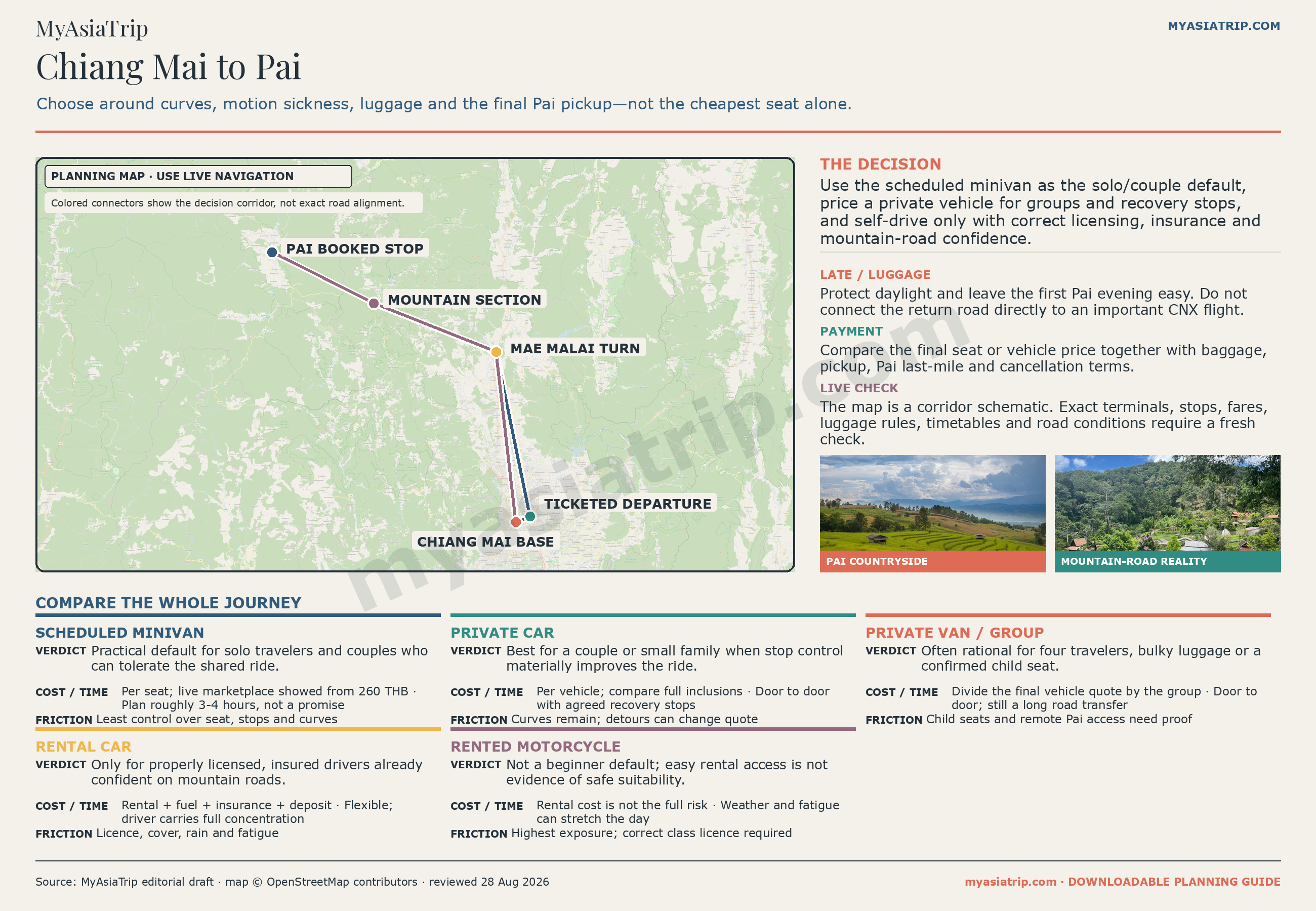
Comparing Your Transport Options: Chiang Mai to Pai

Choosing the route depends on group size, luggage, tolerance for sustained curves, legal driving status and what happens after arrival—not only the lowest seat price.
| Feature | Scheduled Minivan | Private Car / Van | Self-Drive (Car/Motorbike) |
|---|---|---|---|
| Best For | Solo travelers, couples, budget travelers. | Families, small groups, those with large luggage, motion-sensitive travelers who want control. | Confident, licensed, experienced mountain drivers seeking maximum flexibility. |
| Pickup Point | Exact operator station or pickup point shown on the live ticket | Hotel door or other confirmed location | Rental office, after inspection and paperwork |
| Arrival Point | Exact Pai stop shown on the live ticket; remote stays need another transfer | Hotel door only if the quote includes its location | Accommodation after confirming parking and road access |
| Price Basis | Per person, per seat. | Per vehicle for the entire trip. | Daily rental rate + fuel + insurance. |
| Luggage | Usually one standard bag per person; oversized items may require an extra fee or a second seat. Verify before booking. | Generous, but must be confirmed with the operator based on vehicle size and passenger count. | Limited by vehicle size. |
| Stops | Operator-controlled; do not assume timing or number | Agree number, waiting and detour charges before payment | Flexible, but every stop lengthens a tiring road day |
| Motion Sickness | Least control over speed, seat and stops | More control, but the road still curves | Driver controls pace but also carries the full concentration burden |
| Who Should Avoid | Those with severe motion sickness, large families, travelers with bulky luggage (e.g., bicycles, surfboards). | Budget-conscious solo travelers. | Inexperienced drivers, those without a valid IDP/Thai license, nervous drivers. |
The Scheduled Minivan Experience
This is the most common way to travel between Chiang Mai and Pai. It’s a shared experience that balances cost and relative speed.
Operators and Booking
Prempracha Transport is a primary operator for this route. A check of their official site on August 28, 2026, confirmed they operate scheduled services and provide information on their timetables, fares, and luggage policies. Their guidance is that travelers should always check the official website for the most current service information before traveling.
You can book tickets in several ways:
- At the exact Chiang Mai station and operator counter shown in the current booking.
- Through the operator’s official website.
- Via third-party online booking platforms.
A cross-check of online booking sites on August 28, 2026, showed bookable one-way fares starting from 260 THB. It is critical to understand this is a live marketplace starting price. The final price at the counter or after fees on a booking platform may be different. Always compare the final price, luggage allowance, and cancellation policy before paying.
The Journey and Terminals
- Departure: Arrive early enough to find the correct operator and bay without rushing. A hotel pickup may include a collection window and other stops; the confirmation must say whether it replaces or merely feeds the terminal departure.
- The ride: Use roughly three to four hours as a planning range, not a timetable. Traffic, weather, passenger stops and road conditions can lengthen it.
- Arrival: Confirm the named Pai stop before paying. A central guesthouse may be walkable; a riverside, hillside or valley stay can still require a separate pickup whose operating hours and price need confirmation.
The Private Transfer Option
For a premium, you can hire a car or a larger van with a driver. This is often the best choice for families and groups.
Calculating the Cost
While the upfront cost is much higher than a minivan seat, the math can work out for a group. To calculate the true value, divide the total vehicle price by the number of travelers. Factor in these benefits:
- Door-to-door service: No need to travel to/from bus terminals.
- Luggage capacity: Essential if you have more than one standard suitcase per person.
- Child Seats: Private services are your best bet for securing a vehicle with pre-booked child safety seats. This must be confirmed at the time of booking.
- Stop control: You can negotiate rest or recovery stops, but photo detours and waiting time may change the quote. Put the agreement in writing.
When the private-transfer math starts to work
Do not compare one private-vehicle total with one minivan seat. Compare complete door-to-door costs for the same group:
private vehicle + child seat + pickup-zone fee + agreed stops
versus
minivan seats + ride to the Chiang Mai departure point + Pai arrival transfer + any luggage charge
For a solo traveler, the shared van usually wins. For four travelers with bags, a child seat and a remote Pai hotel, the difference can narrow even before you price the easier pickup. Ask for the final vehicle model or passenger/luggage capacity; “van” is not a useful capacity guarantee by itself.
Book private transfers through your hotel, a reputable travel agent in Chiang Mai, or a trusted online platform. Always confirm the final price, what it includes (fuel, tolls, driver), and any fees for extra waiting time or detours.
The Self-Drive Challenge
Renting a car gives route control but also transfers every road, parking, weather and insurance decision to you. A motorcycle raises the exposure further and should not be chosen merely because rental is easy.
Legal and Insurance Requirements
Before you rent, understand the legal framework. According to official Thai government guidance, foreign drivers must have a valid license from their home country and one of the following:
- An International Driving Permit (IDP) valid for the correct vehicle class.
- A valid driving license from an ASEAN country.
Your rental agreement is not a substitute for a valid license. In the event of an accident, if you are not properly licensed, your travel and vehicle insurance may be voided. Thoroughly check the insurance policy offered by the rental company, paying attention to the deductible and coverage limits.
Road Conditions and Safety
- The curves: The mountain section demands sustained concentration. Do not build the day around a social-media curve count; build it around alertness, daylight and recovery.
- Daylight and Weather: Only drive this route during daylight hours. Rain can make the road surface slippery, and visibility can be poor in the mountains. In the rainy season, be aware of the potential for landslides or road disruptions.
- Flexibility: Keep the first Pai evening easy. Do not pair the transfer with a non-refundable timed activity, and keep your Chiang Mai itinerary flexible around the travel day.
Before accepting a rental, photograph the vehicle, record existing damage, check tires and lights, understand the deposit, and read what the insurance excludes. Confirm that your license/IDP covers the vehicle class; a car entitlement does not automatically legalize a motorcycle. If rain, fatigue or confidence changes, switching to a driver is a planning decision—not a failure.
Essential Pre-Trip Checklist
Before booking a minivan seat or private car, ask these questions.
- Booking:
- What is the final, all-inclusive price?
- What is the exact departure point and time?
- What is the exact arrival point?
- What is the luggage allowance (in pieces and/or kilograms)? What is the fee for an oversized bag?
- What is the cancellation and refund policy?
- For Motion Sickness:
- Discuss appropriate over-the-counter medication with a pharmacist or your doctor before your trip.
- Eat a light meal before you travel.
- Book a seat closer to the front of the minivan if possible.
- Avoid reading or looking at your phone during the journey.
- Keep water handy and focus on the horizon.
- Return journey:
- When your preferred departure time matters, book the return as soon as the outbound plan is stable and recheck the current operator conditions.
- Return to Chiang Mai the day before a consequential flight. A same-day mountain-road connection leaves traffic, weather and a missed departure in one fragile chain. Use the CNX airport guide to plan the final transfer separately.
Motion sickness: plan the body, not only the ticket
The route can be unpleasant even for travelers who are comfortable on ordinary buses. Choose an earlier departure when it protects daylight and leaves recovery time after arrival. Eat lightly, keep water accessible, avoid reading or scrolling and look outward when that helps. If medication may be appropriate, discuss the choice, dose and interactions with a clinician or pharmacist before travel rather than borrowing a tablet at the terminal.
Seat requests are not guarantees. Ask the operator what can actually be selected, arrive early and do not assume the front seat is available or safer. A private vehicle permits more stops, but it does not straighten the road. If severe motion sickness would make the journey unmanageable, reconsider whether Pai adds enough value to the northern route.
Luggage and ticket terms that change the decision
A marketplace may sell the seat while the operator controls the bag. Before paying, record the included pieces or weight, the handling of large suitcases, bicycles or sports gear, and whether an extra seat is allowed or required. Do not arrive with an oversized item based on a forum answer from a different vehicle.
If your bag does not fit the published allowance, solve it before travel. Ask whether it needs a paid extra seat, a different vehicle or advance handling, and get the answer attached to the booking. Turning up early does not create cargo space. Keep medication, water, documents and a warm or rain layer in a small accessible bag rather than under luggage you cannot reach during the mountain section.
Read cancellation terms in both directions. Ask whether a change is permitted, where a missed pickup is handled and whether the online fee is refundable. Save the operator contact and booking reference offline; mountain connectivity and a depleted phone battery are poor tools for finding a lost departure point.
Also separate operator cancellation from weather disruption. Ask who contacts you, whether the ticket moves to a later service and what happens to a separately booked Pai hotel pickup. One flexible accommodation night is often more useful than the cheapest non-refundable combination.
The route verdict
Book the scheduled van when price matters and you can tolerate the curves, shared space and operator-controlled stops. Price a private car when door-to-door simplicity, confirmed restraints, luggage or recovery stops materially improve the journey. Self-drive only when the legal and insurance paperwork is correct and mountain driving is already within your skill set. Then protect the travel day: no hard Pai appointment on arrival and no important Chiang Mai flight on the return day.
For city mobility before departure, use getting around Chiang Mai. If you are also considering Chiang Rai, compare buses, shared transfers and private cars in the Chiang Mai–Chiang Rai guide.
Research notes
Official planning references
We use these primary references for the time-sensitive details relevant to this guide. Rules, prices and operating hours can change, so confirm the live information before you travel.
- Prempracha Transport — official route and booking portal
Details to check: Operator identity, Chiang Mai–Pai corridor, timetable/fare and booking workflow; checked 2026-08-28.
- 12Go — Chiang Mai to Pai live inventory
Details to check: Marketplace starting-price and luggage cross-check only; checked 2026-08-28.
- Thailand Government — foreigners driving in Thailand
Details to check: Valid-license categories for foreign drivers; checked 2026-08-28.
Guide reviewed 30 August 2026. Confirm live rules, prices and operating details with the linked authority before travel.