


Bangkok Weather & Best Time to Visit: Month-by-Month Guide
Compare Bangkok weather by month, including heat, rainfall, festival timing and the best season for sightseeing, based on Thai climate normals.


Bangkok’s three seasons at a glance
Bangkok is easiest for long sightseeing days from November to February, hottest around March to May, and much wetter from May through October. Even the relatively cool season is hot by temperate-climate standards: Thai Meteorological Department normals show daytime highs around 32–33°C from November to January. Choose by your tolerance for heat and rain rather than expecting a mild winter.
If you prioritize sightseeing without constant exhaustion, aim for the cool months. If your budget is tight and you don’t mind a sudden afternoon downpour, the rainy season offers the best hotel deals and a much-needed reduction in tourist numbers. The breakdown below helps you choose which version of Bangkok’s intensity you are willing to navigate.
| Season | Months | Key Characteristics |
|---|---|---|
| Relatively cool and dry | November–February | Lower rainfall and cooler nights; daytime remains hot |
| Hot | March–May | Highest normal daytime temperatures; April is especially demanding |
| Wetter period | May–October | Frequent showers and storms; September and October have the highest normal rainfall |
Month-by-month weather and travel tips
Cool season: November-February
November is the most pleasant transition. The crushing humidity of the monsoon begins to lift, and the city becomes walkable again, though you should still expect midday heat. It is the month of Loy Krathong, where the river glows with thousands of floating lanterns—a spectacular sight, but one that brings heavy crowds to the riverside. If you want the festival atmosphere without the extreme peak-season pricing of December, late November is your best bet.
December has Bangkok’s lowest normal monthly rainfall, which makes temple days easier, but a shower is never impossible. It is also a popular travel period. A light layer is useful mainly for strong indoor air-conditioning, not for the outdoor temperature.
January continues the dry, manageable weather. It is the best month for day trips to Ayutthaya or cycling through the “Green Lung,” as you can stay outdoors for longer without immediate fatigue. However, you are paying a premium for this comfort. If you plan to visit popular markets, start at dawn—not just for the light, but to beat the human traffic that peaks by 11:00 AM.
February marks the end of the relative cool. Temperatures begin to climb, while normal rainfall remains low. Chinese New Year may fall in January or February, so check the lunar calendar if Yaowarat crowds will affect your plans. Dry conditions are likely, not guaranteed.
Hot season: March-May
March is when the city begins to simmer. The transition is fast; by mid-month, midday sightseeing becomes a physical chore rather than a pleasure. The trade-off is a noticeable drop in tourist numbers and better hotel rates. Strategy is key here: do your walking before 9:00 AM, and spend the hours between 11:00 AM and 4:00 PM in air-conditioned museums or malls. If you can handle the heat, March offers a much quieter version of the city.
April has the highest normal daytime temperature of the year in Bangkok. Extreme days can approach or exceed 40°C, but that is not the daily average. Songkran brings major water-play zones and transport disruption from 13–15 April; outside the busiest celebration areas, ordinary city life continues. Protect phones and documents and plan regular cooling breaks.
May is a difficult month. The extreme heat remains, but the humidity begins to spike as the monsoon approaches. You might get lucky with clear days, or you might get caught in the first heavy pre-monsoon storms. It is one of the most affordable times to visit, but you must be prepared for the oppressive “sticky” feeling of the air. Carry a water bottle, plan for indoor breaks, and have an umbrella ready for the sudden, violent afternoon showers that signal the season’s end.
Rainy season: June-October
June is firmly within the wetter period. Heavy showers often arrive in bursts, but there is no dependable daily storm time or one-hour limit. Build a flexible indoor alternative and allow extra travel time when rain coincides with the evening rush.
July and August follow a similar rhythm: sunny mornings and stormy afternoons. The humidity is a constant factor, and you will get wet at some point. However, these are the best months for budget travelers who want to see the major sights without the crushing crowds of the cool season. The rain creates a lush, green version of the city, and the afternoon showers become a predictable part of your daily schedule—a perfect excuse for a long lunch or a Thai massage.
September and October are the wettest months, and flooding in low-lying streets is a real possibility. This is the peak of the monsoon, and you will need maximum flexibility in your plans. If your trip is focused on indoor activities—shopping, dining, and art galleries—this is the most budget-savvy time to visit. The rain comes in intense bursts that can halt traffic for hours, so stay near the MRT or BTS lines to avoid being stranded in a waterlogged taxi. By late October, the rain begins to fade, signaling the start of the next cycle.
When is the best time for good weather?
The relatively cooler season from November to February is the easiest period for Bangkok travel. Normal daytime highs remain above 31°C, so long outdoor days still require water, shade and breaks; the advantage is substantially lower rainfall and cooler nights.
The cost of this comfort is high: expect peak-season prices and the largest crowds of the year. If you can, aim for the “shoulder” weeks in late November or early February to get the best of the weather with slightly less competition for space. “Good weather” in Bangkok is relative—it is always tropical, but this window is the most forgiving for the average traveler.
When is the cheapest time to visit?
If budget is your primary driver, compare flexible hotel rates during the wetter months rather than assuming September or October is automatically cheapest. Major attractions will not be empty, and rain does not follow a guaranteed afternoon schedule. Refundable bookings and an indoor alternative are more useful than a rigid weather timetable.
The hot season (March–May) also offers significant savings, but the 40°C heat is a genuine health consideration for some. If you can tolerate the sweat and the sun, you can enjoy the Songkran festivities and lower prices. The trade-off is simple: you save money by accepting a higher degree of physical discomfort. For most budget-conscious travelers, the shoulder months of November and March offer the best balance of cost and climate.
Festivals and events worth planning around
Songkran (April 13–15): The Thai New Year is a city-wide water fight. It is chaotic, loud, and incredibly fun, but it is not for those who value personal space or staying dry. The heat is extreme, making the water battles a welcome relief. Book your hotel months in advance and prepare for some business closures, though the festive energy is unavoidable.
Loy Krathong (November full moon): In Bangkok, the defining ritual is floating decorated krathongs on water; mass sky-lantern imagery is more strongly associated with northern Yi Peng celebrations. Riverside areas become crowded, so confirm the date and local arrangements before choosing a viewing point.
Chinese New Year (January/February): Chinatown becomes the heart of the city with dragon dances and endless street food. The weather is at its best, but the crowds are at their densest. If you are in town, it is worth prioritizing, but be prepared for a sensory (and physical) overload.
Packing and practical tips for each season
Bangkok is hot year-round. Light, breathable fabrics like linen or cotton are your only defense. Even in the “cool” season, you will be sweating by noon. Remember that temples require covered shoulders and knees regardless of the temperature; a lightweight scarf is a lifesaver.
Cool season: You might actually need a light sweater for the aggressive air-conditioning in malls and cinemas. The evenings can occasionally feel fresh, but don’t expect to need a coat.
Hot season: Sun protection is a survival skill. A wide-brimmed hat, high-SPF sunscreen, and a reusable water bottle are mandatory. Plan your day in chunks and never skip an opportunity to sit in the shade.
Rainy season: A compact, sturdy umbrella is better than a cheap plastic poncho that will make you sweat. Quick-dry clothing and waterproof sandals are essential; wet sneakers will stay damp for days in this humidity. A dry bag for your electronics is a smart investment for sudden downpours.
Regardless of the month, insect repellent is a must, especially after rain. And remember: the colder the air-conditioning indoors, the more you will feel the heat when you step back outside. A backup pair of dry socks in your bag during the monsoon can save your entire afternoon.
A note on climate change
While the seasonal rhythm remains, Bangkok’s weather is becoming less predictable. Extreme heatwaves or unseasonable floods can happen at any time. Always check a short-range forecast and keep your itinerary flexible. The “Cool” season is the safest bet for sightseeing, but every month offers a different version of the city’s intense, tropical personality.
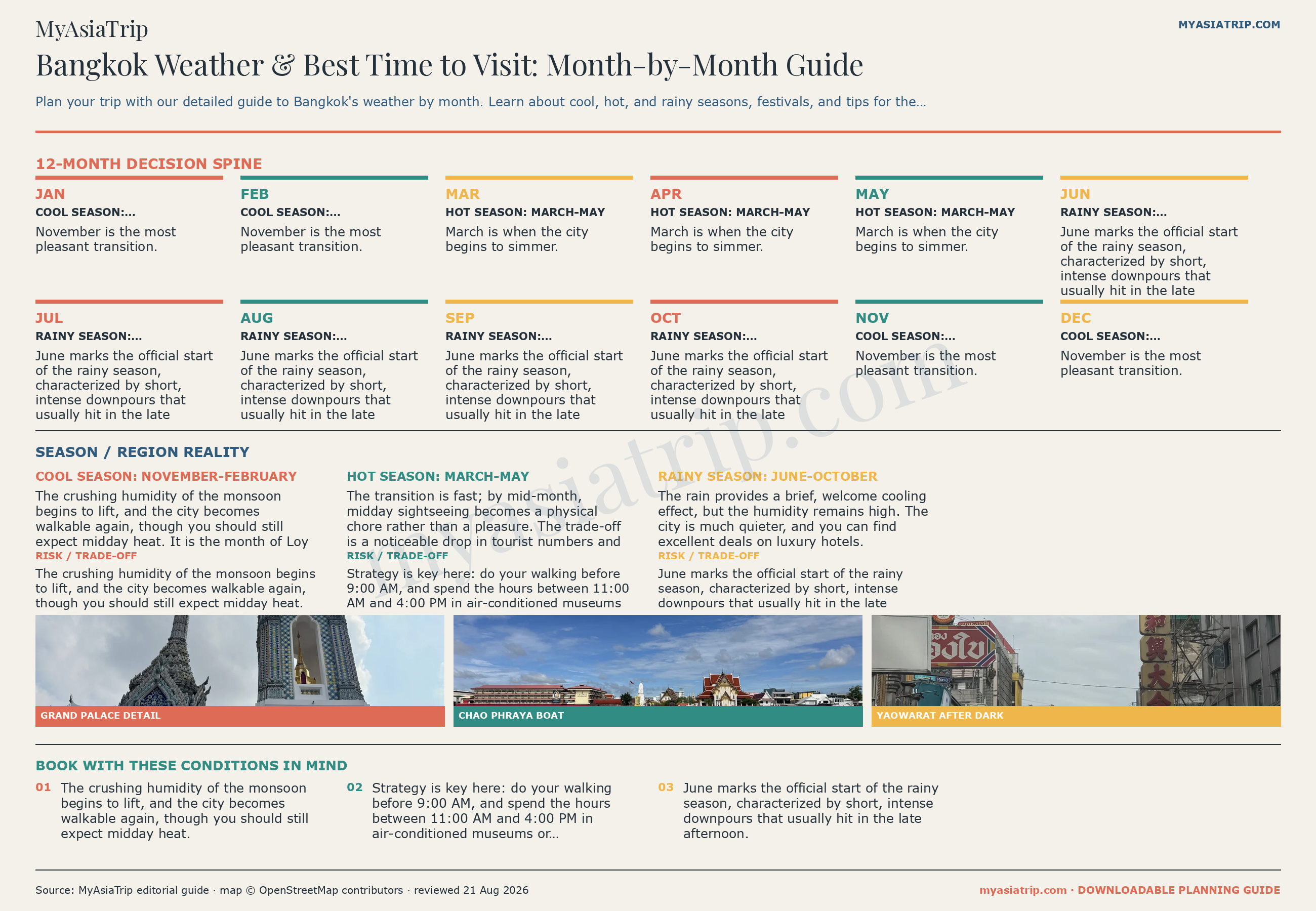
Use the Thailand weather-by-month guide if your itinerary includes different coasts, and the Bangkok day-trips guide before committing to an exposed outdoor excursion. Save the downloadable infographic above for a quick month-by-month comparison, then check a short-range forecast before outdoor plans.
Sources and live checks
- Thai Meteorological Department: Bangkok 30-year climate normals
- Thai Meteorological Department: climate charts
- Thai Meteorological Department: current monthly summaries
Climate normals describe long-term patterns, not a forecast for a particular trip. Check the TMD short-range forecast close to departure.
Quick answers
Frequently asked questions
What is the best month to visit Bangkok for good weather?
When is the rainy season in Bangkok?
Is Bangkok worth visiting during the hot season?
What should I pack for Bangkok in the rainy season?
Does Bangkok have a 'cool' season?
Research notes
Official planning references
We use these primary references for the time-sensitive details relevant to this guide. Rules, prices and operating hours can change, so confirm the live information before you travel.
- Tourism Authority of Thailand
Details to check: Official destination information and trip-planning context
- Thai Meteorological Department
Details to check: Official forecasts, warnings and seasonal weather information
- BTS Skytrain
Details to check: Official Bangkok rail routes, stations and fares
Guide reviewed 24 August 2026. Confirm live rules, prices and operating details with the linked authority before travel.