Wat Pho Bangkok Guide: Reclining Buddha, Tickets & Dress Code
Plan a Wat Pho visit with current opening hours, ticket price, dress rules, massage information, transport options, and a practical temple route.


Wat Pho is the Bangkok temple to choose if you want a visit that balances monumental art with the reality of a functioning monastery. While the 46-meter Reclining Buddha is the headline act, the site’s true value lies in its sprawling courtyards and its role as the birthplace of traditional Thai massage. Don’t make the mistake of rushing in for a single photo and leaving; the complex rewards those who can tolerate the heat long enough to explore beyond the main hall.
The temple is located immediately south of the Grand Palace and a short, breezy ferry ride from Wat Arun. This makes it the most logical middle stop in a river-temple day, provided you have the stamina for three major sites in a row.
Is Wat Pho worth visiting?
For many, Wat Pho is a better investment of time than the Grand Palace. It offers a famous interior without the intense, high-security formality of the royal complex. Choose it if you prefer to wander independently through chedis and courtyards rather than being funneled through a specific visitor path. However, if your energy for temples is limited, don’t try to “do” both the Palace and Wat Pho in one morning unless you start at 8:30 AM and are prepared for a lot of walking in high humidity.
Allow at least 90 minutes for the site. The hall of the Reclining Buddha is often a bottleneck of tour groups; a rushed 30-minute visit usually means you spent 20 of those minutes just navigating the queue.
Wat Pho at a glance
| Practical detail | Current guidance |
|---|---|
| Official name | Wat Phra Chetuphon Wimon Mangkhalaram Rajwaramahawihan |
| Visitor hours | Daily, 8:00 AM–7:30 PM |
| Foreign visitor admission | 300 THB |
| Free admission | Children under 120 cm |
| Nearest MRT | Sanam Chai |
| Time to allow | 90 minutes; two hours with a massage |
| Best time | Opening time or late afternoon |
These hours and prices were verified on 28 July 2026. Treat them as a baseline, but be prepared for ceremonial closures or price adjustments that aren’t reflected in last week’s travel blogs.

Why Wat Pho is worth visiting
The 46-meter Reclining Buddha is a massive, gold-leaf-covered figure that nearly fills its purpose-built hall. The pose represents the Buddha entering final nirvana, and the scale is genuinely dramatic. Look for the mother-of-pearl inlays on the feet, which depict the 108 auspicious signs of the Buddha. Despite the scale, the hall can feel surprisingly intimate—and very crowded.
Outside, the atmosphere shifts. The courtyards are home to over a thousand Buddha images and four massive royal chedis decorated in lively ceramic. The stone figures and inscriptions throughout the grounds reflect the temple’s history as Thailand’s first public university. It’s a place for observation, but keep in mind that the sun reflects harshly off the stone, so seek out the shaded cloisters when your energy flags.
The temple is also the home of the national massage school. This is not a tourist demonstration; it is a functioning, high-standard medical service. If you want a treatment, check the waiting list as soon as you arrive, as queues can be long and unpredictable.
What to see
The reclining Buddha
If the hall looks packed, go here first to get it out of the way. The visitor path is narrow and moves in one direction. Pause at the head for the classic photo, but keep moving toward the feet to see the intricate mother-of-pearl detail. The heat inside the hall can be intense when it’s full of people, so don’t feel obligated to linger longer than your comfort allows.
Participation in the coin-dropping ritual—placing 108 small coins into metal bowls along the wall—is optional. If the aisle is congested, it’s better to keep moving and respect the flow of the crowd.
The four royal chedis
These tiled towers are spectacular, but their narrow courtyards offer very little shade. Explore them slowly, but be mindful of worshippers and don’t block the small entrances while trying to get the perfect wide-angle shot.
The ordination hall and Buddha galleries
The main ordination hall is an active sacred space. Remove your shoes, keep your voice to a whisper, and never point your feet at the Buddha image. The surrounding galleries, containing hundreds of seated Buddhas, are usually much quieter than the Reclining Buddha hall and provide a welcome moment of calm.
Traditional Thai massage
The official massage school offers various treatments, but don’t expect a spa-like retreat. The setting is a large, open-sided hall that is functional and historic. Prices and wait times fluctuate daily; check the board at the school rather than relying on a figure you saw online. A massage will add significantly to your visit time, so plan accordingly.
Plan your Wat Pho visit
Dress code and temple etiquette
The dress code is a non-negotiable sign of respect. Shoulders and knees must be covered. While you might see some visitors in shorts, the official rules are clear, and you risk being turned away at the gate. Modest, breathable clothing is the only sensible choice for a day of temple hopping.
Remove your shoes whenever you see a footwear pile. Never touch a monk, especially if you are a woman, and avoid climbing on any statues or sacred structures. Photography is generally fine, but if a ceremony is in progress, stay at the back and turn off your flash.
How to get to Wat Pho
MRT
Sanam Chai station is a short, straightforward walk from the temple. The station itself is beautifully designed to match the Old City aesthetic, but once you step outside, the pavements are often uneven and the heat is immediate.
River boat
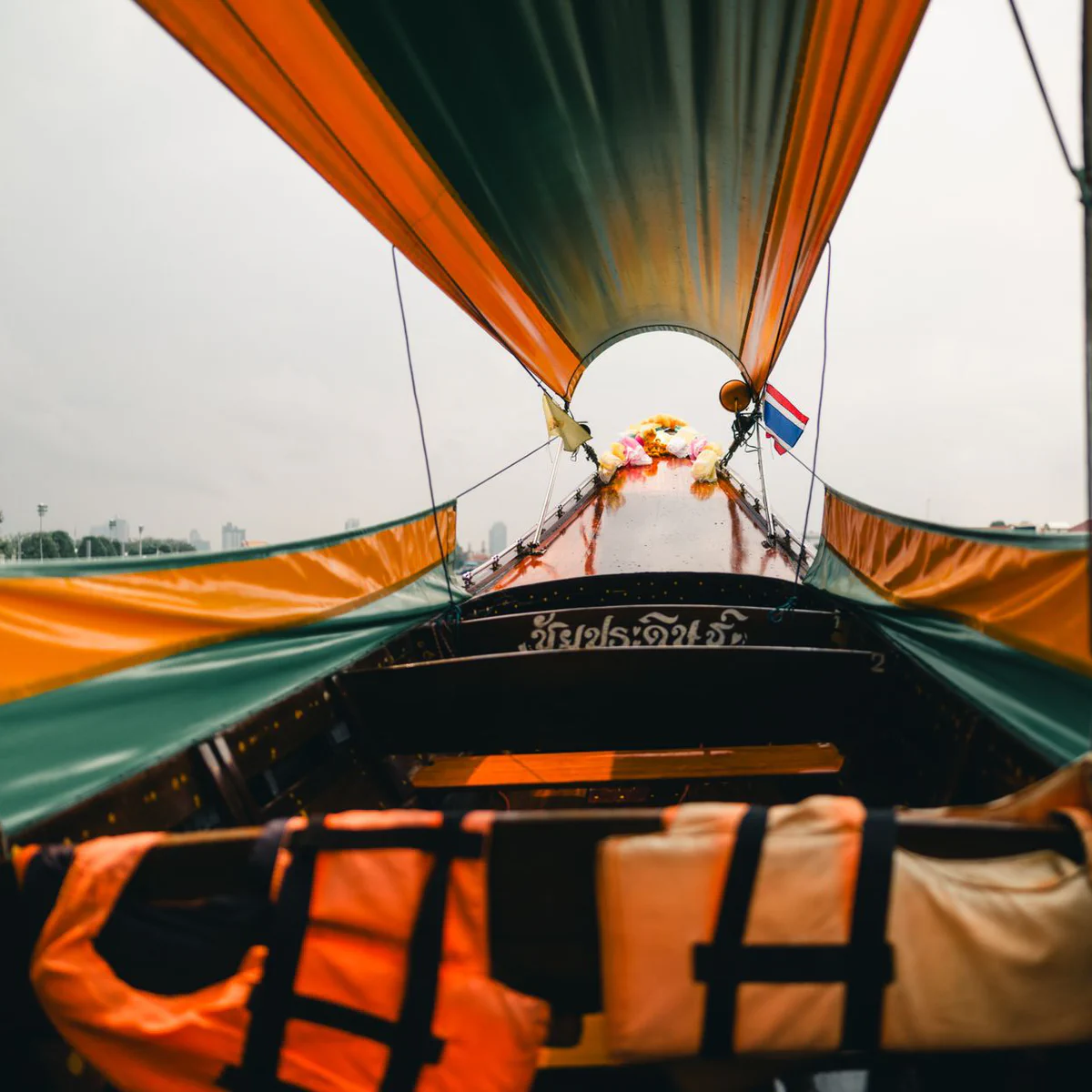
Use Tha Tien pier (N8) if you are arriving from across the river or from other riverside stops. Pier assignments can shift due to construction or water levels, so follow the local signs rather than a saved map pin. The ferry from Wat Arun is a quick 5-baht crossing.
Taxi or ride-hailing
A taxi is your best bet for an early arrival or if you have limited mobility. However, road traffic around the Grand Palace is notoriously slow during the day. If you use Grab, be prepared for a wait as drivers navigate the congested Old City streets.
For a full breakdown of your options, see getting around Bangkok.
The most efficient temple route
The most realistic route is to start at the Grand Palace at 8:30 AM to beat the worst of the crowds. Walk south to Wat Pho before the midday heat peaks. After exploring and perhaps having lunch, cross from Tha Tien to Wat Arun to finish your morning on the west bank.

Don’t reverse this route just for sunset photos at the Palace—it closes early and the entry process is much slower. If you are short on time, pairing Wat Pho with Wat Arun is the most logistically sound choice. If royal history is your priority, pair the Palace with Wat Pho and accept that you’ll be doing a lot of walking.
Wat Pho on a one-day Bangkok visit
If you only have one day, don’t try to see every museum and temple on the map. Start with the Palace, then Wat Pho. If you still have energy after lunch, cross to Wat Arun. After that, go back to your hotel and rest. Bangkok is a marathon, not a sprint, and trying to see four museums in one morning will only leave you with “temple fatigue.”
Wat Pho without the Grand Palace
This is the “slower” version of the day. Arrive at 8:30 AM, spend two hours exploring the courtyards of Wat Pho, and get a massage before the queues build. This approach is far more relaxed and better for those who value Buddhist art and a calm atmosphere over royal ceremony.
Common mistakes
- Showing up in beachwear and expecting the temple to provide a free wrap; carry your own.
- Missing the entire 8-hectare complex because you spent all your time in the Reclining Buddha hall.
- Believing a tout who tells you the temple is “closed for a ceremony”—check the official gate yourself.
- Accepting a “free” tuk-tuk ride that inevitably ends at a jewelry store.
- Planning a massage and then realizing you have a dinner booking in 20 minutes; queues are unpredictable.
- Trying to see the Palace, Wat Pho, Wat Arun, and two museums in one morning; you will remember nothing but the heat.
Heat, crowds and accessibility
The Reclining Buddha hall is a major bottleneck. If it feels too tight, step back into the wider courtyards and come back 15 minutes later. The complex has many uneven surfaces and shoe-removal points, which can be a challenge for those with mobility needs. Ask the staff for the most accessible route if you have concerns.
Bangkok’s humidity is a physical force. Carry water, use sun protection, and take a shaded break before you even think about crossing the river to Wat Arun.
Before you leave the hotel
- Check the official site for any religious holidays or ceremonial closures.
- Ensure your outfit covers both shoulders and knees.
- Have the Thai name of the temple ready for your taxi driver.
- Confirm the current ferry status at Tha Tien.
- Decide if a massage is a “must” or a “maybe” to avoid itinerary stress.
- Ignore anyone on the street who tells you the temple is closed; they are lying.
Sources and live checks
Checked details
Prices and opening hours
Checked 20 August 2026
- Wat Pho hours and admission
- Daily, 8:00 AM–7:30 PM; 300 THB for foreign visitors
- Verify with Wat Pho official visit information
Live prices, closures and admission conditions can change after the checked date. Use the linked operator page before booking or departure.
Quick answers
Frequently asked questions
What are Wat Pho's opening hours?
How much is Wat Pho admission?
Can I combine Wat Pho with the Grand Palace and Wat Arun?
Research notes
Official planning references
We use these primary references for the time-sensitive details relevant to this guide. Rules, prices and operating hours can change, so confirm the live information before you travel.
- Tourism Authority of Thailand
Details to check: Official destination information and trip-planning context
- BTS Skytrain
Details to check: Official Bangkok rail routes, stations and fares
Guide reviewed 2 August 2026. Confirm live rules, prices and operating details with the linked authority before travel.