7 Best Day Trips from Bangkok: Time and Transport Compared
Compare the best day trips from Bangkok by journey time, transport difficulty and what each place does well, from Ayutthaya to Bang Krachao.


Which Bangkok day trip is best for you?
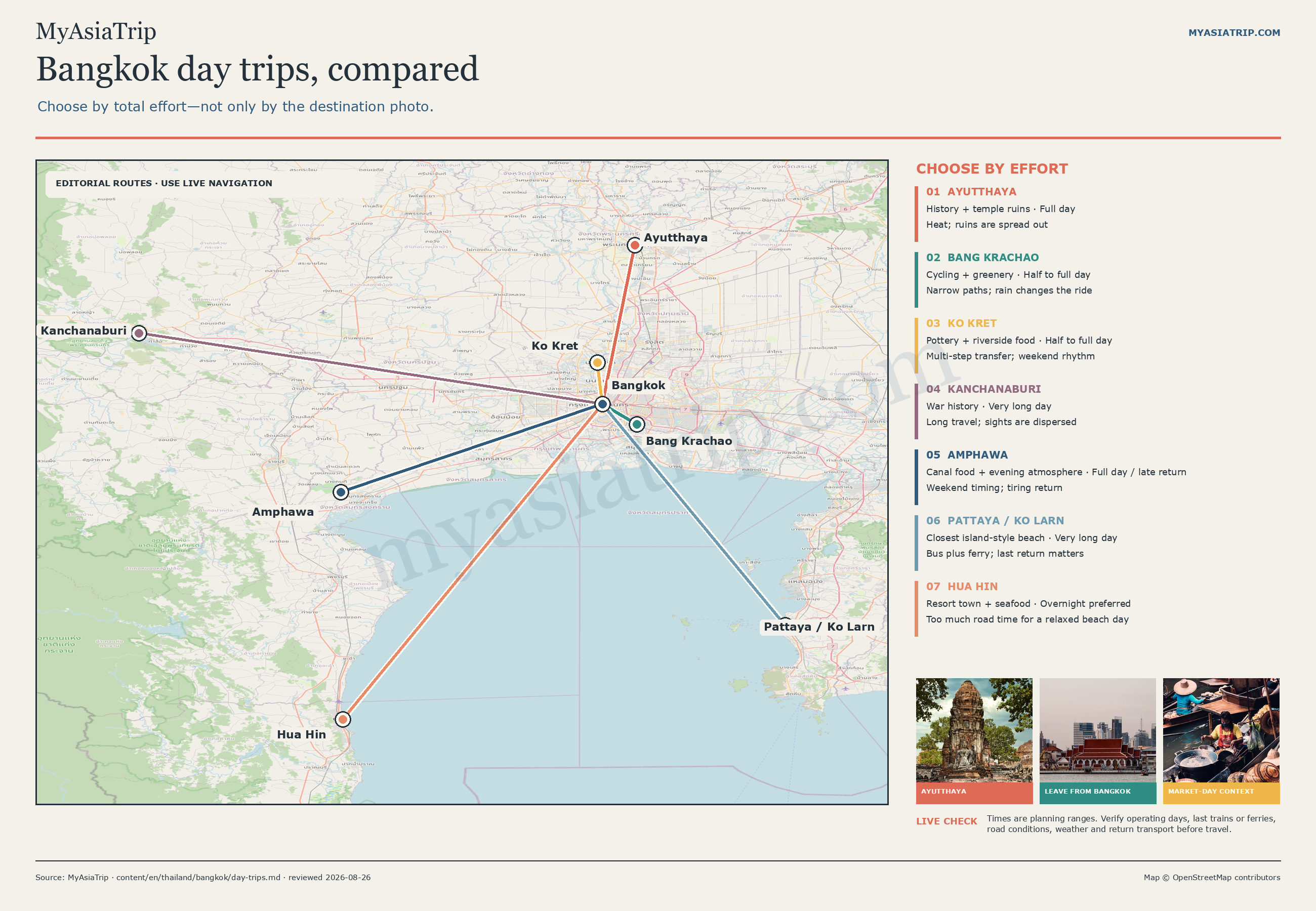
For a first Bangkok day trip, choose Ayutthaya for history or Bang Krachao for an easy green escape. Pick Ko Kret for pottery and a slower weekend, and treat Kanchanaburi, the distant floating markets and Koh Larn as full, transport-heavy days. Hua Hin is normally a better overnight stop than a day trip.
| Day trip | Best for | Realistic commitment | Main friction |
|---|---|---|---|
| Ayutthaya | Temples and history | Full day | Heat and distance between ruins |
| Bang Krachao | Cycling and greenery | Half to full day | Narrow paths and weekend crowds |
| Ko Kret | Pottery and riverside food | Half to full day | Multi-step transfer |
| Kanchanaburi | War history | Very long day | Long journey; sights are spread out |
| Floating markets | Canal atmosphere | Half to full day | Schedules and tourist pressure |
| Pattaya and Koh Larn | Nearest island-style beach | Very long day | Road traffic plus ferry timing |
| Hua Hin | Resort atmosphere | Better overnight | Too much travel for most day trips |
City tour or day trip: know what you are booking
A Bangkok city tour normally stays inside the capital: temples, canals, markets or a neighborhood route with a guide or driver. A day trip from Bangkok leaves the city for somewhere such as Ayutthaya, Kanchanaburi or a provincial floating market. Treating them as the same product creates rushed itineraries—for example, squeezing the Grand Palace, a two-hour road transfer and an evening market into one advertised “day tour.”
Choose a city tour when orientation, historical explanation or door-to-door movement between Bangkok sights is the problem. Choose a day trip when the destination itself justifies the return journey. Before booking either, ask for the actual pickup window, time at each stop, compulsory shops, lunch arrangement and final drop-off rather than counting the number of attraction names in the title.
Pick one destination and check the final return before leaving Bangkok. Traffic, ferry schedules and the physical toll of walking in heat can turn an apparently short distance into a demanding day.
Ayutthaya: Ancient capital in an hour
Travel time: Roughly 1–2 hours each way, depending on mode and traffic Best for: History and temple lovers

Ayutthaya is the heavy hitter of Bangkok day trips. If you want to see the scale of old Siam, this is the place. It’s a vast collection of red-brick ruins, crumbling chedis, and decapitated Buddha statues scattered across an island and its riverbanks. It’s hauntingly beautiful, but the scale is deceptive—on a map it looks compact, but in the heat, every kilometer feels like three.
You have to decide how you’re going to tackle the distances. Cycling sounds like a romantic way to see the ruins, but unless you’re a regular rider with a high heat tolerance, you’ll likely be exhausted after the second temple. A tuk-tuk driver is the more pragmatic choice; they’ll ferry you between the main sites like Wat Mahathat and Wat Phra Si Sanphet while you enjoy a bit of shade. It’s less “adventurous,” but it saves your energy for actually walking through the ruins rather than just getting to them.
The train is atmospheric, while a minivan or private car can simplify the transfer. Departure stations, fares and schedules change, so confirm them with the operator shortly before travel. The Ayutthaya station is outside the central ruin zone; plan a local tuk-tuk, taxi or other transfer after arrival. Our Ayutthaya day-trip guide maps out that choice in more detail.
Don’t forget the dress code: shoulders and knees must be covered, even if the temperature is pushing 35°C. These aren’t just ruins; they are sacred sites. You’ll be paying small entry fees at each major temple, so keep those 20 and 50-baht notes handy. And whatever you do, don’t try to see every single temple on the map—pick four or five major ones and give yourself time to actually absorb the history instead of just taking a photo and running.
Ayutthaya’s appeal lies partly in its lack of polish. Unlike the gleaming gold of Bangkok’s temples, these are raw, weather-beaten, and atmospheric. It feels like a real city that was once the center of the world, not just a tourist attraction. If you can, go on a weekday; the silence among the ruins is part of the experience, and it’s much harder to find when the weekend tour buses arrive.
Bang Krachao: Bangkok’s green lung
Travel time: About 30–60 minutes from central Bangkok, then a short river crossing Best for: Cyclists, nature lovers, weekend visitors
Bang Krachao is the city’s greatest trick. One minute you’re in the concrete jungle of Klong Toey, and ten minutes later, you’re cycling through a dense canopy of palms and mangroves. It’s a “green lung” in every sense—no cars, no skyscrapers, just narrow elevated walkways over dark canals. It feels like stepping back fifty years into a version of Bangkok that most people never see.
The routine is simple: cross the river on a tiny ferry, grab a beat-up rental bike at the pier, and start pedaling. The paths are flat but narrow, so keep an eye out for other cyclists coming the other way. If you can time your visit for a weekend, the Bang Nam Pheung market is a highlight—it’s a local affair where the food is better and the prices are lower than anything you’ll find in the city center. It’s less of a “floating” market and more of a riverside food crawl, which is exactly why it works as a day trip.
If you only have half a day, this is your best bet. It’s closer than Ko Kret and feels more wild. You can spend two hours getting lost in the greenery, have a bowl of noodles by the water, and be back in your air-conditioned hotel room before the worst of the afternoon heat hits. It’s the perfect antidote to the Sukhumvit chaos.
Ko Kret: Pottery and island calm
Travel time: Taxi to Wat Sanam Neua in Pak Kret, then a short ferry Best for: Pottery, riverside food and slower weekend exploring
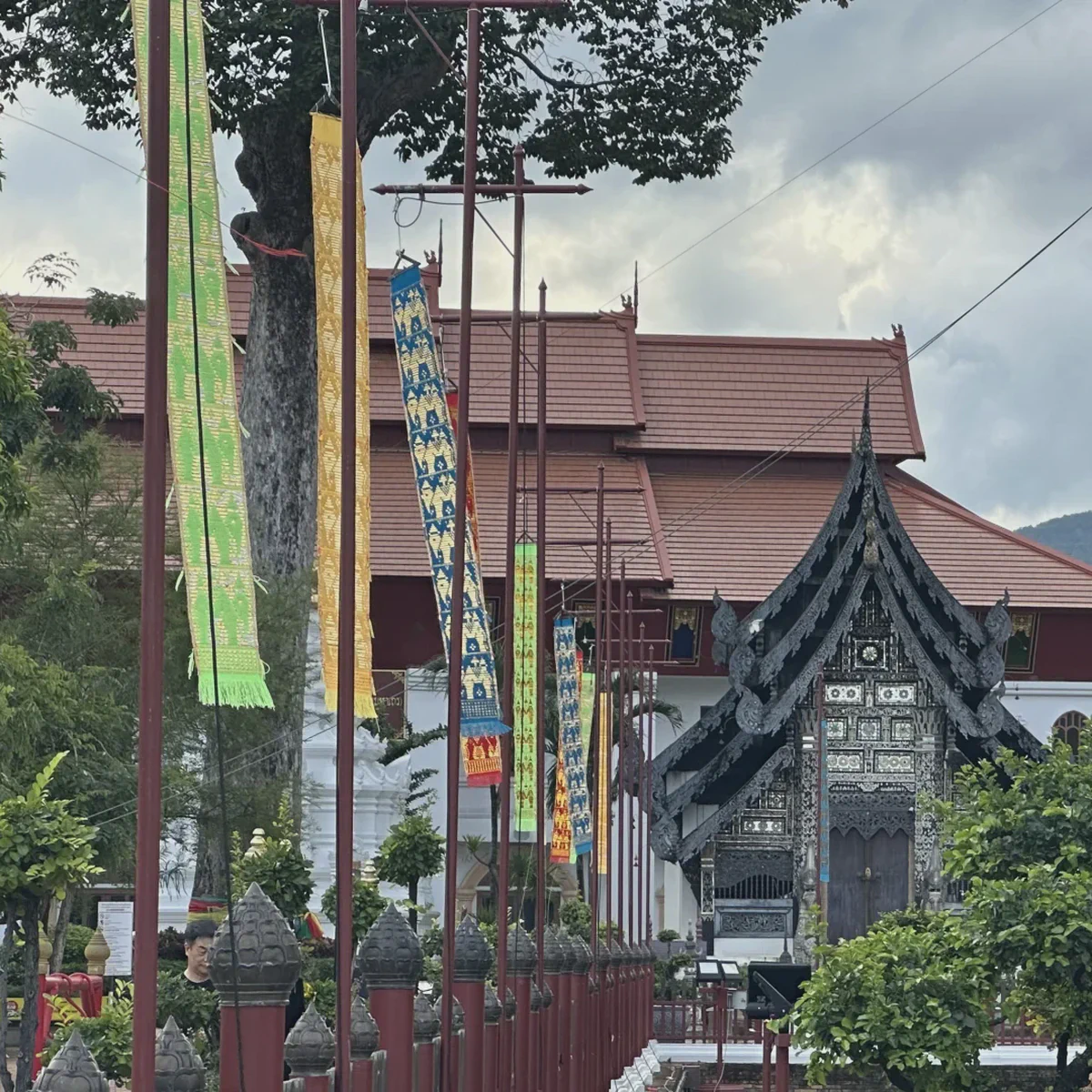
Ko Kret is a Chao Phraya island known for Mon heritage, pottery and a slower riverside rhythm. The main path is largely car-free, although local motorcycles and service vehicles mean it is not a traffic-free park. The multi-step journey is part of the experience, so do not combine it with another distant attraction.
Think of Ko Kret as the artisanal sibling to Bang Krachao. While Bang Krachao is about the greenery, Ko Kret is about the craft and the community. The weekend market here is legendary for its snacks and hand-painted pottery, but it can get very crowded on Sundays. If you want a quieter experience, go on a weekday—you won’t get the market buzz, but you’ll have the pottery workshops and the river views all to yourself.
Kanchanaburi: History and nature west of Bangkok
Travel time: 2-3 hours by minivan Best for: WWII history buffs, waterfall hikers
Kanchanaburi is a beautiful province with a heavy history. The “Bridge over the River Kwai” is the anchor here, part of the tragic Death Railway built under brutal conditions during WWII. Walking across the bridge is a somber experience, and the nearby museums do a good job of explaining the human cost of the project. It’s a significant site, but it’s just one part of what makes the area worth the two-hour drive.
Erawan National Park is a separate outing beyond Kanchanaburi town, not a casual add-on “just up the road.” Combining the bridge museums, Hellfire Pass and the waterfall in one Bangkok day forces long transfers and very little time at each place. Choose the history corridor or the national park, or stay overnight.
The journey is the biggest hurdle. A minivan from Bangkok takes about two to three hours, depending on how many stops the driver makes. The train from Thon Buri is much slower but takes you right across the bridge, which is a bucket-list experience for many. If you’re doing this as a day trip, you’re looking at at least five hours of total travel time, so this isn’t the day for a late start.
Trying to do both the history and the waterfalls in one day is a marathon. You need to be on the road by 7:00 AM at the latest. If you arrive at Erawan Falls after 2:00 PM, you’ll barely have time to see the first few levels before the rangers start clearing people out. Pick the one that matters most to you. If you’re a history buff, spend the extra time at the Hellfire Pass Memorial Museum. If you’re a nature lover, go straight to the falls and enjoy a full afternoon in the water.
Kanchanaburi is a step up in complexity from Ayutthaya. The distances between the town center and the national park are significant, and you’ll need to arrange local transport (usually a songthaew) to bridge the gap. It’s a rewarding day, but it’s also an exhausting one. Expect to get back to Bangkok late, tired, and probably a little bit sunburned.
Floating markets: Damnoen Saduak vs Amphawa
Travel time: Both are west of Bangkok; travel time depends on traffic (roughly 1.5-2 hours by minivan) Best for: First-time floating market visitors; those seeking a less touristy experience
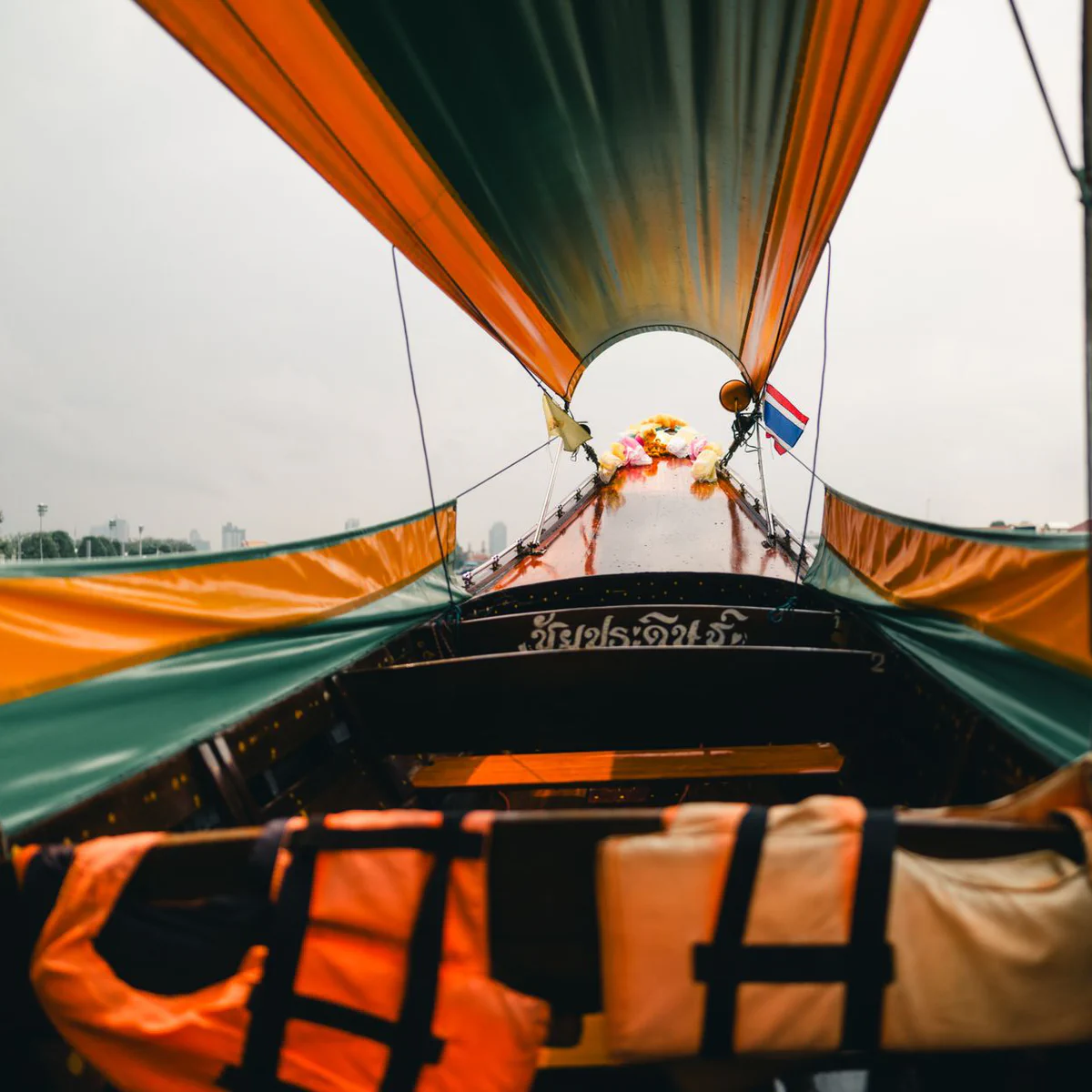
Two floating markets are common day trips from Bangkok. They are not interchangeable. The dedicated Bangkok floating-markets guide compares the boat experience, timing and tourist trade-offs before you choose one.
Damnoen Saduak
Damnoen Saduak is the floating market seen in travel brochures: colorful, boat-focused and strongly oriented toward visitors. Choose it for the familiar morning image, not for quiet local shopping. Confirm the complete boat price and whether it is per boat or per person before boarding.
Amphawa
Amphawa is a different beast entirely. It’s a weekend-only market that caters more to locals from Bangkok than to international tour groups. The vibe is much more relaxed, the food is incredible (especially the grilled river prawns), and the canal-side wooden shops are genuinely charming. It’s best visited in the late afternoon when the heat starts to fade. If you stay until after dark, you can take a boat to see the fireflies in the trees—it’s a bit touristy, sure, but it’s a beautiful way to end the day.
Comparison
- Schedule: Damnoen Saduak operates daily; Amphawa is mainly a weekend market (Friday to Sunday). If you have a weekday, Damnoen Saduak is the only option.
- Vibe: Damnoen Saduak is a tourist attraction; Amphawa is a local market that tourists visit.
- Time commitment: Both require 1.5-2 hours each way. Damnoen Saduak can be done in a morning; Amphawa is best with an afternoon start and after-dark fireflies.
- Crowds: Damnoen Saduak is packed by 9 AM; Amphawa gets busier later in the afternoon and evening.
Whichever you choose, manage your expectations. These markets are crowded, noisy, and can be a bit chaotic. If you go to Damnoen Saduak, get there by 8:30 AM to beat the worst of the bus tours. At Amphawa, be ready to walk—the best food is often hidden in the little alleys behind the canal. And remember, neither of these is “undiscovered”—you’re there for the experience, so just lean into the madness and enjoy the snacks.
Pattaya and Hua Hin: Beach options from Bangkok
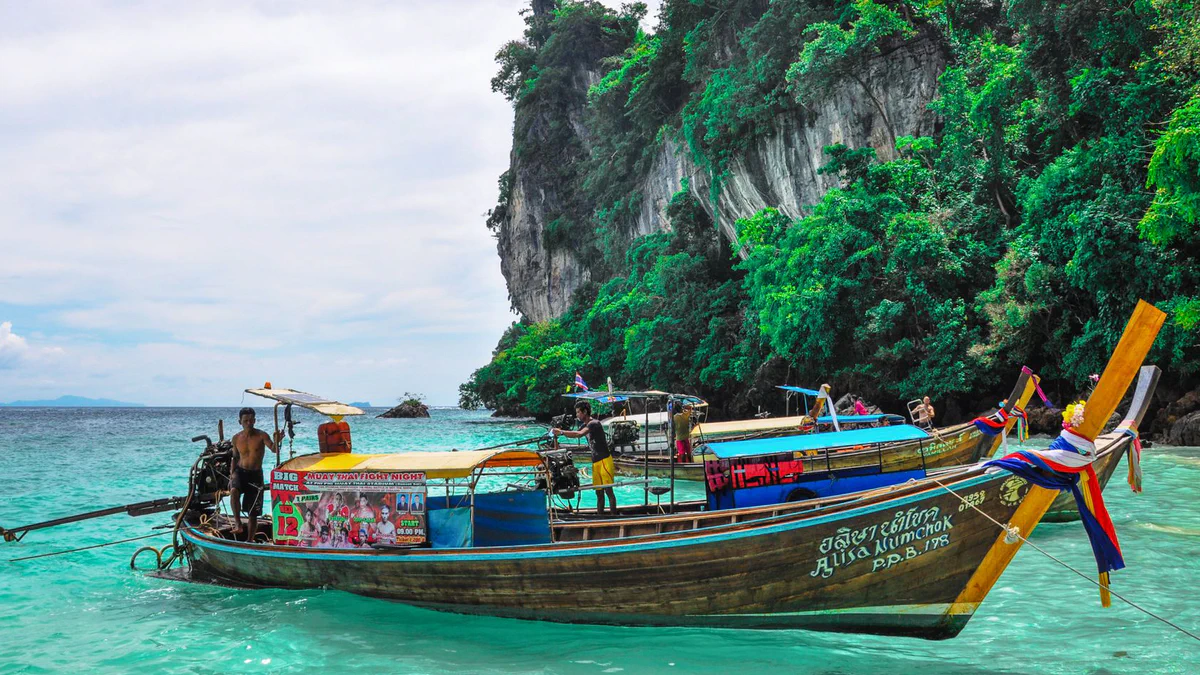
Both Pattaya and Hua Hin are beach resorts accessible as long day trips. Neither has beach quality comparable to southern islands, but they are the closest coastal options for a quick escape. The choice depends on travel time and what kind of beach experience you want.
Pattaya (including Koh Larn)
Travel time: About 2 hours by bus from Ekkamai Bus Terminal; then a 30-minute ferry from Bali Hai Pier to Koh Larn
If you’re desperate for a beach and can’t make it to the southern islands, Pattaya is your quickest fix. But be honest with yourself: Pattaya Beach itself is pretty disappointing. The sand is coarse, the water is murky, and the atmosphere is more urban than tropical. The only reason to do this as a day trip is to catch the ferry to Koh Larn. Once you’re on the island, you’ll find the white sand and turquoise water you were actually looking for. It’s a busy place, but it’s a real beach.
This is a long day. You’re looking at two hours on a bus, a thirty-minute ferry ride, and then the same on the way back. If you aren’t on that first 8:00 AM bus, you’ll spend more time in transit than in the water. Skip the Pattaya city sights and head straight for the pier. And keep a sharp eye on the ferry schedule—missing the last boat back from the island is an expensive mistake to make.
Hua Hin
Travel time: 3-4 hours by car or minivan Best for: Seafood lovers, kiteboarders, royal palace fans
Hua Hin is a more refined seaside resort, but it’s also much further away. The beach is long and flat, perfect for a walk, but the water is shallow and not particularly clear. It’s more about the vibe—excellent seafood, a few beautiful royal palaces, and a night market that’s actually worth visiting. It’s a favorite for Bangkok families, but as a day trip, it’s a marathon.
Getting there: Trains, buses and minivans serve Hua Hin, but departure points and journey times vary by service. Check the live operator schedule; do not rely on an old reference to Hua Lamphong or a single bus terminal.
A four-hour drive each way is a lot to ask for a five-hour stay. If you’re a kiteboarding enthusiast or a fan of Thai royal history, the trek might be worth it. But if you just want to lie on the sand, you’ll spend eight hours in a van for a very short afternoon at the beach. Verdict: if you have to choose a beach day trip, Koh Larn wins on efficiency every time.
Direct comparison
- Travel time: Pattaya (2 hours plus 30-minute ferry) requires less time than Hua Hin (3-4 hours).
- Beach quality: Koh Larn’s white sand and clear water are better than Hua Hin’s shallow, less clear beach.
- Activities: Hua Hin offers kiteboarding, palace visits, and a more resort-like atmosphere; Pattaya offers a quick island escape and nightlife.
- Best for: If you have limited time, choose Pattaya and Koh Larn. If you want a more relaxed resort feel and don’t mind a long drive, Hua Hin works but leaves little time on the beach.
Which day trip should you choose?
Private transport prices change with fuel costs, season, route and bargaining. Between fuel surcharges, seasonal entry fees, and your own bargaining skills, the cost will vary. Just make sure you have plenty of cash in small notes—nothing kills the mood faster than being stuck at a rural pier with only a 1,000-baht bill that nobody can change. Also, double-check the operating days for the markets before you set out; showing up for a weekend market on a Monday is a mistake you only make once.
Your return journey is just as important as your departure. Minivans stop running earlier than you think, and missing that last train back from Ayutthaya is a stressful way to end a long day. If it’s 4:30 PM and you’re debating whether to see one more ruin or head to the station, choose the station. You’ll be tired, the heat will have taken its toll, and you’ll be much happier sitting on a train than trying to negotiate a private taxi for an emergency two-hour trip back to the city.
Sources and live checks
- Tourism Authority of Thailand: Ayutthaya
- Tourism Authority of Thailand: Bang Krachao day trip
- Tourism Authority of Thailand: Central Thailand and Ko Kret
- Tourism Authority of Thailand: floating markets
- State Railway of Thailand booking and schedules
Transport times are planning ranges, not timetables. Check the operating calendar and final return for your travel date.
Quick answers
Frequently asked questions
What is the best day trip from Bangkok?
Can you go to the beach on a day trip from Bangkok?
How do I get to Ayutthaya from Bangkok?
Research notes
Official planning references
We use these primary references for the time-sensitive details relevant to this guide. Rules, prices and operating hours can change, so confirm the live information before you travel.
- Tourism Authority of Thailand
Details to check: Official destination information and trip-planning context
- BTS Skytrain
Details to check: Official Bangkok rail routes, stations and fares
Guide reviewed 26 August 2026. Confirm live rules, prices and operating details with the linked authority before travel.