Bangkok 3-Day Itinerary: Temples, Markets & Day Trips
Plan three days in Bangkok around riverside temples, Chinatown, markets and modern districts, with practical transport and pacing decisions.


Three days in Bangkok is just enough to cover the main river corridor, markets and the contrast of the modern neighborhoods. If you want a full day trip without compressing the city into a blur, use the Bangkok 5-day itinerary. If you have a complete week and want slower neighborhood days, the 7-day Bangkok itinerary is the better fit.
How to Use This Itinerary
Think of this itinerary as a practical template, not a rigid script. It assumes you have three full days to work with, starting from your first morning. If you arrive late on Day 1 and are feeling the jet lag, consider swapping Day 1 and Day 2 so you can tackle the temples when you’re actually fresh. We’ve grouped each day by geography to save you from losing half your trip to a taxi window, and the pacing accounts for the reality of Bangkok’s heat and the inevitable queues.
The plan gives you two tracks for Day 2—one for the weekend and one for the week—and two distinct options for Day 3. Pick the one that actually fits your energy level; there’s no prize for “finishing” Bangkok if you’re too exhausted to enjoy it. This guide includes opening hours and dress code rules, but recheck them before you leave your hotel, especially for the Grand Palace, which is very strict about its last admission. Use our scam warnings to move efficiently and avoid the common pitfalls that can derail a first-timer’s morning. If you arrive feeling the fatigue of a long flight, consider starting Day 1 with a lighter afternoon at Wat Pho rather than diving headfirst into the Grand Palace crowds. Prioritize what matters most and adjust the sequence based on your arrival time and interests.
Getting Around Bangkok
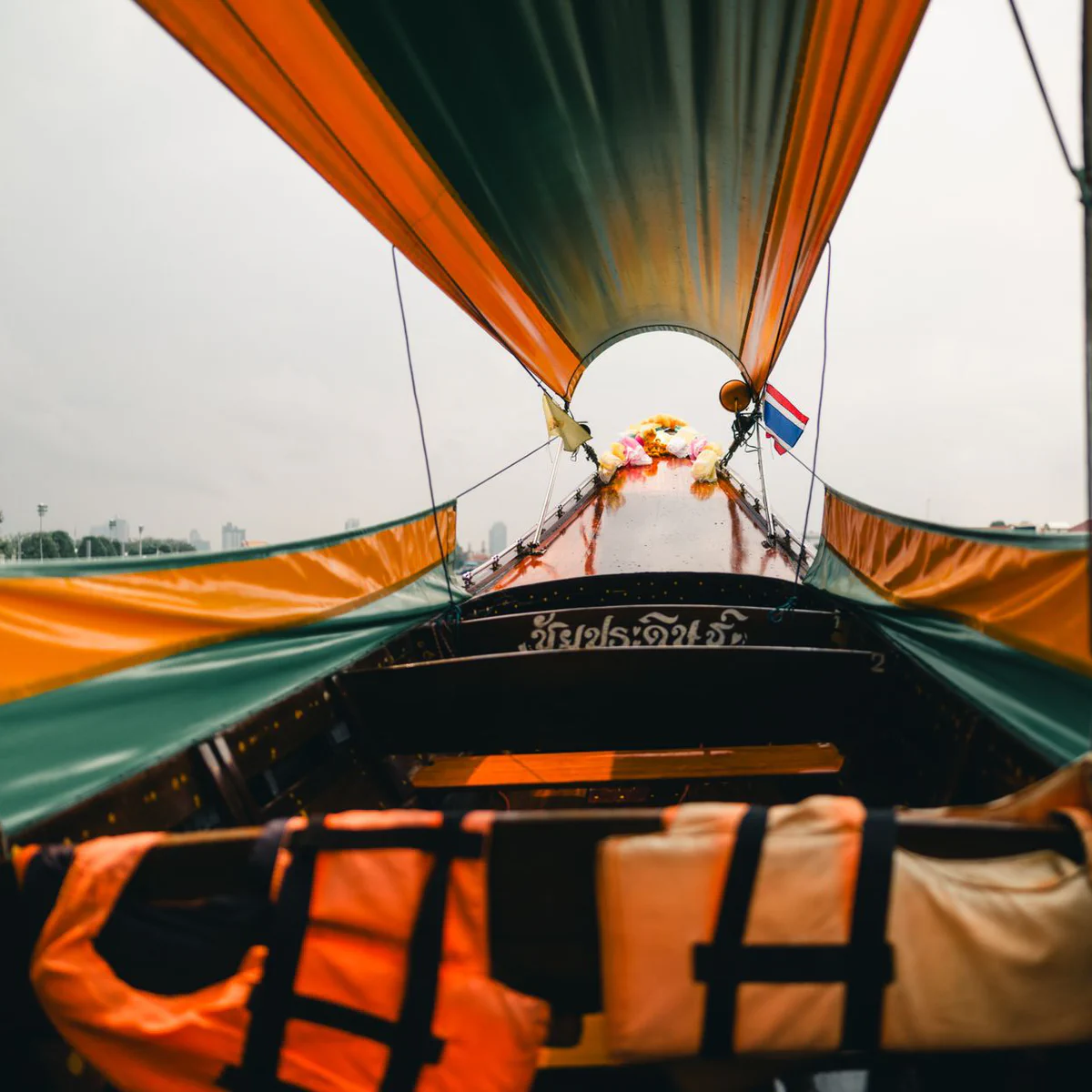
Bangkok’s traffic can be brutal. To keep your sanity, rely on the BTS Skytrain and MRT subway whenever possible. They’re air-conditioned, reliable, and they completely bypass the gridlock on the streets. The BTS covers the Sukhumvit and Silom lines, while the MRT is your best bet for the Old Town and Chinatown. For reaching the riverside temples, nothing beats the Chao Phraya River ferries. The orange-flag public ferry is a bargain (around 18-32 THB) and stops at all the major piers like Tha Chang for the Grand Palace, Tha Tien for Wat Pho and Wat Arun. Cross-river ferries between Tha Tien and Wat Arun pier are even cheaper.
The orange-flag ferry runs frequently during daylight and connects directly to the BTS at Saphan Taksin station (Sathorn Pier). If your hotel is near a pier, use the river—it’s scenic, breezy, and much faster than any bus. For shorter hops or when you’re carrying bags, use the Grab app to call a metered taxi or car. It saves you the headache of haggling over prices in the heat. Tuk-tuks are fine for a quick, fun ride, but avoid them for long distances. Remember that the BTS and MRT are separate systems with separate tickets; you can buy single-journey tokens or get a reloadable card (Rabbit for BTS, MRTA for MRT). The MRT connects directly to the airport rail link, useful for arrivals. When using taxis from the airport, always insist on the meter or use the official airport taxi queue.
Day 1 - The Royal and Temple District
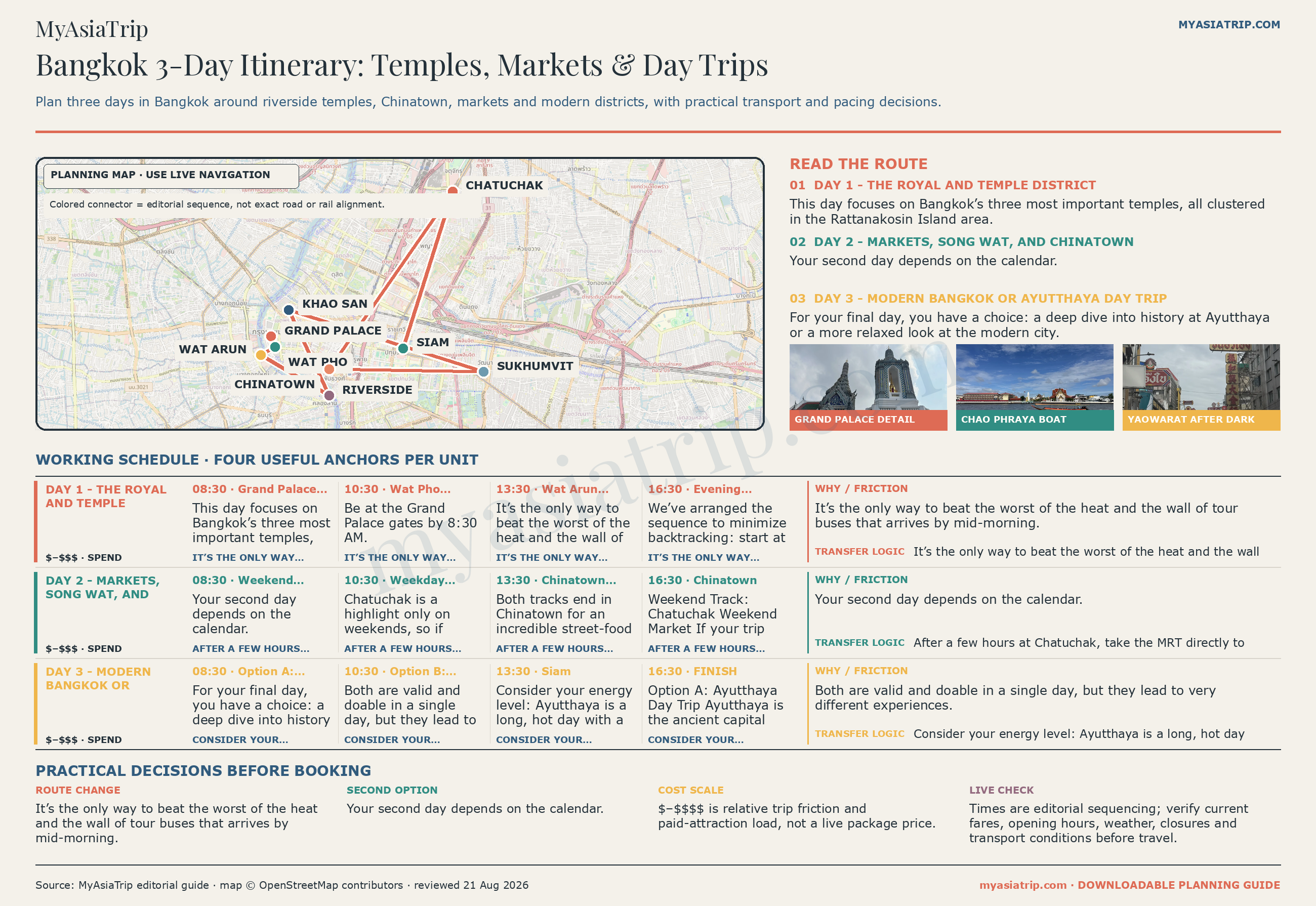
This day focuses on Bangkok’s three most important temples, all clustered in the Rattanakosin Island area. Be at the Grand Palace gates by 8:30 AM. It’s the only way to beat the worst of the heat and the wall of tour buses that arrives by mid-morning. We’ve arranged the sequence to minimize backtracking: start at the Grand Palace, walk to Wat Pho, and then take the 5-baht ferry across to Wat Arun. This geographic grouping saves time and avoids crossing the river twice.
Grand Palace (and Wat Phra Kaew)
The Grand Palace complex is the big one. Entry is 500 THB, and the gates are open from 8:30 AM to 4:30 PM (though they stop selling tickets at 3:30 PM). The dress code is non-negotiable: shoulders and knees must be covered. They no longer provide free sarong rentals, so bring your own scarf or long pants. The crowds get thick after 10:00 AM, so start early and bring water—there are free refill stations inside. You’ll need to take your shoes off to enter the temple halls, so wear something easy to slip on and off. Wat Phra Kaew is inside the Grand Palace grounds, so one ticket covers both.
Scam alert: This is the most common pitfall in the city. A tuk-tuk or taxi driver will likely stop you near the palace and claim it’s “closed today” for a ceremony. They’ll then offer a cheap tour of other temples that ends at a high-pressure gem shop. Ignore them. The palace is almost always open. If there’s a real closure, it’ll be posted on the official website or at the ticket gate. Just walk past the touts and head straight to the ticket booth on Na Phra Lan Road.
Wat Pho (Temple of the Reclining Buddha)
It’s a 10-minute walk south from the palace to Wat Pho. Entry is 300 THB. Give yourself at least an hour here. The grounds are a bit more spread out and generally feel less frantic than the Grand Palace. The Reclining Buddha is spectacular, but take some time to wander the smaller courtyards and the forest of porcelain chedis. If your feet are starting to throb, the on-site massage school is a great place to recharge with a traditional foot massage.
Wat Arun (Temple of Dawn)
To get to Wat Arun, take the cross-river ferry from Tha Tien pier. It costs just a few baht and takes about two minutes. Entry is 200 THB. The central spire is decorated in thousands of pieces of colorful porcelain and is one of the most iconic images of the city. You can climb the steep steps for a great view of the river, but take your time—the steps are narrow and the heat can make the climb feel much harder than it looks. The temple is usually open until 6:30 PM. The porcelain mosaics that decorate the prang are intricate and worth examining up close.
Evening Options
After Wat Arun, you have a few ways to end the day. You could head to Khao San Road for the backpacker buzz and street food, or take the public ferry back to Saphan Taksin and head into Sukhumvit for a more modern dinner. A quieter option is Phra Athit Road, which has a nice selection of riverside cafes and a more local atmosphere. If you want a truly relaxed evening, find a riverside bar near the Oriental Hotel pier and watch the lights come on over the water. Keep some cash handy for street food and small purchases, and remember that Khao San is fun but can be very loud and touristy. Phra Athit provides a more local atmosphere with artsy cafes and live music.
Day 2 - Markets, Song Wat, and Chinatown
Your second day depends on the calendar. Chatuchak is a highlight only on weekends, so if you’re here during the week, skip it and explore the slower-paced Talat Noi and Song Wat areas instead. Both routes end in Chinatown for a busy street-food dinner.
Weekend Track: Chatuchak Weekend Market
If your trip includes Saturday or Sunday, head to Chatuchak Weekend Market (or JJ Market). It’s an absolute beast of a market with over 15,000 stalls. Picking a focus—whether it’s clothing, home decor, or just snacks—and moving methodically. The food section near the Clock Tower is a great spot for a mid-morning bite. It’s impossible to see everything, so don’t even try. Wear your most comfortable shoes and bring a refillable water bottle. Most stalls are cash-only, so make sure you’ve visited an ATM before you dive in.
After a few hours at Chatuchak, take the MRT directly to Wat Mangkon station. This drops you right in the heart of Chinatown and saves you the hassle of a long taxi ride through the afternoon traffic.
Weekday Track: Talad Noi and Song Wat
On a weekday, Chatuchak is mostly closed, so head to Talad Noi and Song Wat Road instead. The area combines old shophouses, street art, engine-part warehouses, and specialty coffee shops. It’s much quieter and more photogenic than the markets. Start at the intersection with Charoen Krung and just wander the narrow alleys. You’ll find indie cafes, old engine-part warehouses, and beautiful murals. It’s a great way to see a more layered, historic side of Bangkok without the tourist crowds. For lunch, a recommended spot is Lim Lao Ngow Fishball Noodle, though many other small eateries line the streets.
Chinatown Street-Food Dinner
Both tracks meet up in Yaowarat Road (Chinatown) for the evening. The energy here after 5:00 PM is electric. You’ll find everything from grilled seafood to mango sticky rice. You’ll likely have to queue for the famous spots, but honestly, many of the smaller stalls are just as good. Cash is king here, so keep your wallet ready. If the noise and the crowds get too much, find a smaller side street for a slightly quieter meal. Avoid the stalls that look like they’re charging “tourist prices” for seafood and stick to the ones that are packed with locals. After dinner, consider strolling down Yaowarat Road or visiting the nearby Talad Noi area for a nightcap. The neon-lit streets are iconic, and the energy is electric.
Day 3 - Modern Bangkok or Ayutthaya Day Trip
For your final day, you have a choice: a deep dive into history at Ayutthaya or a more relaxed look at the modern city. Both are valid and doable in a single day, but they lead to very different experiences. Consider your energy level: Ayutthaya is a long, hot day with a lot of walking; modern Bangkok is more relaxed and air-conditioned.
Option A: Ayutthaya Day Trip
Ayutthaya is the ancient capital and a UNESCO World Heritage site. You can go independently by train from the main station (which is very cheap) or join a small-group tour for about 60-90 USD. Independent travel gives you more freedom but requires more coordination. Once you arrive at the Ayutthaya station, you can hire a local tuk-tuk for the day or rent a bicycle. The most important temples include Wat Mahathat (the Buddha head in the tree roots), Wat Phra Si Sanphet, and Wat Ratchaburana.
Why choose this option? If you love history and ruins, it’s a non-negotiable trip. Just be prepared for an early start (around 7:00 AM) and a lot of time in the sun. The park is spread out, so you’ll definitely need some kind of transport to move between the temples.
Option B: Modern Bangkok (Jim Thompson House, Siam, Benjakitti Park, Rooftop Bar)
If you’d rather stay in the city and keep things a bit more relaxed, this option is for you.
- Jim Thompson House Museum - A cluster of beautiful traditional Thai houses. You have to take a guided tour (about 250 THB), which explains the mysterious story of the American silk merchant who built it. It’s a peaceful, green oasis in the middle of the city, with lush gardens and traditional wooden architecture. The museum is located near the BTS National Stadium station, making it easily accessible.
- Siam shopping malls - This is a sharp contrast to the temples. Malls like Siam Paragon and CentralWorld are massive and offer a great escape from the midday heat. The food courts here are actually excellent for a high-quality, low-cost lunch. If you want a slightly more chaotic, “anything goes” mall experience, check out our MBK Center guide.
- Benjakitti Park - A modern park with a large lake and great views of the skyline. It’s a nice place for an afternoon stroll when the heat starts to dip. If you still have energy, you can walk the “Green Bridge” to Lumphini Park. The park features a large lake with a walking path, and there are often local exercisers and families. It is a good place to relax before the evening.
- Rooftop bar - End your trip with a cocktail at a sky bar. Whether it’s the famous Sirocco at Lebua or a more laid-back spot in Sathorn, the views are the perfect way to say goodbye to the city. Just check the dress code—many don’t allow shorts or flip-flops. Arrive before sunset to watch the city light up.
Why choose this option? Shorter travel times, air-conditioned indoor spaces, and a more relaxed pace. Ideal if you are exhausted from the previous days or have a late flight. You can also customize the afternoon: swap the park for a visit to the Bangkok Art and Culture Centre (near Siam) or explore the Erawan Shrine area.
Where to Stay in Bangkok
Your choice of neighborhood determines how much time you spend commuting. Each area has distinct advantages and trade-offs.
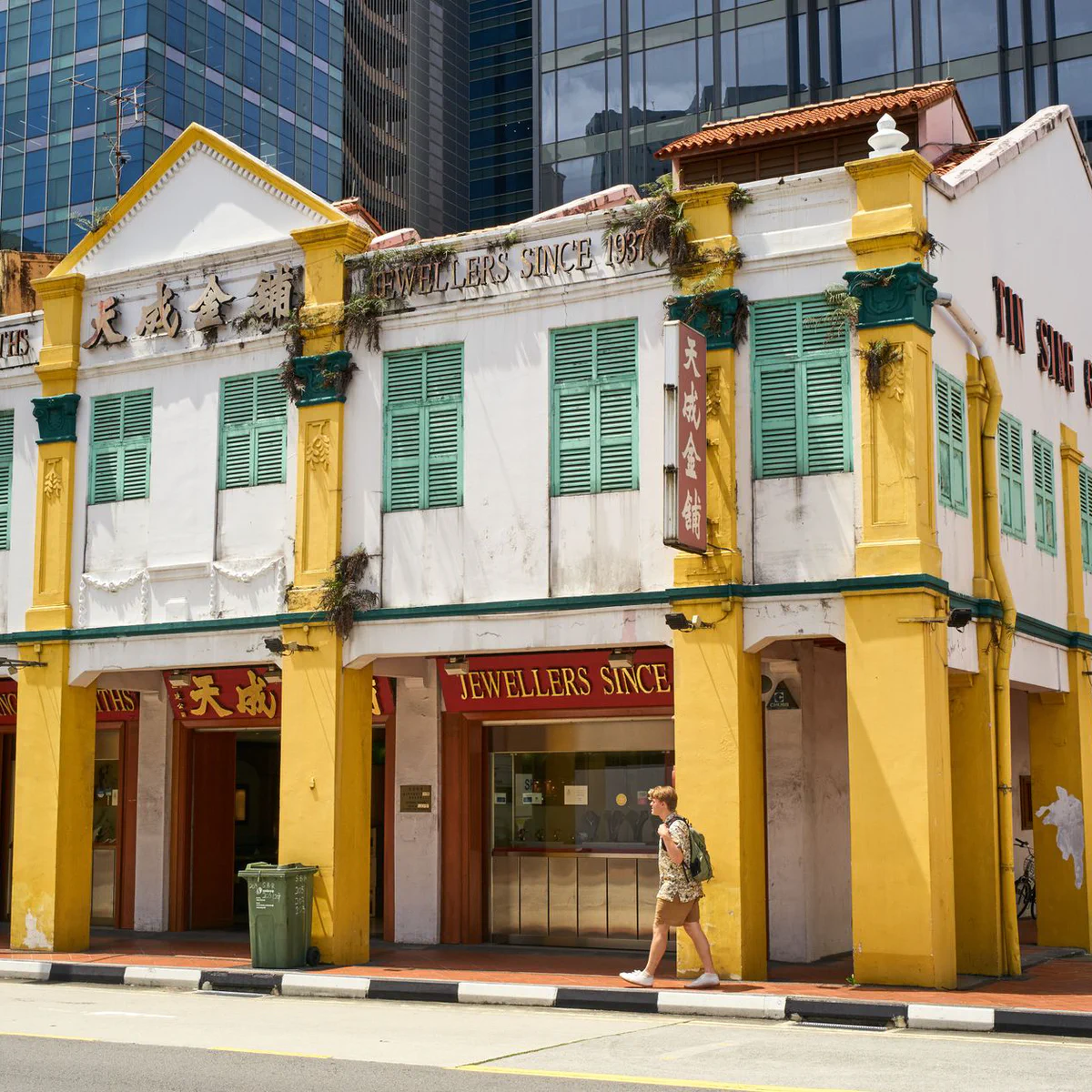
- Chinatown - This is a fantastic base for first-timers. You’re close to the major temples and the MRT, and the food scene is right on your doorstep. One mid-range example is Pipp Residence. It can be noisy and chaotic, but that’s part of the charm. MRT Wat Mangkon station puts you near Yaowarat Road. Chinatown is well connected to the temple district and the market area, making it a strong choice for those focused on sightseeing. However, it is less central for modern Bangkok attractions like Siam and Sukhumvit.
- Sukhumvit - Better for nightlife, shopping, and luxury hotels. The BTS Skytrain runs through it, giving fast access to Siam and the riverside. Areas like Nana, Asok, and Phrom Phong have a wide range of accommodation. Sukhumvit is more tourist-oriented and can be expensive, but the transport connectivity is excellent. This is the best choice if you plan to spend time in modern Bangkok and want easy access to the BTS.
- Riverside - Offers scenic views and quieter surroundings, but public transport depends on boats or taxis; less convenient for quick trips to markets and malls. If you choose Riverside, stay near a ferry pier or arrange private transfers. The area is popular for luxury hotels and dinner cruises. It is ideal for a romantic or relaxing stay, but you will likely rely on taxis or boats for most outings.
Price hotels for your actual dates after choosing the district. Chinatown keeps Day 1 close to the temples, while Sukhumvit shortens the journey to the Day 3 Option B stops. Changing hotels rarely earns back enough time on a three-day trip to justify packing twice.
Essential Tips for First-Timers
Dress code for temples. Always cover your shoulders and knees. This is strictly enforced at the Grand Palace. Wear light, breathable fabrics to stay cool. The Grand Palace no longer provides free sarong rentals, so bring your own scarf or long pants. Shoes must be removed inside temple buildings.
Heat management. Bangkok is humid. Carry a water bottle, use sunscreen, and don’t be afraid to duck into a mall or a 7-Eleven for a 10-minute air-con break. Plan your heaviest walking for the early morning. Wear lightweight, breathable fabrics.
Cash is essential. While malls and hotels take cards, the heart of Bangkok—the markets and street food stalls—is cash-only. ATMs are everywhere, but the fees for foreign cards are high, so withdraw larger amounts at once. Larger malls and hotels accept cards.
Language. A few Thai words go a long way. Most people in tourist areas speak some English, but a “Sawatdee-kap” (hello) and “Khop-khun-kap” (thank you) will always get you a smile. Most signs in transport and attractions have English translations.
Stay scam-aware. Trust your own research over unsolicited advice from drivers. If someone tells you the palace is closed, just keep walking. Use Grab for taxis to avoid the “no meter” headache.
Complete the route with the temple route comparison for live-check decisions, the food guide for meals near each day’s final district and the where-to-stay comparison before choosing a hotel that depends on taxis.
Checked details
Prices and opening hours
Checked 20 August 2026
- Grand Palace hours and admission
- Daily, 8:30 AM–4:30 PM; tickets sold until 3:30 PM; foreign admission 500 THB
- Verify with Grand Palace official FAQ
- Wat Pho hours and admission
- Daily, 8:00 AM–7:30 PM; foreign admission 300 THB
- Verify with Wat Pho official visit information
Live prices, closures and admission conditions can change after the checked date. Use the linked operator page before booking or departure.
Quick answers
Frequently asked questions
Is 3 days enough for Bangkok?
What is the best way to get around Bangkok?
What should I wear to temples in Bangkok?
How much does it cost to visit the Grand Palace?
Is Chatuchak Market open every day?
Research notes
Official planning references
We use these primary references for the time-sensitive details relevant to this guide. Rules, prices and operating hours can change, so confirm the live information before you travel.
- BTS Skytrain — Routes and Fares
Details to check: Official BTS route and fare checks behind the district grouping (checked 2026-08-30).
- Bangkok MRT — System Map
Details to check: Official MRT stations and service windows behind the Old City and Chinatown connections (checked 2026-08-30).
- State Railway of Thailand — Timetables and Booking
Details to check: Official timetable pathway for the optional Ayutthaya rail day (checked 2026-08-30).
Guide reviewed 31 August 2026. Confirm live rules, prices and operating details with the linked authority before travel.