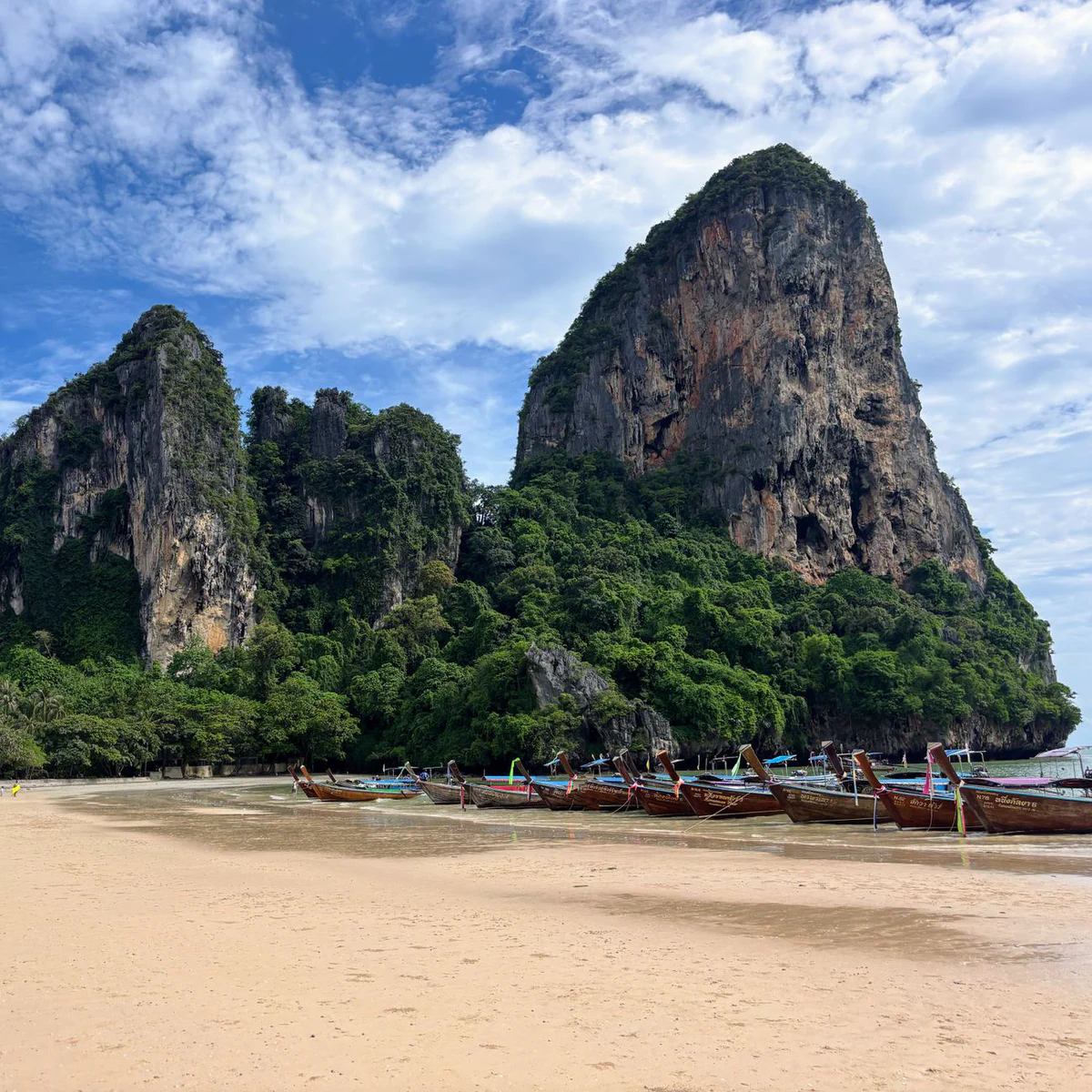
Thailand 7-Day Itinerary: Three Realistic Routes for One Week
Choose a realistic Thailand 7-day itinerary with Bangkok, Chiang Mai, Khao Sok, Phuket or Krabi, daily route tables, transfer logic and baht budgets.


Seven days in Thailand is enough for a memorable first trip, but only if you decide what the week is for. The most balanced route is Bangkok, Chiang Mai and one Andaman coast base; it gives you temples, food, northern culture and a beach without pretending that airport days are sightseeing days. If you want jungle and quiet islands, replace Chiang Mai with Khao Sok and Koh Lanta. If beaches are the whole point, stay south and accept the weather risk.
Every route below uses two nights in each base and treats arrival or departure as a real block of work: airport transfer, check-in, luggage, meals and recovery. Three bases is already a fast week. Compare your month in the Thailand weather by month guide, use the Thailand getting-around guide, and check live flight, ferry and attraction information before paying for non-refundable plans.
Compare the three Thailand one-week routes
The budget bands are early planning ranges per person for seven days, excluding international flights. They are derived from the site’s Thailand planning bands—budget-focused ฿1,200–2,000 per day, comfortable ฿2,800–5,500, and premium ฿7,000+—with route transfers, islands and private rooms capable of pushing the actual total higher. Use the Thailand travel cost guide to price your dates.
| Route | Exact base sequence | Pace | Travel days | Early budget band* | Best for | Main compromise |
|---|---|---|---|---|---|---|
| 1. Classic contrasts | Bangkok (Days 1–2) → Chiang Mai (Days 3–4) → Phuket or Krabi (Days 5–7) | Fast, three bases | 3 (Days 3, 5 and departure Day 7) | ฿8,400–14,000 budget; ฿19,600–38,500 comfortable; ฿49,000+ premium | First-time visitors who want the widest contrast | Two domestic flight moves and very little spare time |
| 2. Nature and quiet island | Bangkok (Days 1–2) → Khao Sok (Days 3–4) → Koh Lanta (Days 5–7) | Moderate-fast, transfer-heavy | 3 (Days 3, 5 and departure Day 7) | Same baseline; ground and ferry legs can add cost | Jungle, limestone lake and slower island evenings | No Chiang Mai, plus minivan and ferry uncertainty |
| 3. Southern scenery | Phuket (Days 1–2) → Khao Sok (Days 3–4) → Krabi (Days 5–7) | Fast, south-only | 3 (Days 3, 5 and departure Day 7) | Same baseline; marine trips and private cars raise it | Beach-first travelers who want karst scenery | Skips Bangkok and the north; several days depend on Andaman weather |
If heat, children, mobility needs or luggage make three bases feel like one transfer too many, choose two bases. The 10-day itinerary is the better place to add a region; this seven-day page is designed around subtraction and clear replacements.
Route 1: Bangkok, Chiang Mai and one Andaman base
Choose this route when Thailand means more than beaches. Bangkok supplies the dense, humid city start; Chiang Mai changes the scale with old-city temples and a mountain day; Phuket or Krabi gives you a final recovery window. The price is three airport movements, so pack light and do not attach a timed boat or long excursion to a flight day.
Route 1 timeline
| Day | Base | Morning block | Afternoon/evening block | Transfer and pacing note |
|---|---|---|---|---|
| 1 | Bangkok | Arrival, immigration, luggage and hotel transfer | Check-in, rest, nearby dinner or a short riverside outing | Arrival day; keep the first attraction optional |
| 2 | Bangkok | Historic district: Grand Palace area and Wat Pho | Wat Arun, then flexible Chinatown dinner or hotel rest | One geographic cluster, with heat and shade built in |
| 3 | Chiang Mai | Bangkok check-out, airport, flight and Chiang Mai transfer | Old City temples and a nearby meal | Flight day; use the Chiang Mai Where to Stay guide to reduce the last-mile trip |
| 4 | Chiang Mai | Doi Suthep or one responsible elephant programme | Lunch, rest, Nimman or Night Bazaar | One substantial experience only |
| 5 | Phuket or Krabi | Check-out, airport, flight, luggage and hotel transfer | Local beach or town reset | Flight day; choose Phuket for connections or Krabi for karst scenery |
| 6 | Phuket or Krabi | One marine or coastal excursion | Return, shower and unbooked evening | Boat day is weather-dependent and tiring |
| 7 | Phuket or Krabi / departure | Final breakfast, swim or nearby walk | Airport transfer and onward flight | Do not plan a long boat connection before a tight flight |
Day 1 — arrive in Bangkok without spending your energy twice
Arrival to early afternoon: Confirm whether you land at Suvarnabhumi (BKK) or Don Mueang (DMK), collect bags and allow for the road or rail connection to your hotel. For your first base, use the Bangkok Where to Stay guide to choose a practical BTS, MRT or river connection rather than treating the district name as enough.
Late afternoon: Check in, shower, hydrate and sleep or sit somewhere cool. If the flight arrived early and your body cooperates, make the Chao Phraya riverside your only outing; ask your hotel about the simplest current river-transport option. If you land late, dinner near the hotel is the correct plan. Protecting Day 2 matters more than forcing an iconic photograph into a jet-lagged afternoon.

Day 2 — Bangkok’s historic core, then one flexible evening
Morning: Start with the Grand Palace and Wat Phra Kaew area, then walk or ride a short distance to Wat Pho. Use the Bangkok things to do guide for alternatives and check each official operator notice before visiting. Covered shoulders and knees are the respectful default for temple visits; shoes, shade and water become small logistical issues by the third hour.
Afternoon: Eat a proper lunch, sit down and cross the river to Wat Arun only if everyone still has capacity. Replacement rule: if the heat or a queue takes the morning, remove Wat Arun rather than turning the evening into another cross-city transfer. Use Yaowarat for dinner only when it is a convenient meal district, not as a second sightseeing checklist.
Day 3 — fly to Chiang Mai and use a walkable afternoon
Morning: Check out, travel to the correct Bangkok airport and allow for airline check-in and baggage rules. BKK and DMK are separate airports; build the airport leg into the morning even when the flight itself is short. After landing, collect luggage and transfer to Chiang Mai. Leave bags with the hotel if the room is not ready.
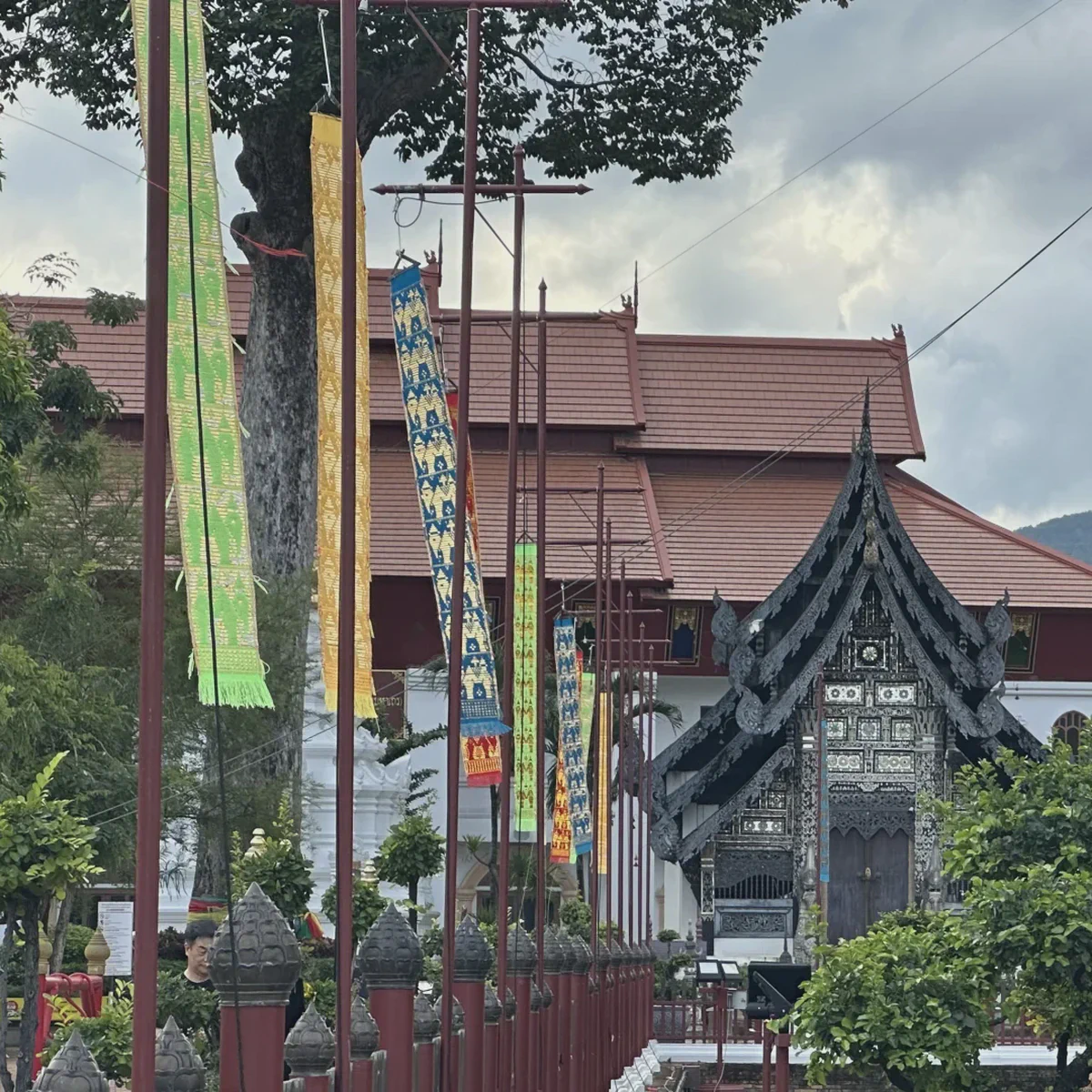
Afternoon and evening: Stay within Chiang Mai’s Old City for Wat Chedi Luang and Wat Phra Singh, or choose one temple plus a long café break. The Chiang Mai Old City guide covers the area. Stay in the Old City for walkability or Nimman for cafés and a different evening rhythm; choose via the Chiang Mai Where to Stay guide. A market is optional. The stopping point is dinner near your base and an early night.

Day 4 — one Chiang Mai anchor, not an overbooked excursion day
Morning: Choose Doi Suthep for mountain views and a contrasting temple setting, using the Doi Suthep guide to plan the road and stair effort. The alternative is one responsible elephant programme; use the elephant sanctuary guide and reject riding, performances and forced close contact. These are different full or substantial half-day blocks.
Afternoon: Return for lunch and rest. If Doi Suthep was the morning anchor, use Nimman or a quiet café; if an elephant programme filled the morning, do not add a mountain visit. Replacement rule: in smoke, rain or poor visibility, remove Doi Suthep and replace it with a cooking class, craft activity or indoor café-and-food block—not an additional remote day trip. Keep the evening near the hotel.
Day 5 — fly south and let the beach be the activity
Morning to mid-afternoon: Check out, reach the airport, fly to Phuket or Krabi, collect luggage and make the final transfer. Choose Phuket when flight choice, services and nightlife matter; choose Krabi when Railay, limestone scenery and a quieter finish matter. A room near a beach is not automatically convenient—look at the actual last-mile route and what you plan to do.
Late afternoon: Eat close to the hotel, check in and swim or walk locally if conditions allow. Replacement rule: if the flight is delayed, remove the swim and keep only dinner and rest. Do not book an island excursion with a narrow check-in window on arrival day.
Day 6 — one sea day, with a land-based replacement ready
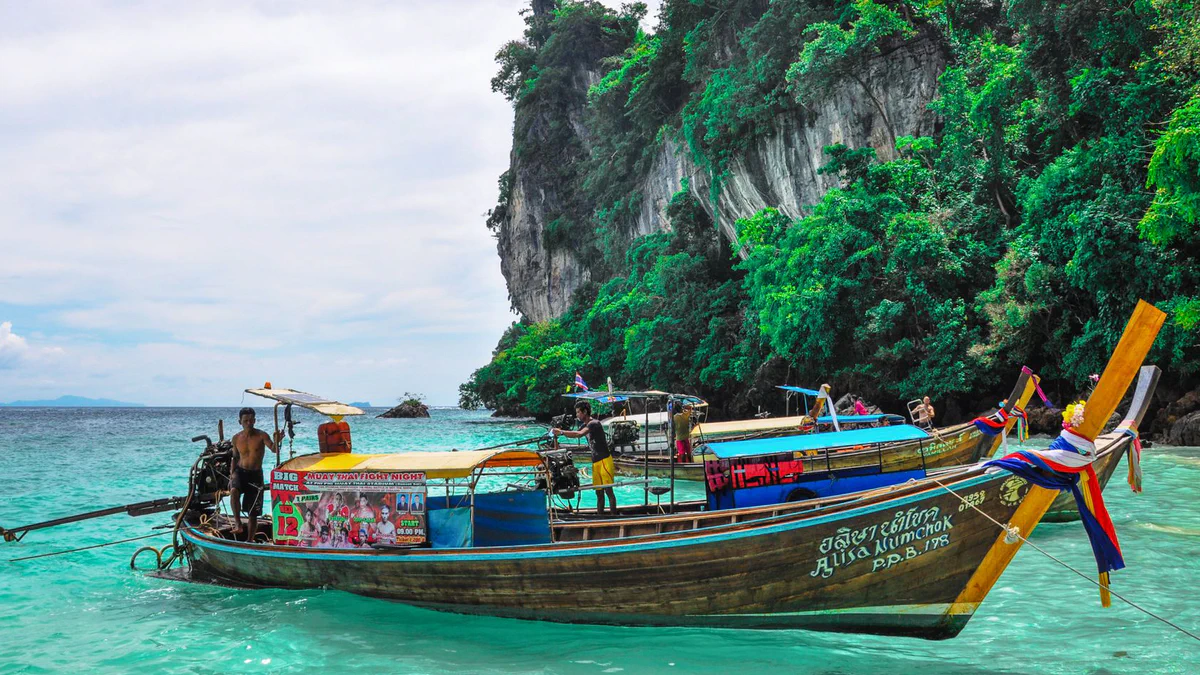
Choose one marine block: Phi Phi or a bay trip from Phuket, or Railay/Hong Islands from a Krabi base. Confirm the current operator departure, meeting point, inclusions, sea conditions and cancellation policy. These details change; the examples are route shapes, not promises of daily operation.
The afternoon should be return, shower, food and quiet. Replacement rule: if rain, wind or accumulated fatigue makes the boat a poor choice, replace the entire marine block with Old Phuket Town, Krabi Town, a nearby beach in safe conditions or a long indoor rest. Do not move a cancelled boat into departure morning.
Day 7 — final beach morning and a safe departure
Keep breakfast, one nearby swim or a short walk as the whole morning. Check out, allow for luggage collection and leave a generous road buffer to Phuket International Airport (HKT) or Krabi International Airport (KBV). If your international ticket departs from Bangkok, treat the onward flight as another travel chain and check the airport, baggage handling and connection terms. A final beach hour is never worth a missed international flight.
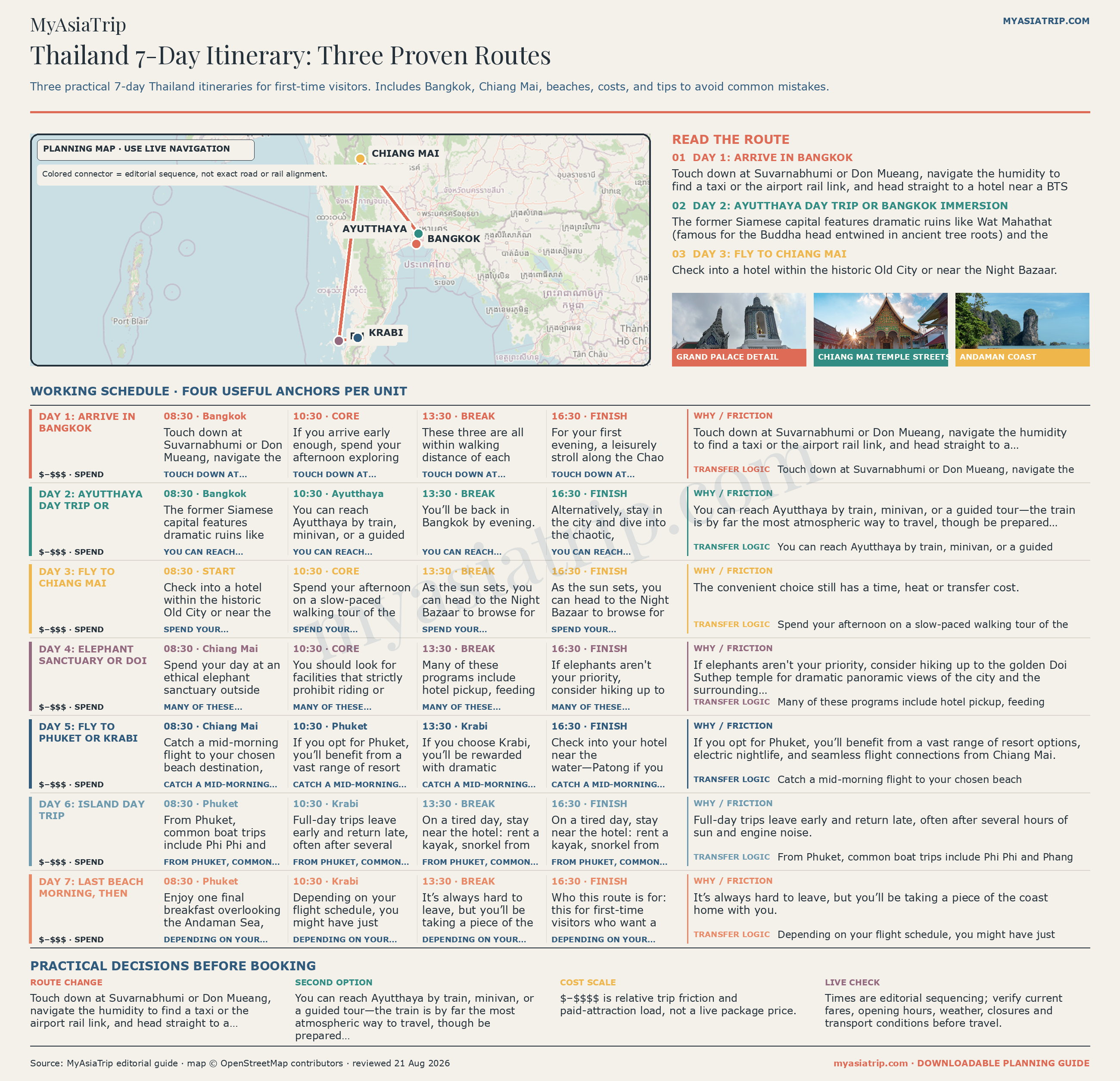
The approved downloadable infographic currently illustrates this classic Bangkok–Chiang Mai–Andaman sequence, including its seven day anchors. It does not illustrate the Khao Sok/Koh Lanta or Phuket/Khao Sok/Krabi routes below; use their timeline tables as the current text plan.
Route 2: Bangkok, Khao Sok and Koh Lanta
This is the best fit for travelers who would rather hear insects and longtail engines than add a northern temple circuit. It is not a simple overland shortcut. Bangkok to Khao Sok needs an airport, a flight to Phuket or Surat Thani, baggage and a ground transfer, so the route reserves Day 3 for that chain. Koh Lanta then adds a pier or road connection; timetable changes and sea conditions deserve a buffer.
Route 2 timeline
| Day | Base | Morning block | Afternoon/evening block | Transfer and pacing note |
|---|---|---|---|---|
| 1 | Bangkok | Arrival, luggage and hotel transfer | Rest and nearby dinner | Use the Bangkok Where to Stay guide |
| 2 | Bangkok | Historic district or one Bangkok neighborhood | Long lunch, river or food block | Keep the evening flexible before the transfer chain |
| 3 | Khao Sok | Check-out, airport, flight and baggage | Ground transfer, check-in and short nature walk | Travel day; a morning minivan alone is not realistic |
| 4 | Khao Sok | Cheow Lan Lake boat and short nature block | Return, lodge meal and recovery | Check the lake departure point before booking lodging |
| 5 | Koh Lanta | Khao Sok check-out and minivan/road transfer | Check-in, beach and sunset | Transfer day; ferry or road timing can shift |
| 6 | Koh Lanta | One dive/snorkel or island block | Rest, Lanta Old Town or nearby meal | Replace the boat with a land day in poor conditions |
| 7 | Koh Lanta / departure | Breakfast and luggage; ferry/road to Trang or Krabi | Airport transfer and onward flight | Keep a large boat-to-flight margin |

Day 1 — arrive in Bangkok and keep the first evening close
Arrival to afternoon: Complete immigration, baggage collection and the transfer to a base chosen with the Bangkok Where to Stay guide. Check in or leave bags, shower and take a proper break.
Late afternoon to evening: If energy allows, eat nearby or make a short riverside outing. If you arrive late, remove the outing and sleep. This is the recovery block that makes the next day’s transfer preparation possible.
Day 2 — one Bangkok neighborhood before the southern transfer
Morning: Choose the Grand Palace and Wat Pho cluster, or stay within one neighborhood for food and a slower walk. The Bangkok things to do guide helps with a nearby alternative.
Afternoon and evening: Take a long lunch, return for luggage and check the next day’s airport and flight tasks. Replacement rule: if the morning is hot or crowded, remove the second landmark rather than adding Ayutthaya. Keep dinner close to the hotel and the evening unbooked before the flight-plus-ground-transfer chain.
Day 3 — Bangkok to Khao Sok is a flight-plus-ground-transfer day
Morning: Check out, travel to the correct Bangkok airport, complete airline and baggage tasks, and fly to Phuket or Surat Thani according to the live route that fits your lodging. After landing, collect bags and meet the pre-arranged van, bus or driver. The airport-to-park road leg is part of the day, not invisible time.
Afternoon and evening: Check in near the activity you actually booked, eat and take only a short walk if daylight and energy remain. Check whether the next day’s Cheow Lan Lake departure uses a different entrance or pickup point. Replacement rule: if a late flight makes the lake timing unsafe, remove the lake morning and use a shorter park or village block; never pretend a missed connection is a full nature day.
Day 4 — Cheow Lan Lake, with the lake entrance in the plan
Leave early for the confirmed Cheow Lan Lake meeting point. A boat journey, a short trek and a park or lodge meal can fill the usable day. Floating accommodation can be memorable but adds an accommodation change and boat dependence; choose it only when the lake, rather than a general Khao Sok visit, is the main reason for the route. Wildlife sightings are possibilities, not guarantees.
Return for dinner and rest. Weather replacement: when storms or poor water conditions affect the boat, replace the lake block with a land-based park walk or lodge recovery; do not add an evening drive to compensate.
Day 5 — Khao Sok to Koh Lanta
Morning: Check out, load luggage and take the planned minivan or private road transfer south. Depending on the current route, a ferry or vehicle ferry may be involved; confirm the last pier and arrival arrangement rather than relying on a generic “Khao Sok to Lanta” duration.
Afternoon: Check in, eat and walk the beach near your base. Choose a beachfront area when sunset and easy recovery matter; an inland room may be cheaper but creates another ride every time you want the sand. No boat excursion belongs on this transfer day.

Day 6 — one Koh Lanta sea block or a genuinely slow island day
Choose one dive, snorkel or nearby-island excursion if the sea and operator schedule fit. A single-day trip is the limit here; liveaboards and ambitious multi-island loops belong to a longer itinerary. Otherwise stay on land: Long Beach or Klong Dao is easier for a low-friction day, while Lanta Old Town gives the route a cultural and food block without another boat.
Replacement rule: cancel the sea block in poor conditions and replace it with a beach near the hotel, Lanta Old Town and a long lunch. Do not add a second boat the following morning.
Day 7 — Koh Lanta to the airport with luggage and sea margin
Have breakfast, pack and leave the island using the confirmed ferry or road combination toward Trang or Krabi. A combined ferry-and-minivan ticket toward Phuket Airport can fit some schedules, but compare the full chain and keep a generous margin before the flight. With a separate international ticket, an overnight near the departure airport may be the less stressful choice. The final island morning is a short walk, not an expedition.
Who this route is for: Nature-focused travelers who accept three transfer days, skip Chiang Mai and value quiet island evenings more than a broad first-trip sampler.
Route 3: Phuket, Khao Sok and Krabi
Choose this route when beaches and limestone scenery matter more than Bangkok’s temples or Chiang Mai’s northern culture. It keeps all three bases in the south, which removes a northern flight but still includes a substantial road transfer into Khao Sok and another road move to Krabi. Do not describe it as a relaxed beach week: Days 3 and 5 are travel days, and Day 6 must remain weather-flexible.
Route 3 timeline
| Day | Base | Morning block | Afternoon/evening block | Transfer and pacing note |
|---|---|---|---|---|
| 1 | Phuket | Arrival, bags and airport transfer | Check-in, local beach and dinner | Choose a base area by evening and airport needs |
| 2 | Phuket | One island or bay excursion | Return, shower and flexible evening | Boat exposure; keep a land replacement |
| 3 | Khao Sok | Phuket check-out and ground transfer | Check-in, short park or lodge block | Treat the road leg as the day’s main work |
| 4 | Khao Sok | Cheow Lan Lake or land-based park block | Return and rest | Confirm weather and meeting point |
| 5 | Krabi | Khao Sok check-out and road transfer | Ao Nang/Railay check-in and local reset | Railay adds a boat last mile |
| 6 | Krabi | Hong Islands/Railay/coastal anchor | Return and quiet dinner | Replace sea exposure with land-based Krabi |
| 7 | Krabi / departure | Breakfast, nearby swim and luggage | Transfer to KBV or onward connection | Do not tie a non-refundable flight to a narrow boat link |

Day 1 — arrive in Phuket and stay local
From Phuket International Airport, take the road transfer to the chosen base: Patong for nightlife and dense services, Kata or Karon for a calmer resort strip, or a northern beach for quiet at the cost of longer transfers. Check in, eat and use only the nearby beach or town for the first afternoon. Replacement rule: if the flight arrives late, remove the beach walk and keep dinner and sleep.
Day 2 — one Phuket sea or bay day
Choose one current operator itinerary, such as a bay or island day, after checking its pier, departure, inclusions, weather policy and any current park notices. Early departure, boat motion and sun make this a full block even if the map looks compact. Return for a shower and unbooked evening.
If the sea is unsettled, replace the entire boat block with Old Phuket Town, a nearby beach when flags permit, a food-focused indoor afternoon or rest. Do not add two smaller excursions to force the original sightseeing count.
Day 3 — Phuket to Khao Sok by road
Check out, load bags and take the confirmed minivan or private transfer north. The road journey is the anchor; add only fuel, lunch and brief comfort stops. On arrival, check in near the next activity’s pickup point and ask how weather affects the park’s boat routes.
The afternoon is a short park-edge walk or lodge rest. Replacement rule: if traffic turns the transfer into the whole day, remove the walk. Khao Sok is not improved by arriving exhausted and immediately starting another transfer.
Day 4 — Cheow Lan Lake or a land-based Khao Sok day
Use the morning and early afternoon for a confirmed Cheow Lan Lake boat and short trek, with time for a meal and return. If you prefer less water dependence, replace this full block with a land-based park walk and lodge time. Floating accommodation is optional, not an automatic upgrade; it adds luggage handling and another check-in.

Day 5 — Khao Sok to Krabi
Travel by confirmed road transfer toward Krabi, then choose Ao Nang for easier road access and services or Railay for a car-free limestone setting. Railay’s final water connection means luggage and weather remain part of the plan. Check in, eat nearby and leave the afternoon to a local beach or a quiet view.
Day 6 — Krabi’s one coastal anchor
Choose either a Hong Islands or other current marine block, or spend the day on land around Railay and Ao Nang with a short walk, kayak or climbing session suited to your ability. Replacement rule: if wind or rain makes the sea plan unsuitable, remove the boat and use Krabi Town, Railay on a safe window, a café-and-lunch day or rest. Do not shift a cancelled sea trip to departure morning.
Day 7 — depart Krabi with the last-mile plan visible
Keep the final morning close to the hotel. Collect luggage, allow road traffic and reach Krabi International Airport (KBV) with a buffer appropriate to the actual flight. If you must connect through Bangkok, confirm whether the itinerary uses the same airport and whether bags are checked through. A separate ticket makes the connection your responsibility; price an overnight when the chain is tight.
Who this route is for: Beach-first travelers who prefer southern transfers to a northbound flight and can let sea conditions decide the highlight of Days 2, 4 and 6.
Phuket or Krabi: which southern base fits?
Phuket is a practical choice when you value flight options, a broad accommodation market, restaurant range and nightlife. Patong is convenient for late evenings but noisy and crowded; Kata and Karon trade some nightlife for a calmer resort rhythm. Krabi is a better fit when Railay, karst scenery and a compact mainland base matter more. Ao Nang has services and boat access; Railay is visually special but adds a water last mile for every bag.
Use the islands and beaches guide to compare the coast and marine priorities. There is no confirmed southern Where to Stay article in this site’s inventory, so this page intentionally does not invent one. Let the activity meeting point, airport and actual map distance decide the area.
Budget, transport and packing decisions
A realistic seven-day budget
| Planning level | Seven-day baseline per person | What it assumes | What commonly pushes it higher |
|---|---|---|---|
| Budget-focused | ฿8,400–14,000 | Shared room where relevant, local meals, simple transport and limited paid activities | Solo rooms, domestic flights booked late, island legs and extra excursions |
| Comfortable | ฿19,600–38,500 | Private or comfortable shared room, mixed local meals, domestic transport and selected activities | Beachfront rooms, private transfers, peak dates and marine fees |
| Premium | ฿49,000+ | Higher room category, private transport and more paid experiences | Resort demand, premium flights, private boats and solo occupancy |
These are planning bands, not quotes. Price the actual domestic flights, baggage, rooms and one or two activities before booking. A cheap room far from a pier or rail station can cost more in time and repeated rides. The Thailand travel cost guide explains the assumptions in more detail.
Flights, ground legs and luggage
Domestic fares differ by baggage allowance and fare conditions. A small carry-on can work for a week if you pack quick-dry clothes and plan laundry, but weigh it before the airport. For Khao Sok, include the airport transfer on both sides of the flight; for Koh Lanta or Railay, include the pier and final luggage movement. Minivans can be cheaper but cramped. Private transfers buy space and a clearer pickup, not a guarantee against traffic.
Ferries and boat trips are weather-sensitive. Keep the final ferry away from a non-refundable flight, and use the Thailand getting-around guide to compare the complete journey rather than a headline fare.
Pack temple-appropriate clothing covering shoulders and knees, a waterproof phone pouch or dry bag, insect repellent, sunscreen, swimwear, a hat, a light layer for heavy air-conditioning and a travel adapter. Use drinking water that is bottled or properly treated. Compare insurance exclusions with planned marine, hiking or wildlife activities, and ask park operators how weather changes boat access.
Replacement rules for a slower, family or wet-weather week
The route becomes better when you remove the block that creates the problem.
- Slower pace: remove Chiang Mai from Route 1 or Khao Sok from Route 3 and make the remaining two bases the week. Do not add Ayutthaya, Pai or a fourth beach to the freed space.
- Families: replace a remote elephant or boat block with a half-day cooking, craft or nearby beach block, and keep the last day close to the hotel. For young children, Bangkok plus one southern base is usually easier on naps and luggage.
- Heat or smoke: replace Doi Suthep with cooking, indoor food and café time. Move only the specific block, not the whole day, and keep a recovery afternoon.
- Rain or rough sea: replace the entire marine block with Old Phuket Town, Krabi Town, Lanta Old Town, a nearby safe beach or rest. Do not “make up” the boat on departure day.
- Budget pressure: remove private transfers and a second paid excursion before choosing a remote hotel. Keep one meaningful anchor in each region.
The strongest one-week route is not the one with the most pins on a map. It is the one that still works when the first flight is late, the afternoon is brutally humid and everyone needs a quiet meal. Choose the route whose compromise you can actually live with, then let the optional block be optional.
Quick answers
Frequently asked questions
Is 7 days enough for a first trip to Thailand?
How much does a 7-day Thailand trip cost?
Should I go to Phuket or Krabi?
Can I travel from Bangkok to Khao Sok in one morning?
Research notes
Official planning references
We use these primary references for the time-sensitive details relevant to this guide. Rules, prices and operating hours can change, so confirm the live information before you travel.
- Thai Meteorological Department — Seasons of Thailand
Details to check: Broad season framing and the reminder that Thai coasts differ (checked 2026-09-17).
- State Railway of Thailand — Timetables and Booking
Details to check: Official rail timetable source behind the rail-versus-flight planning caveat (checked 2026-09-17).
- Tourism Authority of Thailand — Bangkok
Details to check: Official Bangkok destination context used for the city blocks (checked 2026-09-17).
- Tourism Authority of Thailand — Thailand
Details to check: Regional destination and food context; attraction and operator details remain live checks (checked 2026-09-17).
Guide reviewed 17 September 2026. Confirm live rules, prices and operating details with the linked authority before travel.