Singapore Travel Cost: Hotels, Food, Transport and Attractions
Build a realistic Singapore trip budget using live hotel and flight prices, current public-transport fares, food choices, attractions, insurance and eSIM costs.


Singapore has a reputation for being expensive, and while that’s true for luxury hotels and rooftop cocktails, the city is remarkably accessible if you approach it with a tactical mindset. For a land-only trip in 2026, a realistic starting point is S$100–150 per person per day for a budget-conscious stay, S$250–350 for a comfortable mid-range experience, and S$600 or more if you’re looking for high-end luxury. These figures exclude your international flights, and if you’re traveling solo, be prepared to pay a premium for the privacy of your own hotel room.
Treat these ranges as a flexible framework rather than a rigid quote. A single night in a Marina Bay suite or a round of drinks at a designer bar can easily double your daily spend. Decide where convenience or atmosphere is worth paying for; using the MRT and eating at well-regarded hawker centers leaves more of the budget for those deliberate splurges.

Singapore dollar exchange-rate table
These are mid-market planning rates checked on 10 September 2026, not the cash rate guaranteed by an airport counter, ATM or card issuer. XE recorded S$1 at about US$0.789, €0.679, £0.583, A$1.101, ¥121.63 and CNY5.30 on that date. Round the numbers when budgeting, then allow for your bank’s foreign-transaction fee and exchange spread.
| Home currency | Approximate value in SGD | Reverse planning shortcut | Example |
|---|---|---|---|
| US dollar (USD) | US$1 ≈ S$1.27 | S$1 ≈ US$0.79 | S$100 ≈ US$79 |
| Euro (EUR) | €1 ≈ S$1.47 | S$1 ≈ €0.68 | S$100 ≈ €68 |
| British pound (GBP) | £1 ≈ S$1.71 | S$1 ≈ £0.58 | S$100 ≈ £58 |
| Australian dollar (AUD) | A$1 ≈ S$0.91 | S$1 ≈ A$1.10 | S$100 ≈ A$110 |
| Japanese yen (JPY) | ¥100 ≈ S$0.82 | S$1 ≈ ¥122 | S$100 ≈ ¥12,200 |
| Chinese yuan (CNY) | CNY1 ≈ S$0.19 | S$1 ≈ CNY5.30 | S$100 ≈ CNY530 |
| Hong Kong dollar (HKD) | HK$1 ≈ S$0.16 | S$1 ≈ HK$6.19 | S$100 ≈ HK$619 |
| Malaysian ringgit (MYR) | RM1 ≈ S$0.31 | S$1 ≈ RM3.21 | S$100 ≈ RM321 |
When a card terminal offers to charge in your home currency, the quoted convenience rate may include an additional conversion margin. For most travellers, selecting SGD and letting the card issuer convert is the cleaner comparison, provided the card itself does not impose a heavy foreign-transaction fee.
Singapore daily budget at a glance
| Expense pattern | Budget | Comfortable | Family comfort | High-spend |
|---|---|---|---|---|
| Accommodation per person, sharing where relevant | S$35–100 | S$120–220 | Family room often S$280–520+ total | S$250–500+ |
| Meals and drinks per person | S$20–40 | S$45–90 | S$25–55 before adult drinks | S$120–250+ |
| Local transport per person | S$6–10 | S$15–35 | Higher ride-hailing share | Private cars and frequent taxis |
| Attractions per person | Mostly free plus one low-cost ticket | One major paid sight a day | Sentosa and Mandai are the largest ticket days | Premium access and private experiences |
| Travel style | Per person, per day | Meals per person | Accommodation assumption | Transport and attractions |
|---|---|---|---|---|
| Careful budget | S$110–170 | Hawker mains S$5–8; drinks S$1.50–4; roughly S$20–35 for a hawker-led day | Dorm bed S$35–70, or half of an S$120–200 compact private room | MRT/bus S$6–10; free sights plus an occasional paid entry |
| Comfortable mid-range | S$240–380 | Hawker breakfast or lunch plus a S$20–40 casual restaurant meal; roughly S$45–80 daily | Half of an S$240–440 well-located 3- or 4-star room | Public transport, one or two cars, and one major paid attraction |
| Family comfort | S$260–420 | Food courts and child-friendly restaurants; roughly S$35–70 per person | S$280–520+ family room or connecting-room configuration, divided by actual occupancy | More ride-hailing; Sentosa and Mandai tickets are the pressure points |
| High-spend | S$600+ | Hotel breakfast, destination dining and drinks; dinner alone can exceed S$100 | Half of an S$500–1,000+ Marina Bay, Sentosa or luxury-city room | Cars, premium views, theme parks and special experiences |
Use these ranges to choose a provisional tier, then replace the accommodation and ticket assumptions with live prices for your dates. The official links at the end of this guide are the sources of record for public-transport fares, destination information and currency details.
Worked Singapore trip-cost examples
The examples below are estimated planning models, not live packages. Accommodation is divided between two adults unless the row says family; totals exclude international flights, shopping, visa fees and insurance. Replace the hotel line with the final tax-inclusive checkout price for your dates.
| Trip model | Hotel configuration | Food | Local transport | Paid attractions | Estimated land total per person |
|---|---|---|---|---|---|
| 3 days / 2 nights, careful first trip | Hostel or 2-star/compact budget room in Chinatown, Little India or Lavender; S$70–120 pp total | S$75–105 | S$25–40 | S$45–80 for one conservatory or museum anchor | S$215–345 plus contingency |
| 3 days / 2 nights, comfortable first trip | Central 3- or 4-star room at S$250–380/night; S$250–380 pp total | S$150–225 | S$45–80 | S$90–170 for two major entries | S$535–855 |
| 5 days / 4 nights, family of four | Family-friendly 4-star hotel in Orchard or Bugis at S$330–520/night; S$330–520 pp | S$220–350 pp | S$90–170 pp, including several cars | S$260–480 pp for Sentosa, Mandai and Marina Bay anchors | S$900–1,520 pp |
| 5 days / 4 nights, luxury couple | 5-star Marina Bay or Sentosa room at S$650–1,000+/night; S$1,300–2,000+ pp | S$500–900 | S$180–350 | S$250–500 | S$2,230–3,750+ pp |
| 2-night Singapore stop in a Malaysia trip | 3-star city room, hawker-led meals, Marina Bay free sights and one paid entry | S$85–135 | S$25–50 | S$35–70 | S$295–500 pp, including S$150–245 pp lodging |
For example, a couple sharing a S$300 four-star room for two nights spends S$300 each on accommodation. Add S$180 each for three days of mixed hawker and casual meals, S$55 for MRT plus one airport car, S$120 for two ticketed attractions and a 10% buffer: the working total is about S$720 per person before flights. This is much more useful than applying one global “mid-range” average to every booking.

Build the budget in layers
Constructing a realistic budget is a multi-step process. Don’t just rely on a single total; layer your costs to see where the real pressure points are:
- Search flights for your specific dates, and be sure to include baggage and seat selection fees.
- Price your entire hotel stay, keeping a close eye on the taxes and service charges that are often added at the end.
- Add the entrance fees for the specific attractions you genuinely plan to visit.
- Set a daily allowance for food and local transport based on your travel style.
- Factor in the “invisible” costs: travel insurance, mobile data, and a 10% contingency for those unexpected tropical rainstorms or taxi rides.
Always work with live quotes. Hotel inventory and flight prices in Singapore can shift dramatically during major events or holidays, so a “scraped average” is rarely accurate. Always look at the final checkout price—that’s the only number that actually matters to your bank account.
Build your Singapore budget by category
Accommodation controls the total
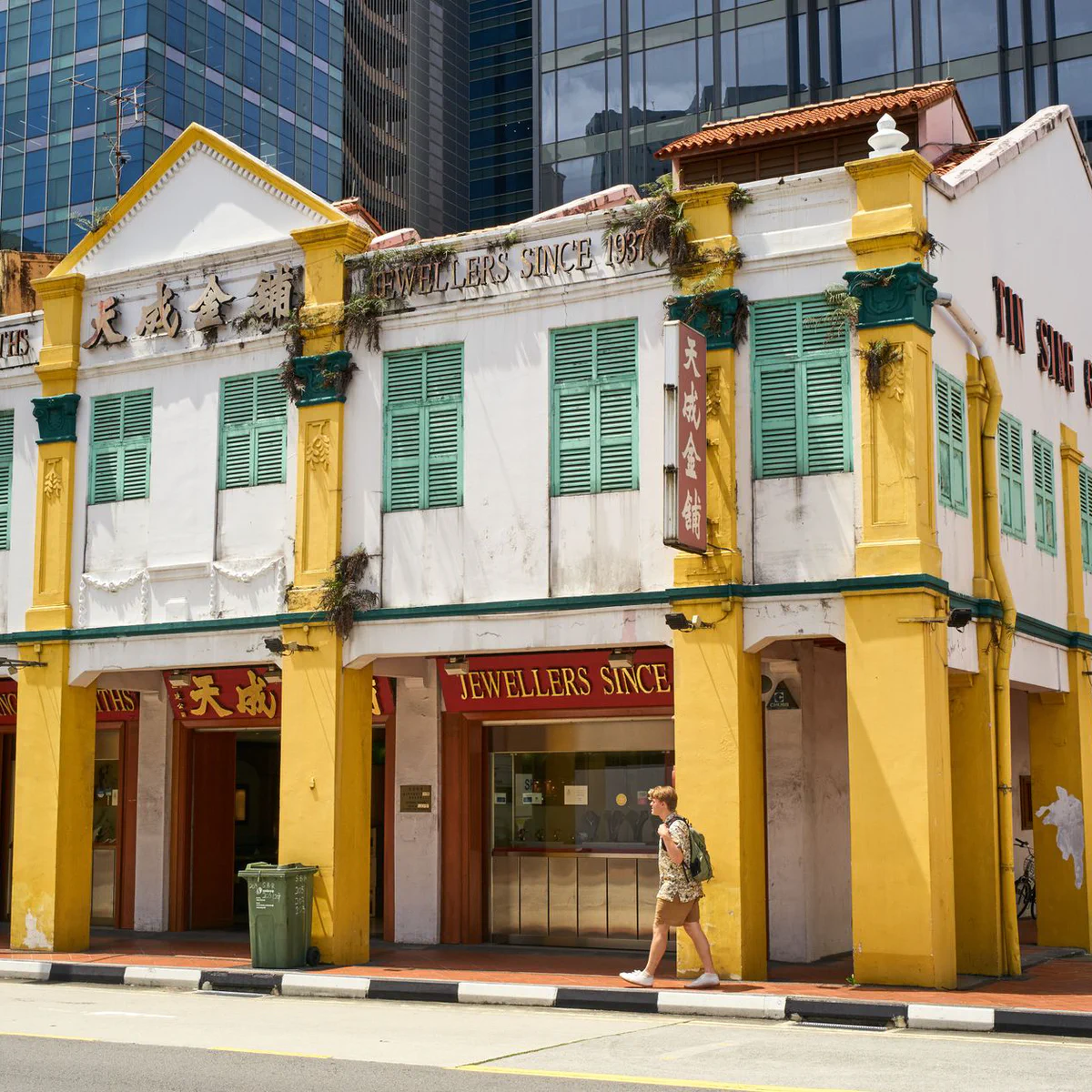
Your choice of neighborhood is the single biggest lever in your budget. While Chinatown, Little India, and Lavender offer a great balance of price and local character, Marina Bay and Sentosa are premium experiences that command a higher price. Before you book that cheaper room further out, consult our where-to-stay guide and Singapore MRT map; sometimes a slightly higher nightly rate is worth it to avoid a grueling 45-minute commute in the humidity every morning.
When comparing rooms, look beyond the price per night. Check the actual square footage, the bed configuration, and whether breakfast is genuinely included. For families, a “family room” might be a better value than two separate rooms, but always confirm the total headcount at checkout to avoid a stressful arrival.
As a rough guide for 2026, expect to pay S$25–50 for a dorm bed, S$105–200 for a budget private room, and S$200–330 for a solid mid-range hotel. Be aware that during peak event dates, these prices can skyrocket, so treat these figures as a starting point for your own live search.
Food and drink
Singapore is a culinary heaven, and your food budget is entirely within your control. The backbone of local eating is the hawker center, where you can find well-regarded dishes for just a few dollars. However, the costs can escalate quickly once you start adding in hotel breakfasts, trendy café lunches, and destination dinners. Alcohol is particularly expensive due to high taxes—a single cocktail at a rooftop bar can cost as much as three full hawker meals. We suggest budgeting for one representative day with three meals and a few bottles of water, then adding a separate “splurge” line for drinks and fine dining.
For your planning, allow S$4–8 for a standard hawker dish, S$15–30 for a meal at a casual, air-conditioned restaurant, and S$12–20 for a simple beer at a bar. You can comfortably eat for S$20–35 a day if you stick to hawker centers, but if you prefer the comfort of restaurants and the buzz of a nightlife scene, you’ll need to significantly increase this figure. Use our Singapore food guide to find the best eats near your planned attractions so you aren’t wasting time and money on unnecessary travel just to find a meal.

Public transport
The MRT and bus network is a miracle of efficiency and affordability. Under the SimplyGo adult fare table (updated 27 December 2025), a short hop costs just S$1.28, while a journey across the entire island maxes out at S$2.57. Fares are distance-based, so use an official journey planner to get an exact figure for your specific route. Whatever you do, avoid paying with cash on buses—it’s more expensive and a logistical hassle you don’t need.
Don’t forget to budget separately for your arrival and departure. A taxi from Changi might be a luxury, but after a long flight, it can be a vital investment in your sanity. Our Changi Airport to city guide breaks down the real-world costs and trade-offs of each option.

Attractions and activities
It’s easy to get carried away with Singapore’s massive list of well-regarded attractions. Before you buy any multi-attraction passes, identify your absolute priorities. Gardens by the Bay, the Mandai Zoo group, and the various theme parks on Sentosa are all fantastic, but they can quickly drain your budget if you try to do them all in one go. A pass is only a bargain if it genuinely matches your interests and fits into your daily route without causing burnout.
When booking, compare prices between the official sites and major activity marketplaces like Klook or KKday. Be meticulous: check if that “discounted” ticket actually includes the specific conservatory or premium zone you want to see. Don’t be fooled by a low headline price that forces you to pay for expensive add-ons once you arrive at the gate.
Connectivity and insurance
Staying connected is a vital part of modern travel, but it doesn’t have to be a major expense. Our Singapore SIM/eSIM guide compares local tourist plans with international eSIMs that start as low as US$4. While the cheapest option might be tempting, make sure the data allowance and validity period actually cover your entire stay. It’s better to spend a few extra dollars for a plan that won’t leave you stranded without maps in the middle of a busy day.
Travel insurance is your safety net, and the cost will vary based on your age, health, and the specific coverage you need. Don’t just settle for the first quote you see. Use our Singapore travel-insurance guide to compare different providers using the same inputs for medical cover and trip cancellation. It’s a small, necessary investment in your own peace of mind.
Test the budget against the route
| Sample trip | What it includes | Land budget per person | Where the money goes |
|---|---|---|---|
| 3 days, 2 nights on a budget | Chinatown or Little India budget stay, hawker meals, free Marina Bay night and one paid conservatory | S$330–520 | Room, Gardens by the Bay and airport transport |
| 3 days, 2 nights comfortable first visit | Central 3- or 4-star hotel, two paid sights, one restaurant meal daily and occasional Grab | S$620–950 | Hotel, tickets, restaurants and ride-hailing |
| 5 days, 4 nights with children | Orchard or Bugis family room, one Sentosa day, one Mandai day and one Marina Bay day | S$1,250–1,950 | Family room, attraction tickets and taxis |
| 5 days, 4 nights high-end break | Marina Bay or Sentosa 5-star hotel, destination dining, rooftop bar and private transfers | S$2,800+ | Hotel and dining dominate |
| Singapore plus Malaysia stopover | Two Singapore nights, Marina Bay and hawker food before continuing | S$260–480 | Singapore accommodation is much costlier than the onward stay |
Once you have your numbers, test them against a three-day Singapore itinerary or a five-day itinerary. If the total feels too steep, move to a less expensive hotel neighborhood or swap premium meals for hawker food. Keep enough room for reliable late transport and any insurance cover you have decided is essential; those costs are harder to cut safely once the trip is underway.
Quick answers
Frequently asked questions
Is Singapore expensive for tourists?
How much should I budget per day in Singapore?
How much is public transport in Singapore?
What should I price first?
Research notes
Official planning references
We use these primary references for the time-sensitive details relevant to this guide. Rules, prices and operating hours can change, so confirm the live information before you travel.
- SimplyGo adult public transport fares
Details to check: Official current adult card and cash fare bands.
- Singapore Tourism Board — Visit Singapore
Details to check: Official destination and attraction-planning information.
- Monetary Authority of Singapore
Details to check: Official currency and financial information.
- XE Currency Tables — SGD
Details to check: Mid-market planning rates checked 10 September 2026; consumer card and cash rates differ.
Guide reviewed 14 September 2026. Confirm live rules, prices and operating details with the linked authority before travel.