Best Time to Visit Singapore: 2026 Month-by-Month Guide
Plan your 2026 Singapore trip with a practical guide to monthly weather, monsoon cycles, festival crowds, room rates, and what to pack.


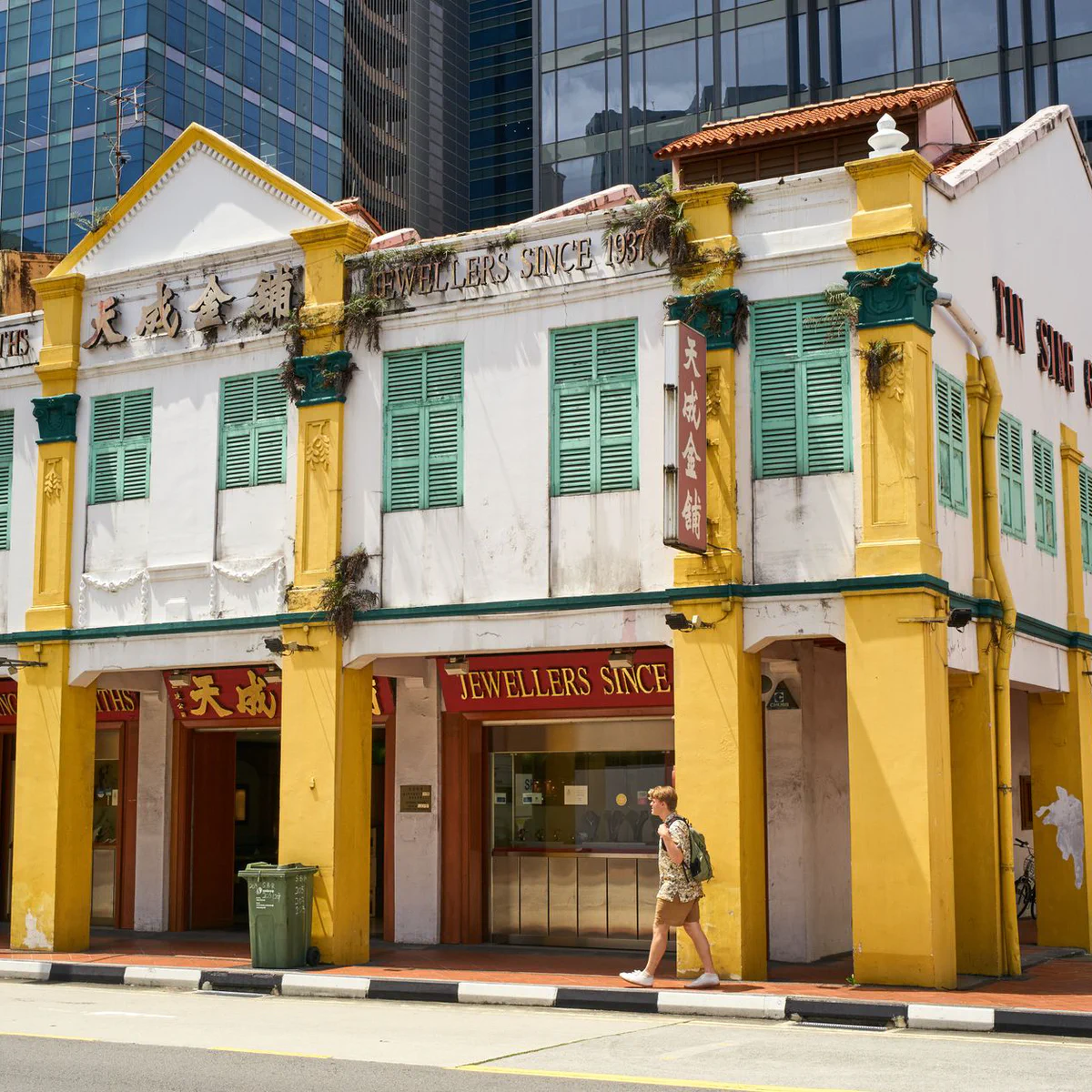
Singapore earned its Garden City reputation through decades of deliberate greening, a story that now continues under NParks’ City in Nature vision. Rain trees shade broad roads, plants climb tower façades, and covered links connect stations with malls and offices. That greenery looks especially vivid after a tropical downpour—but the heat, humidity and slick pavements are also part of the visit.
There is no cool season and no reliably rain-free one. Meteorological Service Singapore records fairly uniform conditions year-round: daily lows are usually 23–25°C, highs 31–33°C and mean relative humidity about 82%. The best month therefore depends less on temperature than on the type of rain, the festivals you want to experience, and the crowd or hotel-price pressure around holidays and major events.
When is the best time to visit Singapore? No bad season, but better timing
There is no inherently poor month to visit Singapore, but your dates will shape the exact trade-offs you encounter on the ground. Because the island’s indoor infrastructure—from air-conditioned museums and covered heritage arcades to climate-controlled conservatories—is exceptionally cohesive, even a rainy week allows for rich exploration. Aligning your travel style with the right calendar window simply ensures a smoother, more comfortable trip.
To narrow down your dates, consider which travel profile best matches your plans:
- For the highest probability of sunny days and dry walking trails: Target February through early March. February is statistically Singapore’s driest month with the lowest rainfall and fewest rain days. Outdoor trails across the Southern Ridges, MacRitchie Reservoir, and the Singapore Botanic Gardens are less prone to muddy conditions, and open-air rooftop venues run with fewer weather interruptions.
- For vibrant cultural celebrations and street light-ups: Choose the major cultural corridors: January/February for Lunar New Year in Chinatown, October/November for Deepavali celebrations in Little India, or December for the Christmas light-up along Orchard Road and year-end festivities at Gardens by the Bay. Expect larger crowds and peak hotel rates, balanced by intense festive atmosphere.
- For food exploration and museum visits on a balanced budget: Consider late March, April, July, and September, then compare your exact dates against the live event calendar. These months can work well between holiday peaks, but hotel prices are not uniformly low.
- Dates requiring early booking and logistical caution: The days surrounding the Formula 1 Singapore Grand Prix (confirmed for 9–11 October 2026) bring extensive street circuit buildouts around Marina Centre, pedestrian detours, closed roads, and substantial hotel price surges across the city. Similarly, the December school holidays through New Year’s Day generate heavy regional flight demand and busy family attractions on Sentosa.
Month-by-month comparison at a glance
The overview below highlights how each month performs across climate patterns, cultural programming, crowd levels, and practical value.
Overall Travel Ratings: Star ratings (★ to ★★★★★) balance outdoor walking comfort, cultural atmosphere, flight and accommodation value, and ease of getting around:
- ★★★★★ (Prime): Outstanding balance of relatively lower rainfall, strong cultural atmosphere, or pleasant walking conditions.
- ★★★★☆ (Very Good): Favorable travel window with straightforward trade-offs, such as occasional heavy showers or moderate crowd peaks.
- ★★★☆☆ (Good / Manageable): Rewarding travel experience, but requires deliberate planning around prolonged rainfall, high humidity, or localized event surcharges.
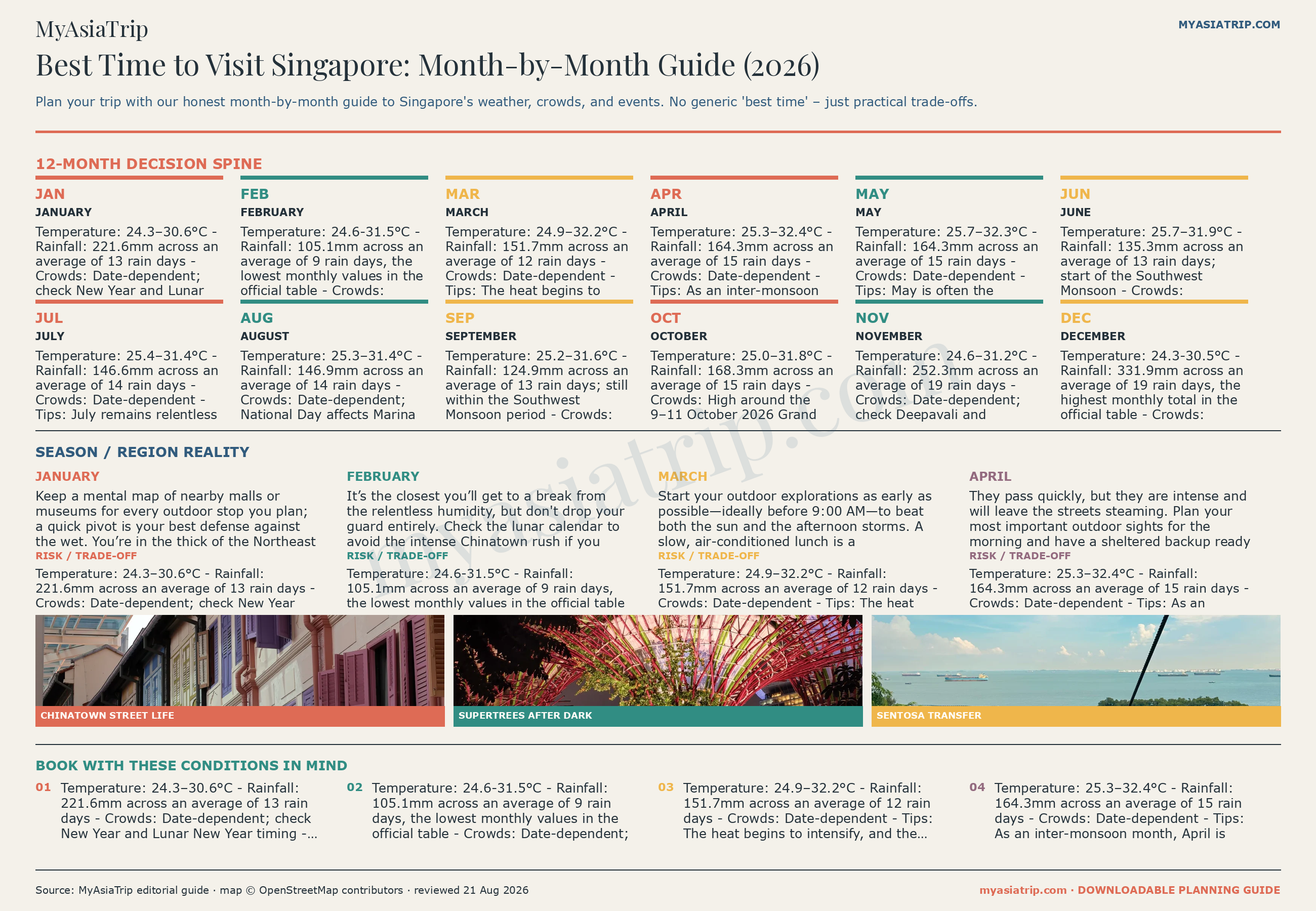
| Month | Overall Rating | Weather Pattern & Seasonal Phase | Major Annual & Confirmed Events | Crowd & Price Pressure | Best Fit For | Primary Drawback & Trade-Off |
|---|---|---|---|---|---|---|
| January | ★★★☆☆ | Northeast Monsoon wet phase easing toward late month; overcast mornings giving way to localized showers | Singapore Art Week (22–31 Jan 2026); Lunar New Year prep in Chinatown; Pongal in Little India | High around New Year & Lunar New Year; moderate mid-month | Art enthusiasts, cultural travelers, festive shoppers | Frequent prolonged monsoon surges early in the month; damp park trails |
| February | ★★★★★ | Northeast Monsoon dry phase; statistically the driest month | Lunar New Year, Chingay, River Hongbao or Thaipusam may fall near these dates; confirm annually | High during public holidays; more moderate outside them | Photographers, hikers, first-time visitors seeking a drier window | Some independent businesses close during major holidays |
| March | ★★★★☆ | Transition out of monsoon; rising midday heat with localized late-afternoon convective showers | Cultural pop-ups; architectural walking tours; Ramadan bazaars (date shifts annually) | Moderate; minor bump during regional mid-March school breaks | Urban explorers, architecture enthusiasts, cafe hoppers | Noticeable rise in midday temperatures and higher humidity |
| April | ★★★☆☆ | Inter-monsoon period; light, variable winds, high humidity, and intense afternoon thunderstorms | Cultural and religious dates vary; check the live calendar | Usually moderate outside public-holiday weekends | Museum visitors, food lovers, travelers with flexible plans | Heavy midday heat and sudden afternoon lightning storms |
| May | ★★★☆☆ | Inter-monsoon period; warmest monthly mean temperature, high moisture, and regular afternoon rain | Singapore International Festival of Arts (SIFA); Vesak Day temple ceremonies | Moderate; manageable hotel rates outside major business conventions | Performing arts attendees, hotel staycationers, nightlife seekers | High humidity and strong midday heat stress during outdoor walks |
| June | ★★★★☆ | Southwest Monsoon begins; early morning Sumatra squalls followed by brighter midday conditions | i Light Singapore (5–28 Jun 2026); mid-year retail events; Dragon Boat Festival | High family volume due to regional mid-year school holidays | Families, evening strollers, sustainable light art fans | Busy wildlife parks and longer waits at Sentosa attractions |
| July | ★★★★☆ | Southwest Monsoon; a mix of dry spells, showers and possible squalls | Food and National Day-season programming varies; check current listings | Moderate to high during regional summer travel | Food lovers, evening visitors, urban sightseers | Outdoor schedules still need a rain backup |
| August | ★★★★☆ | Southwest Monsoon; warm, humid and changeable | National Day (9 August); Night Festival and Hungry Ghost events are date-dependent | High around 9 August; otherwise event-dependent | Culture enthusiasts, night photography fans, heritage walkers | Central crowd-control and road changes around major celebrations |
| September | ★★★★☆ | Late Southwest Monsoon; often a useful outdoor window, but still tropical and changeable | Mid-Autumn dates shift; Grand Prix preparations may affect Marina Centre later in the month | Varies with festival and race-build schedules | Evening walkers, lantern displays and food-market fans | Check current event footprints before choosing a Marina Bay hotel |
| October | ★★★☆☆ | Inter-monsoon transition; higher frequency of afternoon and evening thunderstorms | Formula 1 Singapore Grand Prix (9–11 Oct 2026); Deepavali street light-ups launch | High peak around Grand Prix weekend; moderate otherwise | Motorsport fans, concert-goers, festive cultural explorers | High hotel tariffs and major road closures around Marina Centre during race week |
| November | ★★★☆☆ | Wetter inter-monsoon conditions lead toward the Northeast Monsoon | Deepavali may fall here; recurring literature and Christmas events need date checks | Often rises toward year-end | Literature lovers, early festive shoppers, indoor museum visitors | More rain days and a greater need for indoor backup plans |
| December | ★★★★☆ | Peak Northeast Monsoon rainfall; continuous monsoonal rain spells balanced by festive atmosphere | Christmas on A Great Street; Christmas Wonderland at Gardens by the Bay; Marina Bay Countdown | Peak year-end holiday demand; premium rates for flights and lodging | Holiday travelers, festive shoppers, countdown partygoers | Heaviest rainfall total of the year; frequent reliance on sheltered corridors |
What is Singapore like month by month?
Understanding Singapore’s weather means looking at what each calendar month feels like when walking city streets, dining at open-air hawker centres, or exploring nature reserves.
What is Singapore like in January?
January sits at the tail end of the Northeast Monsoon’s wet phase. Early in the month, travelers often encounter cloudy skies and broad, steady rain spells (monsoon surges) that can last through entire mornings. By late January, showers become shorter and more localized, punctuated by bright tropical sunshine. Daily temperatures range between 24°C and 31°C.
Plan outdoor excursions flexibly. Keep morning hours open for indoor cultural venues like the National Gallery Singapore or the Asian Civilisations Museum during overcast stretches. When moving between City Hall, Raffles City, and Marina Square, take advantage of the extensive subterranean linkways to stay dry.
Visual arts take center stage in late January with Singapore Art Week (confirmed for 22–31 January 2026), bringing exhibitions and installations to Gillman Barracks and Tanjong Pagar Distripark. Simultaneously, Chinatown fills with festive night markets and street lighting in preparation for Lunar New Year, while Little India marks the harvest festival of Pongal. Pack a wind-resistant compact umbrella and shoes with reliable rubber grip, as polished tile walkways outside shopping hubs become slick when wet.
What is Singapore like in February?
February is statistically Singapore’s driest month. Humidity remains tropical and showers are still possible, but the lower long-term rainfall makes outdoor plans easier than in wetter months.
This is an ideal month for open-air walking routes: hike the Southern Ridges from Mount Faber to Kent Ridge Park, take a bumboat to Pulau Ubin for coastal cycling, or spend unhurried hours exploring the Singapore Botanic Gardens without concern for sudden morning washouts.
The cultural calendar is driven by Lunar New Year, featuring the vibrant Chingay Parade and the River Hongbao lantern displays. The Hindu festival of Thaipusam also frequently occurs in January or February, with its solemn foot procession between Serangoon Road and Tank Road. Note that during the first few days of Lunar New Year, some independent family-run hawker stalls close, though major food courts, restaurants, and ticketed attractions operate normally. Pack broad-spectrum sun protection, UV-blocking sunglasses, and breathable clothing.
What is Singapore like in March?
March marks the gradual transition out of the Northeast Monsoon into the hotter inter-monsoon period. Midday temperatures climb toward 32°C, and afternoon heating can trigger localized thunderstorms of unpredictable duration.
Structure your days with a sensible three-part rhythm: explore nature reserves like Sungei Buloh Wetland Reserve in the early morning (7:30 AM to 10:00 AM); retreat indoors to air-conditioned galleries, shopping malls, or covered dining spots from 11:30 AM to 3:30 PM; then head back outside after 4:30 PM as shadows lengthen and the evening breeze cools the waterfront.
Cultural pop-ups and design exhibitions appear across the city. When the Islamic holy month of Ramadan falls in March (shifting roughly 10 to 11 days earlier each Gregorian year), vibrant evening street food bazaars open in Geylang Serai and Kampong Gelam, offering grilled delicacies, baked goods, and illuminated streetscapes. Lightweight linen shirts and quick-drying cottons are ideal, with a light layer on hand for cold air-conditioned trains and malls.
What is Singapore like in April?
April sits squarely within the spring inter-monsoon period. Winds are light and variable, creating still air that can make midday humidity feel particularly heavy. Late afternoons frequently bring sudden, intense thunderstorms accompanied by sharp lightning and heavy downpours.
Organize your afternoons around Singapore’s sheltered spaces. If a heavy storm rolls in, spend those hours inside the climate-controlled Flower Dome and Cloud Forest conservatories at Gardens by the Bay, or browse the interconnected shopping arcades along Orchard Road.
Religious dates do not stay in the same Gregorian month: Hari Raya Aidilfitri, for example, shifts earlier each year. Check the official calendar rather than assuming it falls in April. The month still suits food-focused time in Joo Chiat and Katong, with an umbrella and quick-drying shoes ready for afternoon storms.
What is Singapore like in May?
May typically records the warmest 24-hour mean temperatures of the year. With light breezes and high moisture in the air, outdoor physical activity during the middle of the day leads to rapid perspiration. However, mornings are frequently clear, and the city’s mature tree canopy provides continuous shade along major pedestrian routes.
Approach midday dining strategically. Choose modern hawker centres with high ceilings and industrial fans (such as Maxwell Food Centre or Old Airport Road), or step into air-conditioned food halls during the peak lunch rush between 12:00 PM and 1:30 PM.
Performing arts take the spotlight as the Singapore International Festival of Arts (SIFA) often stages international theatre, dance, and music productions at the Esplanade and Victoria Theatre. Vesak Day brings candlelit ceremonies and flower offerings to Buddhist temples across the city, including the Buddha Tooth Relic Temple in Chinatown. Pack loose-fitting cotton clothing, carry an insulated water bottle to stay hydrated, and plan strenuous outdoor walking for early morning hours.
What is Singapore like in June?
June marks the start of the Southwest Monsoon season. While total monthly rainfall is moderate, the weather is defined by Sumatra squalls—lines of thunderstorms originating over Sumatra that sweep across the island, often during predawn hours or early morning. These squalls bring gusty winds and brief torrential rain, typically followed by clearer, drier skies by late morning.
Check the Meteorological Service Singapore weather radar upon waking. Once an early-morning squall clears, the air feels noticeably fresher, creating pleasant conditions for morning walks along the Marina Barrage or the East Coast Park promenade.
Marina Bay hosts i Light Singapore (confirmed for 5–28 June 2026), featuring sustainable light art installations along the waterfront that are free to explore in the evening. Mid-year shopping promotions run across retail districts, and dragon boat races take place along the Kallang River. Because June coincides with regional school holidays, expect larger family crowds at Sentosa beaches, Universal Studios, and the Mandai Wildlife Reserve; book admission tickets in advance.
What is Singapore like in July?
July sits within the Southwest Monsoon, bringing a mix of dry spells, localized showers and occasional squalls. Plan evening activities normally, but keep an indoor alternative rather than assuming rain will be brief.
July is especially suited to evening and nighttime exploration. Visit the Night Safari in Mandai, take an evening river cruise along Clarke Quay and Boat Quay, or enjoy rooftop drinks overlooking the skyline at Marina Bay.
Food lovers should check the Tourism Board calendar for current culinary programming; dates for the Singapore Food Festival and related events can change. National Day preparations may also alter access around the Civic District before August. If a rooftop bar or restaurant matters to you, check its dress code rather than assuming one citywide rule.
What is Singapore like in August?
August remains warm and humid under the Southwest Monsoon, with showers and occasional squalls still possible. The first half of the month is shaped by National Day activity.
On 9 August (National Day), plan your route with care. Celebrations and crowd-control measures can change access around the Civic District and Marina Bay; check that year’s official event map and use the MRT where practical.
The Singapore Night Festival often brings projections and performances to Bras Basah.Bugis, while seventh-lunar-month events can include neighborhood getai shows. Neither should be treated as a fixed Gregorian-date promise: check the live calendar before booking around them.
What is Singapore like in September?
September often works well for outdoor plans before the wetter year-end period, but it is still a tropical month with no guarantee of clear skies.
Take advantage of the lower rain probability to explore open-air heritage quarters such as Little India, Kampong Gelam, and the colorful Peranakan shophouses along Koon Seng Road in Katong. In 2026, with the Grand Prix scheduled for October, September avoids the severe downtown traffic detours seen in earlier years.
The Mid-Autumn Festival may bring lantern displays and mooncake stalls to Chinatown and Gardens by the Bay; its date shifts annually. Grand Prix infrastructure can also affect Marina Centre before the October race, so check current access notices if you are staying nearby.
What is Singapore like in October?
October ushers in the autumn inter-monsoon transition. The frequency of afternoon and evening thunderstorms increases, often accompanied by strong lightning and brief downpours.
During race week, avoid driving or taking taxis near Marina Centre, City Hall, and the Civic District; rely strictly on underground MRT lines. Stations such as Promenade, Bayfront, City Hall, and Esplanade operate with crowd-management measures but provide efficient transit through the restricted zones.
The headline event is the Formula 1 Singapore Grand Prix (confirmed for 9–11 October 2026) at the Marina Bay Street Circuit, accompanied by off-track concerts and citywide entertainment. Meanwhile, Little India launches its annual Deepavali celebrations, decorating Serangoon Road with elaborate festive lighting, floral markets, and sweet bazaars. If attending the outdoor night race, carry a light poncho and earplugs. If traveling for leisure outside the race, consider accommodations in peripheral neighborhoods like Tiong Bahru or Novena to avoid event price surcharges.
What is Singapore like in November?
November is a wetter inter-monsoon month leading into the Northeast Monsoon, which begins in December. Rain days increase and showers can be broader or longer-lasting than a brief convective burst.
Shift your itinerary focus toward indoor and sheltered attractions. Spend unhurried afternoons exploring the ArtScience Museum, the National Museum of Singapore, S.E.A. Aquarium on Sentosa, or the extensive dining and retail complex at Jewel Changi Airport.
Deepavali may fall in October or November, and recurring literature or Christmas events often appear on the calendar around this period. Confirm dates and venues through VisitSingapore; carry an umbrella and a simple waterproof pouch for electronics.
What is Singapore like in December?
December is historically Singapore’s wettest month. Monsoonal surges can bring continuous, gentle-to-moderate rainfall over several consecutive days, keeping daily temperatures comfortably between 24°C and 30°C with cool breezes. Despite the rain, the city carries an energetic holiday atmosphere with busy shopping districts and year-end celebrations.
Make full use of the city’s sheltered pedestrian connectivity. You can travel from Marina Bay hotels through covered corridors directly into shopping malls, MRT stations, and dining precincts without stepping into open weather. Gardens by the Bay’s massive conservatories (the Flower Dome and Cloud Forest) provide climate-controlled botanical exploration under glass.
Recurring year-end events may include Christmas Wonderland at Gardens by the Bay and the Marina Bay Singapore Countdown. Confirm the current programme and ticketing before travel. Pack a light layer for indoor air conditioning, quick-drying footwear, and book flights and accommodation early.
Key events and festival calendar (2026 & recurring)
Singapore’s event calendar strongly influences hotel pricing, street walkability, and attraction queues. When planning dates, distinguish between fixed annual dates, shifting lunar or religious dates, and confirmed 2026 dates:
Confirmed 2026 dates & fixed annual anchors
- Singapore Art Week (22–31 January 2026): Confirmed by the National Arts Council (NAC). Visual art exhibitions and late-night openings occur at Gillman Barracks, Tanjong Pagar Distripark, and public galleries across the city.
- i Light Singapore (5–28 June 2026): Confirmed by the Urban Redevelopment Authority (URA). Sustainable light art installations transform the Marina Bay waterfront and Raffles Place, offering free evening walking routes.
- Singapore National Day (9 August, fixed annual date): Celebrations are nationwide, while the parade venue and access plan can vary. Check the official map for security perimeters, station exits and road changes.
- Formula 1 Singapore Grand Prix (9–11 October 2026): Confirmed on the official transport and race calendars by the Land Transport Authority (LTA) and Singapore GP. The Marina Bay Street Circuit closes central thoroughfares for roughly a week of setup, racing, and dismantling.
Annually shifting cultural & religious festivals
Because these festivals follow lunar, Hindu, or Islamic calendars, their exact dates change each year. Check the official VisitSingapore Events Calendar before locking in your travel dates:
- Lunar New Year (January or February): Chinatown hosts festive street lighting, lion dances, and night markets. Independent heritage hawker stalls and small family businesses often close for the first few days of the holiday, while shopping malls and major tourist attractions remain open.
- Thaipusam (January or February): Hindu devotees undertake a four-kilometer barefoot procession carrying ornate kavadis and milk pots from Sri Srinivasa Perumal Temple on Serangoon Road to Sri Thendayuthapani Temple on Tank Road.
- Ramadan & Hari Raya Aidilfitri (Dates shift ~10–11 days earlier each Gregorian year): During the fasting month of Ramadan, vibrant evening food bazaars operate in Geylang Serai and Kampong Gelam. Hari Raya Aidilfitri marks the conclusion of fasting with family visits and feasts.
- Vesak Day (May or early June): Commemorating the birth, enlightenment, and nirvana of Buddha, temples across the island host chanting ceremonies, flower offerings, and vegetarian meals.
- Deepavali (October or November): Little India transforms with elaborate street lighting, flower garland stalls, and festive bazaars along Serangoon Road and Campbell Lane.
- Christmas & Year-End Countdown (Mid-November through 31 December): Orchard Road presents its annual Christmas light-up, Gardens by the Bay hosts Christmas Wonderland, and Marina Bay stages the New Year’s Eve countdown fireworks.
Critical trip planning: weather, packing & haze
Understanding Singapore’s monsoon cycles & rainfall
Singapore experiences rainfall throughout the year without an absolute dry season. However, precipitation patterns follow distinct monsoonal phases defined by the Meteorological Service Singapore:
- Northeast Monsoon (December to early March): The wet phase usually runs from December to early January, followed by a drier phase from late January through early March; February is generally the driest month.
- Inter-Monsoon Period (Late March to May): Characterized by light winds, warm temperatures, and frequent late-afternoon thunderstorms.
- Southwest Monsoon (June to September): Brings prevailing southwesterly winds and occasional Sumatra squalls, often in the predawn or morning hours. Conditions afterward still vary.
- Inter-Monsoon Period (October to November): Brings higher thunderstorm frequency and transitions into the year-end wet monsoon phase.
Humidity realities throughout the day
While Singapore’s mean relative humidity is roughly 82%, humidity follows a clear daily pattern:
- Predawn hours: Relative humidity routinely climbs above 90%, condensing morning dew across green spaces.
- Mid-afternoon on sunny days: As ground temperatures rise, relative humidity drops to around 60%, and occasionally lower during prolonged dry spells in February.
Convective showers may be brief, while monsoon surges can produce prolonged overcast rain. Do not build a fixed one-hour rain assumption into a timed itinerary.
Clothing, footwear & rain gear recommendations
- Daily Clothing: Choose lightweight, loose-fitting garments made from breathable natural fibers (linen, lightweight cotton) or technical moisture-wicking fabrics. Light colors help reflect strong solar radiation.
- Indoor Air-Conditioning Layer: Always carry a compact cardigan, light overshirt, or thin hoodie. Indoor spaces (shopping malls, museums, cinemas, and MRT trains) are heavily air-conditioned, creating a noticeable contrast with the outdoor heat.
- Footwear: Bring supportive, breathable walking shoes with good traction, plus quick-drying sandals if useful. Pavements and open-air concourses can be slick after rain.
- Rain Gear: A sturdy, compact travel umbrella is far more practical than a waterproof raincoat. Heavy rain jackets trap body heat and cause rapid sweating in 30°C+ humidity.
Regional haze: facts and real-time monitoring
Smoke haze caused by regional agricultural and peatland fires in neighboring areas is an episodic environmental risk, not an annual certainty.
- When haze occurs, it is historically most likely during the drier months of the Southwest Monsoon period (typically August to October), when regional dry conditions and southerly winds align.
- In many years, Singapore experiences zero or negligible haze impact.
- Travelers should not cancel trips months in advance over haze concerns. During your stay, check live 24-hour PSI (Pollutant Standards Index) and 1-hour PM2.5 readings directly on the National Environment Agency (NEA) portal or the official myENV mobile application.
Weather-aware itinerary strategy
Managing Singapore’s equatorial climate requires sensible daily pacing that balances outdoor highlights with sheltered refuges:
- Morning Outdoor Window (07:30 – 10:30): The morning air is cooler and softer sunlight filters through the trees. Dedicate this window to nature trails at the Singapore Botanic Gardens, the Southern Ridges, or coastal cycling on Pulau Ubin.
- Midday Sheltered Window (11:30 – 15:30): When midday sun and humidity peak, move indoors. Explore the National Gallery Singapore, visit the climate-controlled domes at Gardens by the Bay, or enjoy an unhurried lunch in an air-conditioned food court or heritage restaurant.
- Late Afternoon Cultural Walks (16:30 – 19:00): As heat eases, explore street-level heritage neighborhoods like Kampong Gelam, Chinatown, or the shophouse streets of Katong.
- Evening Waterfront & Night Markets (19:30 – Late): Evenings are ideal for outdoor light shows along Marina Bay, river cruises along Clarke Quay, or visits to the Night Safari.
- Use sheltered transit: City Hall, Raffles Place, Bugis and Orchard have useful underground or covered links, but not every street connection is sheltered. Check the exit closest to your destination before leaving the station.
To continue planning your Singapore itinerary step by step, explore our companion guides:
- Build a balanced daily route with our Singapore 3-day itinerary and Singapore 1-day itinerary.
- Navigate public transit seamlessly using our Singapore getting-around guide.
- Select the best neighborhood for your stay with our curated Singapore where to stay guide.
- Discover top landmarks and cultural districts in our Singapore things to do guide, and plan your budget with our Singapore travel cost breakdown.
Quick answers
Frequently asked questions
What is the best month to visit Singapore?
When is Singapore's rainy season?
Which month is the driest and which is the wettest in Singapore?
What clothes should I pack for Singapore, and do I need a rain jacket?
How do major events like Formula 1, Chinese New Year, and school holidays affect a trip?
Is haze a regular problem in Singapore?
Research notes
Official planning references
We use these primary references for the time-sensitive details relevant to this guide. Rules, prices and operating hours can change, so confirm the live information before you travel.
- Visit Singapore
Details to check: Official destination and visitor information
- Meteorological Service Singapore
Details to check: Official climate patterns and weather records
Guide reviewed 10 September 2026. Confirm live rules, prices and operating details with the linked authority before travel.